Geely's Zeekr Bets on Malaysia Manufacturing to Escape China's EV Slowdown
The premium electric brand will produce SUVs at Proton's facility by mid-2027, doubling overseas sales as domestic momentum falters and oil-shock demand surges.
A Regional Hedge Against Home-Market Headwinds
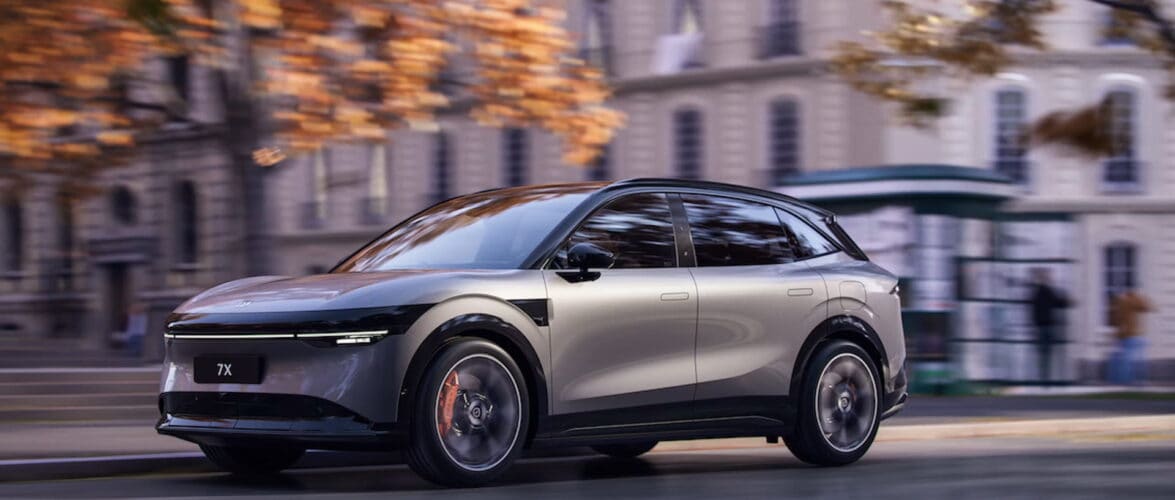
Geely Automobile Group is shifting production of its Zeekr-branded electric vehicles to Southeast Asia, a move that reflects both the maturation of China's EV market and a calculated bet on energy-crisis demand in markets still reeling from oil-price volatility. According to Mars Chen, vice president at Zeekr, the company intends to begin manufacturing the fully electric Zeekr 7X midsize SUV at a Proton facility in Malaysia as early as the first half of 2027. The plan marks a significant pivot: Zeekr aims to double its international sales volume, even as growth at home decelerates.
At DailyTechWire, we've tracked Geely's expansion across ASEAN for years, and this move fits a broader pattern. Chinese automakers have long used Southeast Asia as a testing ground for export strategies, but the timing here is revealing. Domestic EV sales in China grew at their slowest pace in three years during the first quarter of 2026, squeezed by oversupply, intense price competition, and subsidy phase-outs. Meanwhile, Malaysia and neighboring markets have seen a spike in EV interest, driven in part by sustained high fuel costs and government incentives designed to accelerate electrification.
Geely's parent, Zhejiang Geely Holding Group, holds a 49.9 percent stake in Proton, the Malaysian national carmaker it acquired in stages starting in 2017. That relationship has evolved from a financial bailout into a platform for regional manufacturing and distribution. The Zeekr 7X will be assembled on an existing Proton line, leveraging installed capacity without requiring greenfield investment. This is classic asset-light internationalization: use a partner's infrastructure, minimize capital outlay, and test market reception before committing to dedicated lines.
Why Malaysia, Why Now
Malaysia offers Geely several structural advantages. Labor costs remain competitive relative to China's coastal manufacturing hubs, and the country sits within ASEAN's free-trade framework, granting tariff-preferred access to a market of more than 600 million people. Thailand has traditionally dominated Southeast Asian auto production, but Malaysia has been quietly building EV assembly ecosystems, supported by tax breaks for battery imports and local-content incentives.
The oil crisis Chen referenced is not a single event but a protracted period of price instability that began in late 2025, when OPEC+ supply cuts collided with slower-than-expected renewable-energy deployment in emerging markets. Fuel prices in Malaysia, Indonesia, and the Philippines have remained elevated, making the total cost of ownership for EVs more attractive even as upfront sticker prices stay high. Zeekr's 7X, a midsize crossover positioned below the brand's flagship sedan, is designed to hit a price band that competes with premium internal-combustion SUVs once fuel savings are factored in.
Zeekr's strategy also reflects a hedging logic that Chinese EV makers have adopted in response to tightening export controls and tariff walls in Europe and North America. Southeast Asia remains one of the few large automotive markets where Chinese brands face minimal political friction. Malaysia, in particular, has shown little appetite for the kind of anti-subsidy investigations that have roiled EV imports in the EU. By localizing production, Geely insulates Zeekr from potential future tariffs and satisfies local-content rules that could unlock additional incentives.
The Proton Relationship and Its Limits
Proton's role in this arrangement is more complex than a simple contract-manufacturing deal. The Malaysian brand has struggled for decades to compete with Toyota, Honda, and Perodua domestically, and Geely's involvement was intended to inject product development capability and supply-chain scale. Joint models like the Proton X70 and X50, both based on Geely platforms, have sold respectably, but Proton has yet to regain the market leadership it enjoyed in the 1990s.
Hosting Zeekr production gives Proton access to EV manufacturing know-how and potentially a share of export revenue, but it also underscores the asymmetry in the partnership. Geely controls the technology, the brand, and the go-to-market strategy; Proton provides the factory floor and regulatory familiarity. This is a common dynamic in cross-border automotive joint ventures, but it raises questions about how much value Proton can capture long-term, especially if Zeekr scales production and begins exporting directly from Malaysia to Indonesia, Thailand, and beyond.
There is also the question of capacity. Proton's existing lines were designed for internal-combustion vehicles, and while EV assembly shares many processes, battery integration, thermal management, and high-voltage wiring require different tooling and worker training. The fact that Geely plans to use an existing line rather than build a new one suggests either that the initial production volumes will be modest or that Proton has already begun retrofitting its facilities in anticipation of this partnership.
Doubling Overseas Sales: Ambition and Arithmetic
Chen's target of doubling Zeekr's international sales is ambitious but starts from a low base. Zeekr delivered fewer than 20,000 vehicles outside China in 2025, concentrated in Europe and a handful of Middle Eastern markets. Doubling that figure to 40,000 units in 2027 is achievable if Malaysia becomes a hub for right-hand-drive markets, Indonesia relaxes import restrictions, and the 7X finds traction with fleet buyers and early adopters.
Still, the arithmetic matters. Zeekr's total global deliveries in 2025 were around 230,000 units, the vast majority sold in China. Even a successful doubling of overseas sales would leave the brand heavily reliant on its home market, where it competes not only with established players like BYD and NIO but also with a wave of new entrants from Xiaomi, Huawei-backed Seres, and legacy automakers pivoting to electric. Geely's broader portfolio, including Lynk & Co and Geometry, faces the same crowded landscape.
The Malaysia plant, then, is less a silver bullet than a incremental step in a longer internationalization roadmap. Geely has signaled interest in assembly operations in Thailand, Poland, and potentially Mexico, each targeting a distinct regulatory and consumer environment. The Proton partnership offers a relatively low-risk proof of concept: if the 7X sells well and the supply chain proves reliable, Geely can expand capacity or replicate the model elsewhere. If it underperforms, the company has not sunk billions into a dedicated greenfield site.
Supply-Chain Implications and Tariff Arbitrage
Manufacturing the 7X in Malaysia will require Geely to navigate complex battery-supply logistics. Most of Zeekr's lithium-ion cells currently come from CATL and EVE Energy, both based in China. Shipping battery packs to Malaysia for final assembly adds cost and complexity, but it may also unlock tariff advantages and satisfy local-content thresholds. Malaysia's EV incentive framework awards higher subsidies to vehicles with a minimum percentage of ASEAN-sourced components, and battery-pack assembly, even if the cells themselves are imported, can count toward that threshold.
There is also the question of whether Geely will source components from other ASEAN suppliers. Thailand has a mature tier-one and tier-two auto-parts industry, and Indonesia is investing heavily in nickel refining and battery-chemical production. If Geely can integrate parts from these countries, it strengthens the regional value-chain story and positions Zeekr as an "ASEAN-made" brand rather than a Chinese import assembled locally.
This tariff-arbitrage logic is not unique to Geely. BYD is building a plant in Thailand, and several Chinese EV makers are exploring partnerships in Indonesia. The race is on to establish local manufacturing before governments tighten rules or competitors lock up capacity. Geely's head start, via the Proton relationship, gives it an edge, but execution will determine whether that edge translates into market share.
Risks and Realities
Several risks could derail or delay the Malaysia plan. Proton's labor relations have been contentious in the past, and introducing a new production process with tight quality standards could strain workforce readiness. Supply-chain disruptions, whether from component shortages or logistical bottlenecks at Malaysian ports, remain a persistent risk in post-pandemic manufacturing.
Demand is another variable. The oil crisis has made EVs more attractive on paper, but financing remains a barrier in markets where interest rates are high and consumer credit is less accessible than in China or Europe. Zeekr's brand is virtually unknown in Southeast Asia; building dealer networks, service infrastructure, and consumer trust will take time and capital.
Regulatory shifts also loom. Malaysia's current EV incentives are scheduled to taper after 2028, and there is no guarantee they will be renewed at the same generosity. If subsidies shrink or tariffs on Chinese components rise, the economics of local assembly could deteriorate quickly. Geely will need to move fast to capture early-mover advantages before the policy window narrows.
Finally, there is the question of cannibalization. Proton sells its own SUVs in Malaysia, and while the Zeekr 7X is positioned as a premium offering, there is overlap in the target customer base. Managing channel conflict and ensuring that Proton dealers are motivated to sell a higher-margin Chinese brand will require careful partner management.
What This Means for China's EV Export Wave
Geely's Malaysia move is a microcosm of a larger strategic question facing Chinese EV makers: how to sustain growth as the home market matures. For years, the assumption was that China's scale and manufacturing efficiency would enable brands to export globally at prices legacy automakers could not match. That assumption is now being tested by tariffs, political resistance, and the practical challenges of building service networks in unfamiliar markets.
Southeast Asia represents a middle path: large enough to matter, open enough to enter, and close enough to China to keep supply chains manageable. But it is not a frictionless market. Local incumbents, Japanese and Korean brands with decades of presence, and infrastructure gaps all constrain how fast Chinese EVs can scale. Geely's partnership with Proton mitigates some of these barriers, but it also introduces dependencies and compromises.
The first Zeekr 7X units rolling off a Proton line in mid-2027 will be a tangible test of whether Chinese EV brands can replicate their domestic success abroad, not by exporting finished vehicles but by embedding themselves in regional manufacturing ecosystems. If Geely succeeds, expect other Chinese automakers to follow the playbook. If the model stumbles, it may force a rethink of how quickly and at what cost China's EV champions can go global.