The American Datacenter Boom Keeps Hitting the Same Four Walls
Developers have announced 160 GW of new capacity by 2032, but half of what's due next year hasn't broken ground - and the math may not even add up.
The Numbers Don't Match the Noise
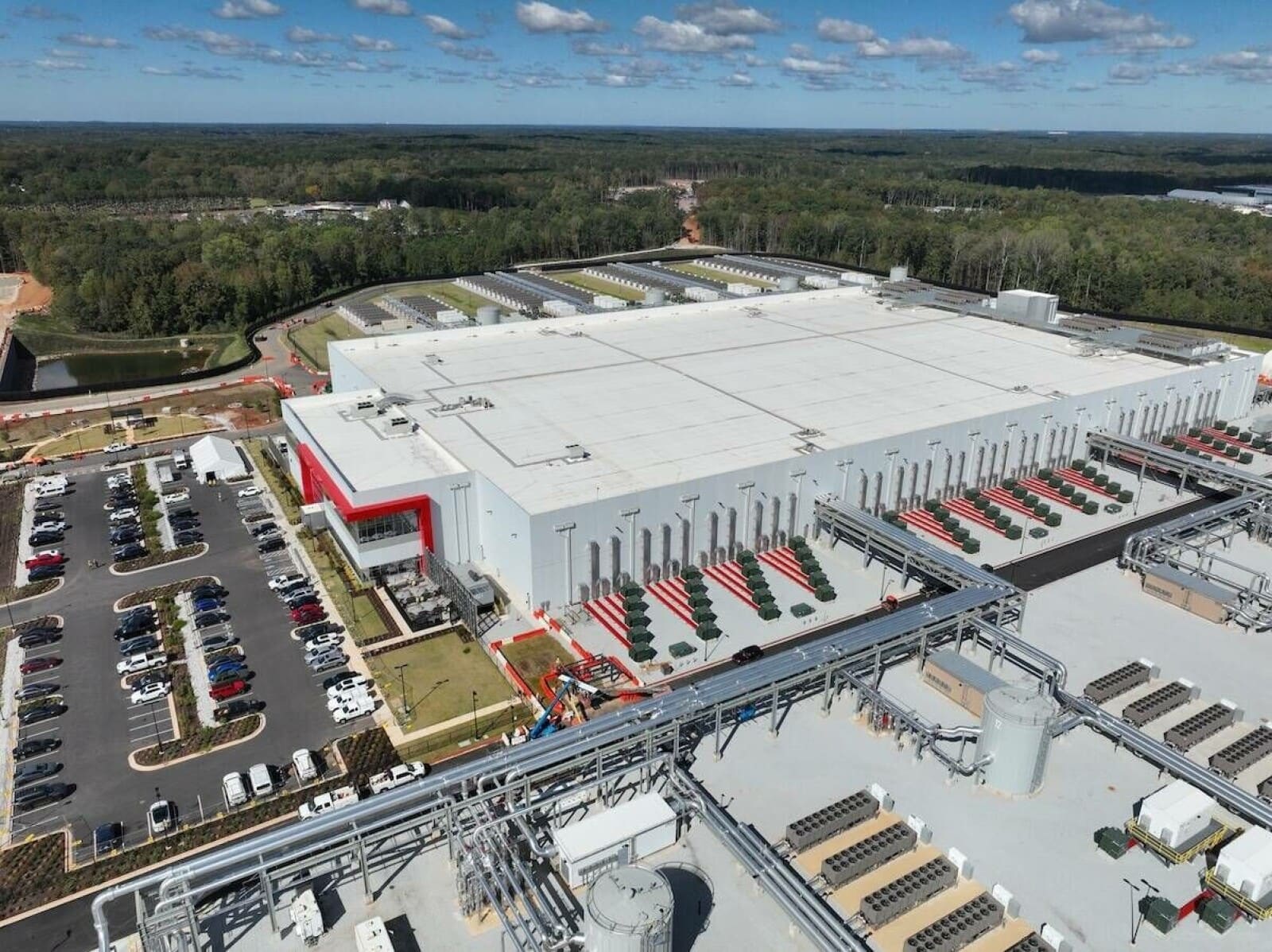
Datacenter developers across the United States have committed to bringing 160 GW of new capacity online by 2032, a figure that would more than double the country's existing installed base. Yet a closer look at construction timelines reveals a widening gap between announcement and execution. Of the 24 GW scheduled to come online in 2026, only 12 GW is currently under construction, according to Jefferies. For projects slated for 2027 and 2028, roughly 80 percent have yet to begin substantial site work.
At DailyTechWire, we've tracked datacenter announcements across Asia and North America for the past three years, and the pattern is consistent: press releases arrive early, cranes arrive late. The reasons are neither new nor exotic. Zoning disputes, utility interconnection backlogs, labor shortages, and the difficulty of securing commercial contracts with anchor tenants continue to stretch timelines well beyond initial projections. What has changed is the scale of the mismatch and the degree to which investor expectations have decoupled from on-the-ground realities.
Interconnection Queues and the Seven-Year Wait
Grid connection delays have become the most visible bottleneck. Some projects now face waits of seven years or more to secure an interconnection agreement, a timeline that renders financial models obsolete and forces developers to reconsider site selection entirely. The US Energy Secretary has directed the Federal Energy Regulatory Commission to implement new rules aimed at accelerating the process, but regulatory reform moves slowly, and the queue continues to lengthen.
Power availability itself is the other half of the equation. Datacenters are no longer competing only with each other for capacity; they are negotiating with utilities that serve residential, commercial, and industrial customers in regions where transmission infrastructure was not designed for the sudden arrival of 50 or 100 megawatt loads. The result is a patchwork of delays, with some projects stalled indefinitely while others pivot to alternative geographies or power models.
Labor shortages compound the problem. Skilled construction workers, electricians, and commissioning engineers are in short supply, and the pace at which new projects can be staffed and executed is constrained by the available workforce. Jefferies notes that a more realistic annual delivery rate is between 15 and 20 GW, not the 40 GW-plus that some forecasts have suggested for 2027 and 2028.
Hyperscaler Demand and the Problem of Double-Counting
One less obvious factor inflating the headline capacity numbers is duplicative counting. Hyperscalers routinely submit multiple requests to different utilities as part of their site selection and negotiation processes. A single planned datacenter campus may generate load forecasts at three or four locations, all of which get tallied in regional capacity estimates even though only one will ultimately be built.
Jefferies highlights this dynamic as a key reason why aggregate announced capacity should not be taken at face value. The firm recommends focusing instead on offtake agreements, permitting progress, financing commitments, and realistic construction timelines as more reliable indicators of what will actually materialize.
This is not a new phenomenon in infrastructure development, but the scale of recent datacenter announcements has amplified its impact. When a single hyperscaler announces plans for tens of gigawatts of new capacity across multiple states, the temptation to sum all the numbers and project exponential growth is strong. The reality is more conditional: many of those announcements are options, not commitments, and the final footprint will be determined by a combination of commercial, regulatory, and technical factors that take years to resolve.
Behind-the-Meter and the Hybrid Model
Faced with grid constraints, some operators are turning to behind-the-meter power generation. This typically involves on-site generation using natural gas turbines, fuel cells, or in some cases small modular reactors, though the latter remain largely in the planning stage. The hybrid model, in which a datacenter draws as much power as possible from the grid and supplements with on-site generation, is becoming more common.
This approach offers two advantages: it reduces dependence on interconnection timelines, and it allows developers to move forward with construction even when utility capacity is limited. The trade-offs include higher capital costs, operational complexity, and in some cases, regulatory scrutiny around emissions and permitting for on-site generation.
The shift toward hybrid models reflects a broader recalibration of risk. Developers who once assumed that grid power would be available on demand are now building flexibility into their designs, accepting higher upfront costs in exchange for greater certainty around delivery schedules.
Texas and the New Geography of Datacenter Development
Regional dynamics are also shifting. Texas accounted for 14 GW of newly announced capacity in the second quarter of this year alone, driven by a combination of factors: a deregulated electricity market, relatively streamlined permitting processes, and a political environment that has prioritized infrastructure development. The state's independent grid operator, ERCOT, has been more accommodating of large industrial loads than some of its counterparts in other regions, though it too faces capacity constraints as demand from datacenters, manufacturing, and residential growth all accelerate simultaneously.
Other states with historically strong datacenter markets - Virginia, Oregon, and parts of the Midwest - are seeing projects delayed or relocated as developers seek jurisdictions with shorter interconnection queues and more predictable timelines. This is not a uniform exodus, but it is a rebalancing, and it has implications for regional economic development strategies that have bet heavily on datacenter investment.
What Realistic Growth Looks Like
If 15 to 20 GW per year is the achievable ceiling, then the 160 GW target for 2032 becomes implausible without significant acceleration in permitting, grid expansion, and labor availability. Even under optimistic assumptions, the US is more likely to add between 90 and 120 GW of new datacenter capacity by the end of the decade, a figure that is still substantial but meaningfully lower than the headline announcements suggest.
This matters for several constituencies. Investors pricing in rapid capacity growth may need to adjust their models. Equipment vendors forecasting demand for servers, cooling systems, and electrical infrastructure will need to align their production schedules with more conservative build-out rates. And policymakers will need to recognize that datacenter development is not simply a function of capital availability - it is constrained by physical infrastructure, regulatory capacity, and labor markets that do not scale overnight.
The Asia Comparison
The dynamics in the United States stand in contrast to parts of Asia, where governments have taken a more directive role in datacenter development. Singapore, for instance, has imposed a moratorium on new datacenter construction in some districts while simultaneously investing in grid infrastructure to support high-density facilities in designated zones. Malaysia and Indonesia have attracted hyperscale projects by offering long-term power purchase agreements and expedited permitting, though both countries face their own challenges around grid reliability and renewable energy integration.
China's datacenter build-out has been shaped by national policy that designates specific regions for large-scale development, often in areas with access to renewable energy and lower land costs. The result is a more centralized, less market-driven process, with both advantages and inefficiencies. The point is not that one model is superior, but that the US approach - decentralized, market-driven, and reliant on state and local permitting - creates a different set of frictions.
The Bottom Line
Announced capacity is not the same as built capacity, and the gap between the two is widening. Developers, investors, and policymakers would do well to focus on the projects that have secured financing, cleared permitting, and begun construction, rather than the headline numbers that accumulate with each new press release. The datacenter boom is real, but it is unfolding more slowly and unevenly than the aggregate figures suggest, constrained by the same infrastructure and labor challenges that have limited large-scale construction projects for decades.
At DailyTechWire, we expect to see continued concentration of new capacity in states with more favorable regulatory environments, further adoption of hybrid power models, and a gradual downward revision of near-term delivery forecasts. The 160 GW target for 2032 may yet be achieved, but not on the timeline or in the locations currently assumed. For now, the American datacenter boom keeps hitting the same four walls: permitting, power, labor, and the gap between what hyperscalers request and what they actually build.