Midjourney Pivots to Healthcare Hardware With 60-Second Full-Body Scanner
The text-to-image AI company is building ultrasonic scanning spas and targeting a 2031 global rollout - a hardware gambit that raises questions about focus, regulation, and the limits of tech-platform diversification.
From Pixels to Physiology
Midjourney announced this week that it is launching Midjourney Medical, a new division focused on developing a full-body ultrasonic scanner capable of imaging the human body in under 60 seconds. The company, until now synonymous with text-to-image AI models used by designers and illustrators across Asia and beyond, framed the move as an answer to internal questions about identity and ambition. It is also building physical locations - branded as spas - where consumers can walk in and be scanned, starting with San Francisco in 2027.
The pivot is striking. At DailyTechWire, we have tracked dozens of AI startups in Seoul, Singapore, and Bengaluru that began with one product category and later expanded into adjacent software verticals - recommendation engines pivoting to fraud detection, computer-vision firms adding document AI. But a leap from generative models to regulated medical hardware, complete with retail real estate, sits in a different risk class altogether.
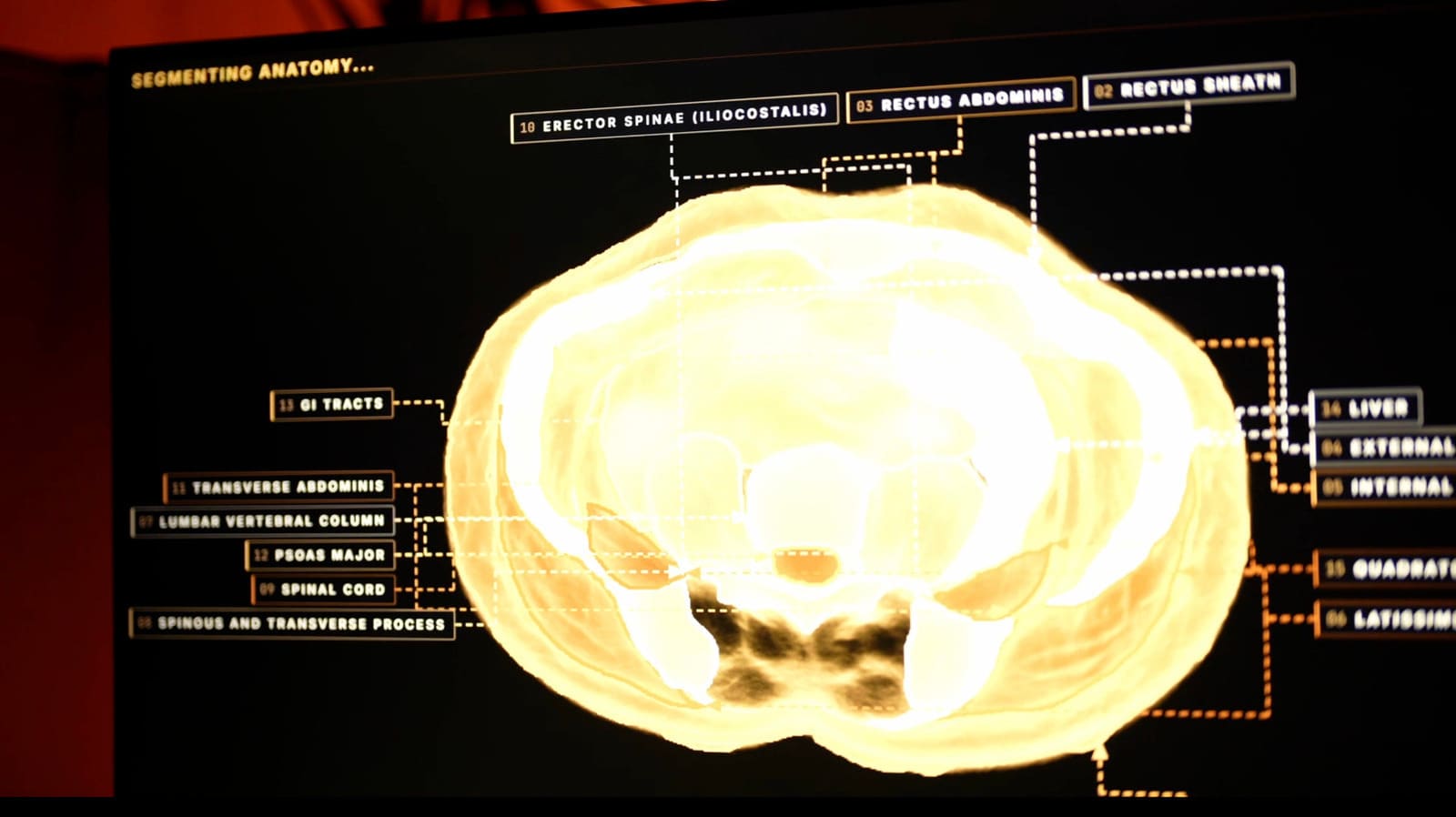
The scanner itself relies on a platform that submerges the user in water at a rate of two inches per second. A ring assembly containing half a million ultrasonic transducers - each described as the size of a grain of sand - emits waves and records the reflections, building a three-dimensional map of tissue and bone. Midjourney likens the process to echolocation used by dolphins. The result, according to the company, approaches the resolution of magnetic resonance imaging but completes in a fraction of the time: 60 seconds versus the 60 to 90 minutes typical of full-body MRI.
The Butterfly Network Connection
Midjourney is not building the core sensor technology in-house. In November 2025, the company signed an exclusive licensing agreement with Butterfly Network, a maker of handheld ultrasound devices that pioneered the use of ultrasound-on-chip architectures. That deal gives Midjourney rights to adapt Butterfly's semiconductor-based transducer arrays for its immersive scanner design.
Butterfly Network itself has spent years navigating the regulatory and reimbursement complexities of medical devices in the United States and Europe. Its handheld units, which connect to smartphones, received FDA clearance in multiple imaging categories and have been deployed in emergency departments and rural clinics. By licensing rather than inventing the underlying chip, Midjourney shortcuts much of the materials-science and signal-processing risk - but it inherits a dependence on a partner whose own product roadmap and capital position will influence timelines.
The project is led by Ahmad Abbas, Midjourney's head of consumer hardware, who joined in late 2023 after working on Vision Pro at Apple. That pedigree signals an intention to treat the scanner as a consumer experience, not merely a clinical instrument. The spa concept - walk-in appointments, ambient design, no white coats - echoes the Apple Store playbook and the membership models that have proliferated in wellness and diagnostics across Shanghai, Bangkok, and Singapore in recent years.
Timeline and Regulatory Gauntlet
Midjourney has laid out a phased rollout. Over the next twelve months, the company plans to refine algorithms, conduct research trials, and iterate on second-generation hardware. The first spa locations are slated to open in San Francisco in 2027. Crucially, the company will then seek FDA approval for diagnostic claims - a process that typically requires clinical validation, multi-site trials, and evidence of sensitivity and specificity benchmarked against existing modalities.
By 2028, Midjourney aims to launch third-generation machines incorporating custom silicon designed to improve image quality and processing speed. That is also the year the company describes as when things get serious, presumably meaning head-to-head comparisons with hospital-grade MRI and computed tomography. The ultimate ambition is 50,000 scanners deployed worldwide by 2031.
Those milestones rest on several assumptions. First, that the FDA grants clearance for a novel imaging modality whose clinical utility in asymptomatic screening remains to be demonstrated. Second, that Midjourney can secure the capital - likely in the range of hundreds of millions of dollars - to manufacture hardware at scale, operate a retail chain, and sustain a multi-year regulatory and go-to-market cycle. Third, that demand will materialize among consumers willing to pay out-of-pocket for imaging that may not yet be covered by insurers or integrated into clinical pathways.
The Screening Bet and Its Tensions
Midjourney's stated vision is preventive: early detection that could avert 30 percent of deaths and halve healthcare costs globally. That framing taps into a long-standing hope in medicine - catch disease early, treat it cheaply - but also a long-standing tension. Population-level screening with high-resolution imaging generates incidental findings, false positives, and downstream procedures that can harm patients and inflate costs. The balance between benefit and over-diagnosis has made full-body MRI controversial among radiologists and health economists, particularly when offered to healthy individuals outside of research protocols.
Ultrasound, because it uses sound rather than ionizing radiation, avoids one risk. But resolution, penetration depth, and interpretation remain open questions. Midjourney's comparison to MRI suggests it is targeting soft-tissue contrast and anatomical detail that go well beyond traditional ultrasound. Whether half a million tiny transducers, even when arrayed in a full-surround geometry, can deliver on that promise in lung, bone, and deep-abdomen imaging will be scrutinized by radiologists and the FDA alike.
There is also the data question. A 60-second scan of the entire body will generate gigabytes of raw signal. Processing that into interpretable images, flagging anomalies, and routing findings to physicians will require inference pipelines and likely some form of AI-assisted triage. Midjourney has deep experience training large models on image data, but medical imaging introduces labeling challenges, liability, and the need for explainability that generative art does not. The company has not yet detailed how it will handle clinical workflow integration, reporting standards, or the liability chain when a scan misses a tumor or flags a benign cyst.
Strategic Fit and Distraction Risk
Why would an AI image-generation company enter hardware-intensive, regulation-heavy healthcare? One reading is that Midjourney, having achieved product-market fit in creative tools, is seeking a second act with larger total addressable market and defensibility. Generative AI models face commoditization pressure as open-weight alternatives proliferate and compute costs fall. A proprietary hardware platform with exclusive sensor IP and a consumer brand could, in theory, command margins and lock-in that software subscriptions cannot.
Another reading is that the move reflects founder ambition and capital availability more than strategic coherence. Midjourney has historically been lean and profitable, funded by subscription revenue rather than venture rounds. If it now pursues hardware at scale, it will likely need external capital, term sheets, and the governance and reporting that come with them. That shift could alter the culture and risk appetite of a company that has until now operated more like a design studio than a hardware manufacturer.
The distraction risk is real. Building and certifying a medical device, operating retail locations, and managing supply chains for electromechanical assemblies are far removed from training diffusion models and serving API requests. The skill sets, regulatory fluency, and operational cadence do not overlap. Unless Midjourney can wall off the two businesses - separate teams, separate capital, separate management bandwidth - there is a non-trivial chance that the hardware bet slows iteration on the core AI product or that leadership attention fragments at a moment when text-to-video, 3D generation, and real-time rendering are moving fast.
Comparisons Across the Region
Midjourney's healthcare pivot invites comparison with other platform companies that have moved into medical imaging or diagnostics. In China, Tencent and Alibaba Cloud have deployed AI reading assistants for radiology and pathology in partnership with hospital networks, but neither has attempted proprietary scanning hardware. In South Korea, Samsung has leveraged its semiconductor and display capabilities to build ultrasound and MRI machines, but as an extension of an existing electronics conglomerate, not a software startup pivoting into hardware.
Startups like Butterfly Network and Exo Imaging in the United States, and Koshin Medical in Japan, have pursued portable ultrasound, but all began with a medical-device thesis from day one. Midjourney's trajectory - consumer software to medical hardware - is more reminiscent of moves by companies like Apple (watch to ECG and blood oxygen) or Amazon (Alexa to Halo wearables and telehealth), though neither of those involved imaging modalities or the regulatory lift of a full-body scanner.
The most direct parallel may be Theranos, not in terms of fraud, but in the attempt to collapse testing time, cost, and real estate into a consumer-friendly form factor with uncertain validation. That precedent has made the FDA and the clinical community wary of Silicon Valley health-hardware promises, particularly when they arrive with bold timelines and sparse published data.
What Comes Next
Midjourney has committed to research trials over the coming year. The design and publication of those studies - patient population, endpoints, comparator modality, independent review - will be the first substantive signal of whether the scanner can deliver clinical value or remains a high-concept prototype. If the company shares interim imaging results, radiologist read agreements, and benchmarks against MRI or CT in peer-reviewed venues, credibility will build. If it does not, skepticism will harden.
The spa rollout in San Francisco will test consumer appetite and operational feasibility. Pricing, throughput, customer acquisition cost, and retention will determine whether the model can scale beyond early adopters and wellness enthusiasts. The FDA submission, expected after 2027, will be the regulatory inflection point. Clearance for specific diagnostic indications - tumor detection, vascular imaging, musculoskeletal assessment - will open reimbursement pathways and hospital partnerships. A narrower clearance, or delays, will confine the scanner to the cash-pay wellness market, a smaller and more volatile segment.
Meanwhile, the core Midjourney AI business continues. The company has not announced any slowdown in model updates or feature releases. Whether it can sustain parallel execution - shipping v7 or v8 of its image model while standing up hardware manufacturing and clinical trials - will become clear over the next eighteen months.
The ambition is undeniable. A 60-second, MRI-equivalent scan delivered in a spa setting would be a genuine breakthrough, with implications for oncology, cardiology, and preventive medicine worldwide. But ambition in medical devices is necessary, not sufficient. Validation, regulation, reimbursement, and clinical adoption are the gates that separate vision from impact. Midjourney has now committed to walk through all of them. The question is whether it can do so without losing momentum in the business that made its name.