Nobel Chemist Behind AlphaFold Moves From DeepMind to Anthropic
John Jumper's departure marks the second high-profile exit from Google's AI unit this week, raising questions about talent retention at the search giant's research arm.
The Second Departure in a Week
John Jumper, co-recipient of the 2024 Nobel Prize in Chemistry, announced Friday that he is leaving Google DeepMind to join Anthropic after spending nearly nine years at the search giant's AI research division. The move comes just days after another prominent DeepMind researcher, Noam Shazeer, revealed he would be departing for OpenAI, signaling what may be a broader shift in how top-tier AI talent views the competitive landscape.
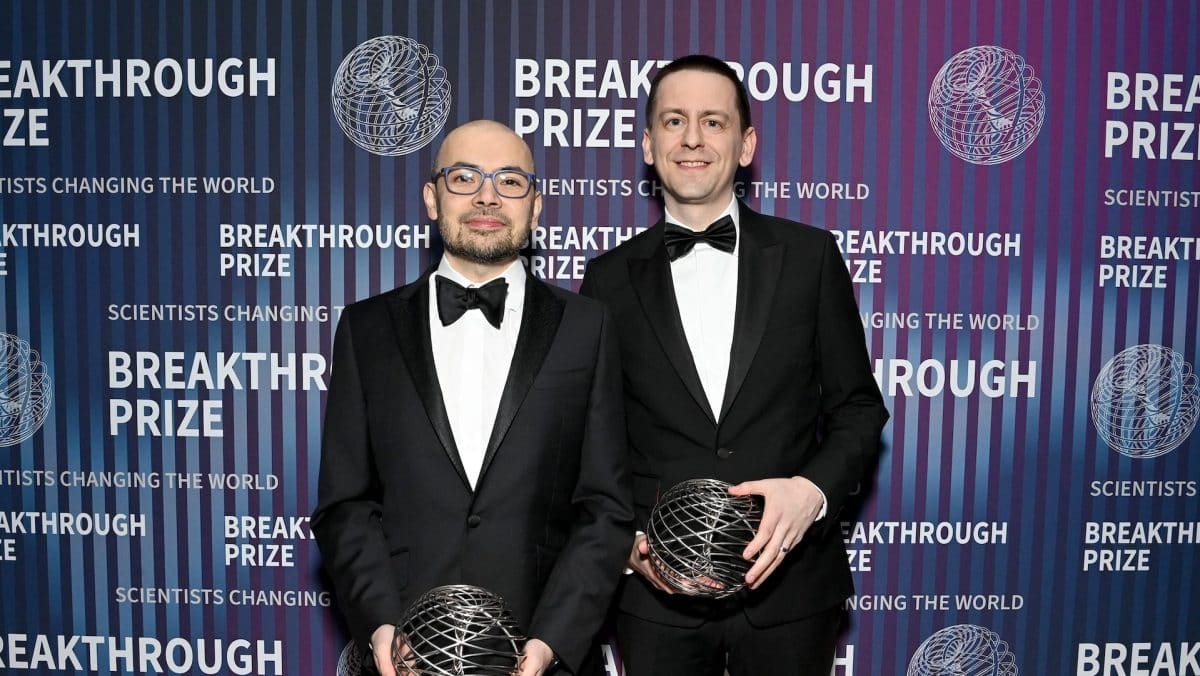
Jumper's exit is particularly striking given his central role in one of DeepMind's most celebrated scientific achievements: AlphaFold, the machine learning system that revolutionized structural biology by accurately predicting how proteins fold into three-dimensional shapes. The work earned Jumper and DeepMind CEO Demis Hassabis the Nobel Prize in Chemistry, a rare instance of AI research being recognized at the highest levels of scientific achievement.
At DailyTechWire, we've tracked the growing fluidity of talent movement between frontier AI labs over the past eighteen months. What once resembled a relatively stable ecosystem - with researchers spending years or even decades at institutions like DeepMind, OpenAI, or academic labs - has increasingly become a fast-moving market where individuals migrate toward projects, funding models, or organizational cultures that align with their evolving priorities.
From PhD to Nobel in Under a Decade
Jumper's trajectory at DeepMind was unusually swift. According to his public statements, Hassabis entrusted him with leading the AlphaFold team just six months after he completed his doctorate, an uncommon level of responsibility for someone so early in their career. That bet paid off spectacularly: AlphaFold has since been used by more than two million researchers worldwide, enabling breakthroughs in drug discovery, vaccine design, and fundamental biology.
The protein-folding problem had confounded scientists for half a century. Proteins are chains of amino acids that twist and coil into complex shapes, and those shapes determine their function in living organisms. Predicting structure from sequence alone was considered one of the grand challenges in computational biology. AlphaFold's success in solving this problem - demonstrated decisively at the 2020 Critical Assessment of Structure Prediction competition - marked a turning point not just for biology but for the credibility of deep learning in scientific domains.
Yet despite this landmark achievement, Jumper appears ready to turn his attention elsewhere. His decision to join Anthropic, a San Francisco-based AI safety and research company founded by former OpenAI executives, suggests he may be drawn to a different set of priorities than those that shaped his work on protein structures.
The Anthropic Appeal
Anthropic has positioned itself as a research organization focused on building interpretable, steerable AI systems. The company's flagship model, Claude, emphasizes safety, alignment, and what the firm calls constitutional AI - an approach that attempts to encode ethical principles directly into model behavior. For researchers concerned about the societal implications of increasingly powerful AI, Anthropic offers an institutional home that foregrounds those questions.
It is unclear what specific role Jumper will assume at Anthropic or whether his work there will continue to focus on scientific applications of AI. Protein folding, drug discovery, and materials science represent a distinct category of problems - high-value, well-defined, and amenable to experimental validation - compared to the general-purpose language and reasoning tasks that occupy much of the attention at labs like Anthropic and OpenAI.
One possibility is that Jumper will help Anthropic expand into domains where AI can be applied to physical sciences, an area the company has not emphasized publicly. Another is that he will contribute to foundational model development, leveraging his experience building specialized architectures for complex prediction tasks. Anthropic has not commented on Jumper's hiring or outlined his responsibilities.
Google's Commercialization Struggles
Jumper's departure also comes at a moment when Google faces mounting pressure to translate its AI research leadership into commercial advantage. The company has invested billions in DeepMind and related AI efforts, yet it has struggled to convert that work into products that businesses are willing to pay for at scale.
According to reporting, Jumper was involved in developing coding tools at Google, part of a broader push to compete with GitHub Copilot and other AI-assisted software development platforms. Those efforts have not gained significant traction in the enterprise market, where Microsoft and OpenAI have established early leads. Google's Gemini models, while technically impressive, have not yet achieved the market penetration or developer mindshare that OpenAI's GPT family enjoys.
This dynamic - world-class research that fails to translate into commercial dominance - has become a recurring theme for Google. The company invented the transformer architecture that underpins modern large language models, yet OpenAI captured the public imagination with ChatGPT. DeepMind pioneered reinforcement learning breakthroughs with AlphaGo and AlphaZero, yet those achievements have not yielded consumer or enterprise products with comparable impact.
For researchers who joined DeepMind to do foundational science, the increasing emphasis on product timelines and revenue targets may feel misaligned with their original motivations. Anthropic, by contrast, remains heavily focused on research, albeit with a strong normative bent toward safety and alignment.
A Broader Talent Reshuffle
The simultaneous exits of Jumper and Shazeer point to a broader reconfiguration of the AI research ecosystem. Shazeer, a co-founder of Character AI and a veteran of Google's early transformer work, is joining OpenAI, which has recently ramped up hiring of senior researchers as it prepares to scale its next generation of models. Jumper is moving to Anthropic, which has raised over seven billion dollars in funding and is expanding its research team.
Meanwhile, Google is contending with internal reorganization, cost pressures, and the challenge of integrating AI across its sprawling product portfolio. DeepMind was folded into a broader Google AI organization in 2023, a move that centralized resources but also diluted some of the research unit's autonomy and distinct culture.
Other frontier labs are also experiencing turnover. OpenAI has seen departures among safety-focused researchers, some of whom have raised concerns about the company's governance and prioritization of commercial goals. Meta's AI research division has remained relatively stable, though it too faces questions about how to balance open research with competitive pressures.
The result is an increasingly liquid talent market where individuals with specialized expertise in model training, alignment, or scientific applications can move between organizations with relative ease. This fluidity benefits researchers, who can negotiate better terms and find environments that match their values, but it also introduces instability for organizations trying to execute multi-year research agendas.
What It Means for DeepMind
Losing a Nobel laureate is more than a symbolic setback for DeepMind. Jumper's work on AlphaFold represented a proof point that AI could deliver transformative value in domains beyond language, vision, and games. It demonstrated that deep learning, applied thoughtfully to scientific problems, could accelerate discovery in ways that traditional computational methods could not.
His departure raises questions about whether DeepMind can sustain the culture and conditions that made AlphaFold possible. The project succeeded in part because Jumper and his team were given the freedom to pursue a difficult problem over multiple years without immediate pressure to monetize their work. That kind of patient capital and research autonomy may be harder to come by as Google's AI strategy becomes more tightly coupled to product roadmaps and quarterly performance.
At the same time, DeepMind retains formidable capabilities. Hassabis remains at the helm, and the organization continues to publish influential research across reinforcement learning, neuroscience-inspired architectures, and multimodal models. The AlphaFold team itself is still active, working on extensions of the original system and exploring related problems in biology and chemistry.
The Road Ahead
For Anthropic, Jumper's arrival is a significant win. The company has attracted a roster of accomplished researchers, but adding a Nobel laureate brings a level of credibility and visibility that few hires can match. It also signals that Anthropic is serious about expanding beyond its current focus areas, though the specifics of that expansion remain to be seen.
For the broader AI ecosystem, the moves underscore how quickly allegiances and organizational structures are shifting. The lines between academia, industry research labs, and startups have blurred to the point where individuals routinely cross them, carrying expertise and networks with them. This mobility accelerates the diffusion of ideas and techniques, but it also means that no single organization can count on retaining its top talent indefinitely.
Jumper's transition from DeepMind to Anthropic is not just a personnel change; it reflects evolving priorities within the AI research community. As models grow more capable and their societal implications become harder to ignore, researchers are increasingly weighing not just the technical challenges they want to work on but also the values and governance structures of the organizations they join. Whether Anthropic can offer Jumper the conditions to make another breakthrough on the scale of AlphaFold remains an open question - but his willingness to make the move suggests he believes the answer is yes.