Tensordyne Bets Logarithmic Math Can Crack the AI Accelerator Market
The startup has taped out a 3nm chip that sidesteps conventional multiplication - but the real test lies in software maturity and deployment timing against next-generation incumbents.
A Different Kind of Multiply
At DailyTechWire, we've tracked dozens of AI accelerator startups promising better performance-per-watt than Nvidia's datacenter GPUs. Most rely on architectural tweaks - sparse compute engines, domain-specific instruction sets, or novel interconnect topologies. Tensordyne, a stealth-mode infrastructure company that recently disclosed its first commercial silicon, has chosen a more fundamental path: changing the arithmetic itself.
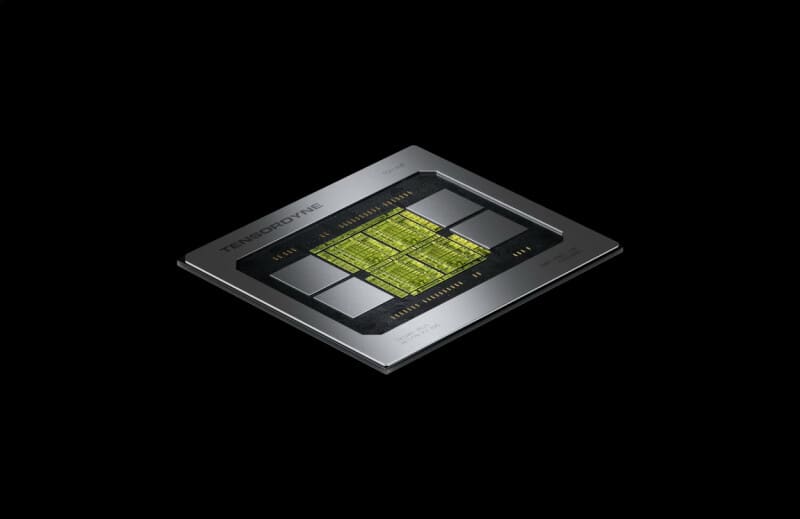
The company has completed tape-out of Napier, an AI inference accelerator fabricated on TSMC's 3nm node, and claims it can deliver seventeen times more inference tokens per watt than Nvidia's Blackwell architecture. The cornerstone of that efficiency gain is not a new memory hierarchy or a clever caching scheme, but logarithmic approximation - a mathematical transformation that converts multiplication into addition.
In conventional digital logic, addition consumes far fewer transistors and clock cycles than multiplication. Logarithms exploit this asymmetry. When you multiply two numbers in log space, the operation reduces to adding their logarithms: a × b becomes log(a) + log(b). The challenge, of course, is converting values into and out of log representation quickly and accurately enough to handle the torrent of matrix operations that define transformer inference.
Tensordyne cofounder Gilles Backhus explained that the company initially considered lookup tables to perform the conversions, but memory overhead made that approach impractical at scale. Instead, Napier implements the Mitchell approximation - a hardware heuristic that estimates logarithm and antilogarithm values on the fly. Because the Mitchell method introduces rounding error, Tensordyne layered in a section-wise correction mechanism that brings numerical precision into line with FP16, the workhorse format for most production inference today. The chip also supports FP8 and 4-bit block floating-point, giving operators flexibility to trade precision for throughput where models permit.
The result is a multiply-accumulate unit that never performs a conventional multiply. Whether that abstraction holds up under real workloads - especially at the trillion-parameter scale - will determine whether Tensordyne's architecture is a footnote or a turning point.
Silicon Specifications and Power Budget
Napier carries specifications that would have headlined a flagship GPU launch two or three years ago. The chip draws 300 watts at nominal load, integrates 144 GB of HBM3e across four stacks, delivers 4.7 TB/s of memory bandwidth, and claims up to 2.1 petaFLOPS of dense FP8 throughput. On paper, that positions it near Nvidia's H200 generation, but at roughly 40 percent of the power envelope.
Peak FLOPS figures are notoriously misleading - sustained utilization in production rarely approaches theoretical ceilings - but the power differential is substantial enough to warrant attention. If Tensordyne's logarithmic engine can maintain even 60 to 70 percent of peak across real inference traces, the efficiency advantage compounds quickly at rack scale.
Each Napier die exposes roughly one terabyte per second of interconnect bandwidth, enabling the company to scale out to 72 accelerators per pod without bottlenecking on chip-to-chip links. Tensordyne has built its rack topology around an all-to-all fabric architecture, with each accelerator connected to six proprietary switch blades developed in partnership with Juniper Networks. The design echoes the full-mesh connectivity Nvidia deployed in its NVL72 systems, but Tensordyne's implementation uses air cooling and fits into a more compact 52U enclosure.
The company's TDN72 system comprises eight compute blades, each housing a single 10-core Intel Xeon-D processor and nine Napier accelerators. Four of these systems can occupy a single 52U rack, yielding 608 petaFLOPS of FP8 compute in a 120-kilowatt footprint. That density metric edges out Nvidia's NVL72 by roughly 68 percent, though the comparison grows murkier when factoring in support for lower-precision formats and the maturity of runtime software.
Tensordyne is targeting brownfield datacenter operators who lack the infrastructure for liquid cooling or the floor space for oversized racks. Whether that positioning translates into design wins depends on how much performance customers are willing to sacrifice - or gain - by moving away from CUDA-compatible hardware.
The Deployment and Software Equation
Hardware specs matter less than software maturity in the accelerator market. Tensordyne's early prototypes lacked the error-correction circuitry now embedded in Napier, which would have forced customers into quantization-aware training workflows - a non-starter for organizations deploying pre-trained foundation models at scale. The production silicon resolves that gap, and the company has built a compiler toolchain capable of ingesting standard model checkpoints and emitting binaries for Napier without manual intervention.
For inference serving, Tensordyne has developed a proprietary runtime alongside adapters that allow integration with third-party frameworks such as vLLM. PyTorch support remains in development, a notable gap given the framework's dominance in research and production pipelines across Asia-Pacific AI labs.
Backhus projects that Napier will sustain over 1,000 tokens per second per chip in production inference, without relying on speculative decoding or multi-token prediction techniques that trade latency predictability for headline throughput numbers. If accurate, that figure would place Tensordyne in contention for latency-sensitive applications - chatbots, code-completion engines, and real-time translation services - where consistency matters as much as raw speed.
Two neocloud providers, Cirrascale and BlueSky Compute, have signaled intent to deploy Tensordyne hardware upon availability. Both operate infrastructure tailored to ML workloads and maintain customer bases willing to experiment with non-Nvidia silicon, particularly when power and density constraints bind capacity expansion. Still, expressions of interest are not purchase orders, and the gap between pilot deployments and production scale is wide.
Timing, Competition, and the Vera Rubin Shadow
Tensordyne is targeting commercial availability in the second or third quarter of 2027. That schedule positions Napier against Nvidia's Vera Rubin and Vera Rubin Ultra architectures, both of which will have had additional process node improvements, larger HBM capacities, and years of software optimization behind them. Nvidia's CUDA moat remains formidable; even AMD, with decades of GPU heritage and backing from hyperscalers, has struggled to capture more than single-digit inference market share outside of specific workloads.
Logarithmic computing is not a new idea - researchers have explored log-domain arithmetic for signal processing and neural networks for years - but Tensordyne is among the first to productize it in a commercial AI accelerator at this scale. The architectural risk is that real-world model sensitivity to numerical precision proves higher than controlled benchmarks suggest, particularly in fine-tuning, multi-modal fusion, or long-context scenarios where error accumulation can degrade output quality.
The business risk is more straightforward: software ecosystems take years to mature, and customers building inference infrastructure in 2027 will weigh the marginal efficiency gains of a novel architecture against the operational cost of supporting a second toolchain, a second set of runtime dependencies, and a second vendor relationship. Tensordyne's compiler may be able to ingest PyTorch models, but edge-case debugging, performance profiling, and kernel optimization still require domain expertise that most organizations have built around CUDA.
The Asia Angle and Broader Implications
Tensordyne's partnership with Juniper Networks and Broadcom - both of which have deep relationships with hyperscale and telco customers across Asia-Pacific - suggests the company is eyeing deployments in Singapore, Seoul, and emerging AI hubs in Southeast Asia, where power costs and datacenter density constraints are acute. TSMC's 3nm process, the same node underpinning Apple's latest mobile processors, offers leading-edge transistor density and power efficiency, but also comes with premium wafer pricing and long lead times.
If Tensordyne can demonstrate that its logarithmic approach delivers materially better inference economics - measured not in FLOPS but in cost per million tokens, including power, cooling, and floor space - it may find traction among regional cloud providers and telcos building out sovereign AI infrastructure. Governments in India, Vietnam, and Indonesia have signaled intent to reduce dependence on U.S.-headquartered cloud platforms, and hardware diversity is one lever in that strategy.
The broader implication is that the AI accelerator market is fragmenting along workload lines. Training remains GPU-dominated, but inference is splintering into latency-sensitive, throughput-optimized, and edge segments, each with different cost structures and performance envelopes. Tensordyne is betting that logarithmic arithmetic can carve out a defensible position in the throughput-optimized segment, where power efficiency and rack density matter more than peak FLOPS.
Whether that bet pays off depends on execution across silicon, software, and go-to-market - and on how quickly Nvidia's roadmap closes the efficiency gap that startups like Tensordyne are attempting to exploit. The next eighteen months will clarify whether logarithmic computing is a viable alternative or an elegant detour in the search for post-GPU architectures.
We'll be watching the software milestones as closely as the silicon ones. Chips are only as useful as the code they run, and in AI infrastructure, the winner is rarely the one with the best arithmetic - it's the one developers choose to target.