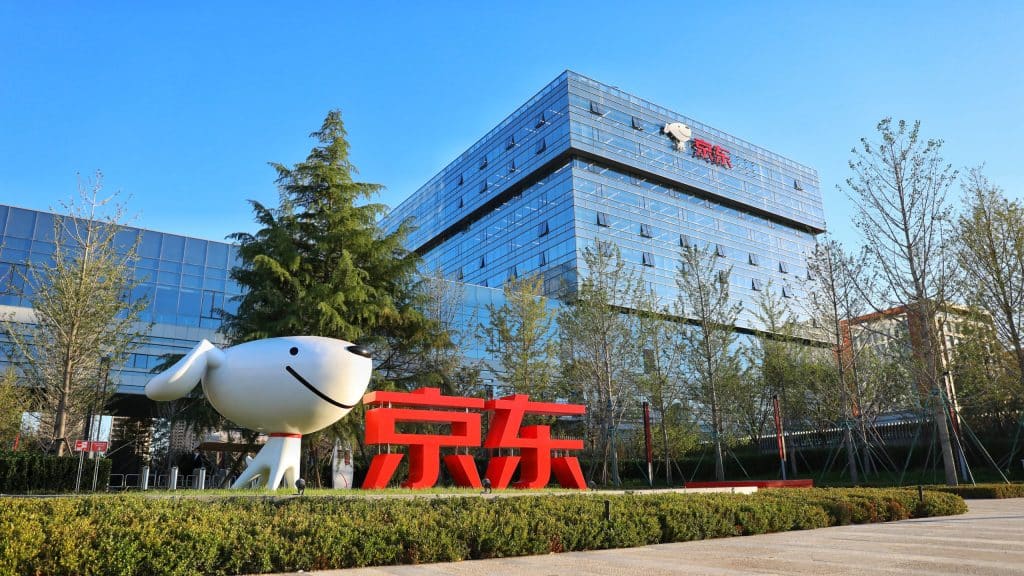
Baidu Edges Past Waymo in New Autonomous Vehicle Rankings
A generative AI benchmarking platform reveals China's lead across robotaxi, trucking, and delivery categories, challenging assumptions about which markets are winning the self-driving race.
A Decade-Old Question, Finally Quantified
For years, the autonomous vehicle industry has debated who leads the race toward driverless mobility. A decade ago, the conversation was heavy on speculation and light on verifiable metrics. Demos proliferated, capital poured in, but the public had little concrete data to assess which companies were actually scaling deployments, generating revenue, or maintaining safety records that mattered.
This week, advisory and research startup Autnmy AI released the Road to Autonomy Index, a generative AI platform designed to benchmark and rank autonomous vehicle companies in real time. The system draws from federal and state regulatory filings, SEC documents, public exchanges, and other verified databases, updating every twelve hours. It evaluates companies across operations, scale, revenue, commercial partnerships, manufacturing capacity, and safety performance.
The index is divided into four categories: robotaxis, autonomous driving licensing providers, autonomous trucks, and delivery robots. What emerges is a global view that diverges sharply from Silicon Valley-centric narratives.
China Dominates the Robotaxi Leaderboard
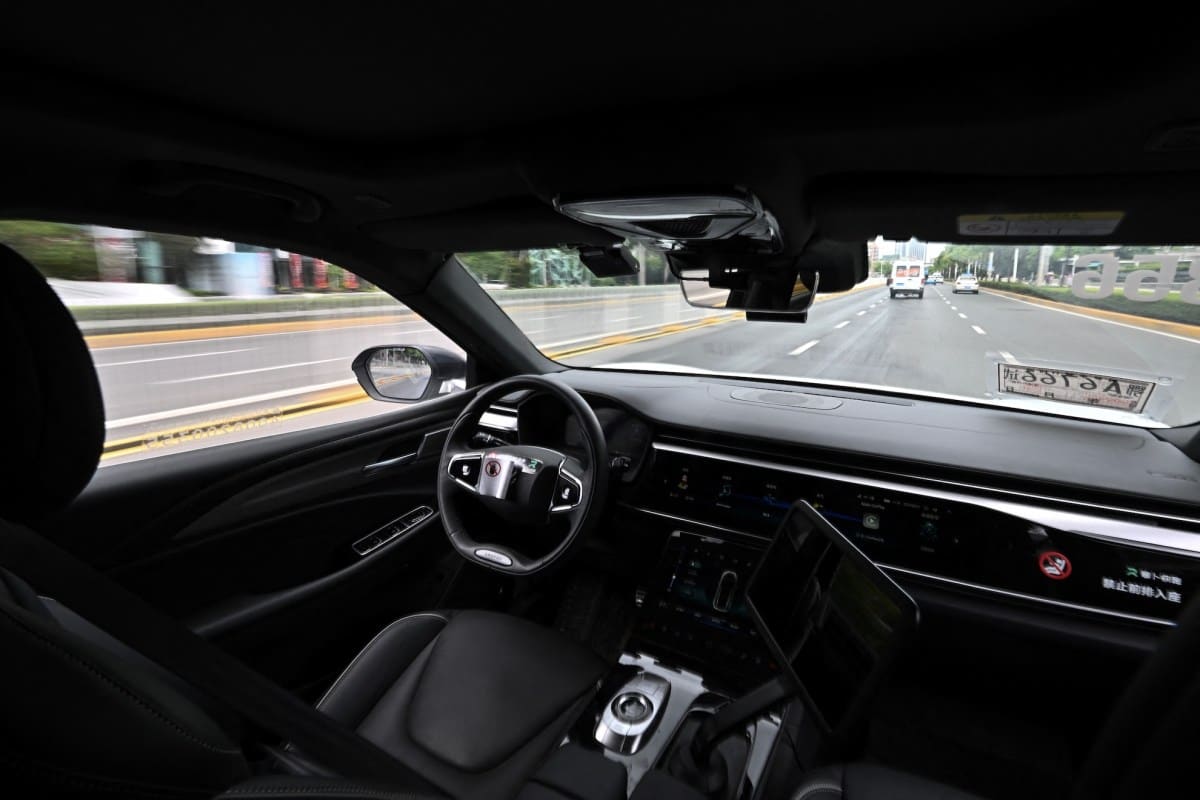
As of the latest update, Baidu's Apollo Go program holds the top position in the robotaxi category, narrowly ahead of Waymo. Pony.ai and WeRide, both Chinese, occupy third and fourth place, respectively. Tesla rounds out the top five.
The result surprised even Autnmy AI co-founder Rob Grant. At DailyTechWire, we've tracked the rapid expansion of robotaxi services in Wuhan, Shenzhen, and Beijing over the past eighteen months. Baidu Apollo Go alone reported more than six million rides in Wuhan by the end of 2025, with a fleet exceeding 400 vehicles in that city. Pony.ai and WeRide have similarly scaled operations in Guangzhou, Shenzhen, and other tier-one cities, supported by municipal governments eager to position themselves as testbeds for autonomous mobility.
Waymo, by contrast, operates primarily in San Francisco, Phoenix, and Los Angeles, with a smaller footprint in Austin. While the company's technology is widely regarded as mature, its geographic and operational scale remains constrained relative to Chinese competitors that benefit from regulatory tailwinds, government subsidies, and dense urban environments conducive to high ride volumes.
Grant emphasized that the index does not rely on web scraping. "If it's publicly available or available under a Creative Commons license, we will use that information," he said. "We do have some licensed data that we pay for, and under that agreement too." This approach aims to ensure data provenance and avoid the noise that plagued earlier attempts to rank AV companies.
What the Index Measures and What It Misses
The Road to Autonomy Index weights multiple variables: fleet size, revenue streams, partnerships with automakers or logistics firms, manufacturing capabilities, and safety incidents. Companies that generate commercial revenue, operate without safety drivers, and maintain transparent reporting score higher.
But the methodology has limitations. It privileges publicly disclosed data, which means privately held companies with less regulatory obligation to report may appear weaker than they are. It also cannot easily capture qualitative factors such as software robustness, edge-case handling, or the sophistication of sensor fusion architectures.
Tesla's fifth-place ranking is illustrative. The company has deployed Full Self-Driving software to millions of consumer vehicles, generating vast quantities of real-world data. But because Tesla does not operate a dedicated robotaxi service at commercial scale and has faced regulatory scrutiny over safety claims, its position in the index reflects operational reality rather than technological potential.
Similarly, the index does not yet account for companies operating in stealth or those focused on private deployments. Zoox, for instance, is building a custom-built robotaxi and expanding its fleet in Texas, but it cannot charge passengers until it receives a federal exemption. Such nuances are difficult to capture in a purely data-driven ranking.
Texas Emerges as a Deployment Hub
Separately, data from Texas's automated vehicle tracker, launched in May, reveals a surge in AV registrations. Waymo's fleet in the state grew from 577 vehicles on May 28 to 620 by late June, a 7.5 percent increase. Tesla registered 69 autonomous vehicles, up 64 percent from 42 a month earlier. Zoox expanded from 35 to 43 vehicles.
Texas has become a strategic deployment zone for multiple reasons. The state imposes minimal regulatory friction on AV testing and commercial operations, offers diverse driving environments from urban Austin to sprawling Houston suburbs, and provides access to major logistics corridors. Waymo announced plans to expand service in Austin, while Tesla is widely believed to be preparing a robotaxi launch in the state, though the company has not confirmed timing or operational details.
Zoox's growth is particularly notable. The company, owned by Amazon, has been testing its purpose-built vehicle in Las Vegas, Foster City, and now Texas. It cannot charge fares until the National Highway Traffic Safety Administration grants an exemption for vehicles without traditional controls, a process that has stretched longer than the company anticipated. Still, the fleet expansion signals confidence that regulatory approval will arrive.
Mobileye Pivots Toward Robotaxi Operations
In a related development, Mobileye announced plans to launch a robotaxi service in an unnamed U.S. city in 2027. The move represents a strategic shift for a company that has long positioned itself as a supplier of autonomous driving technology to automakers rather than an operator of mobility services.
Mobileye CEO Amnon Shashua argued as early as 2020 that robotaxis are the necessary precursor to achieving full autonomy in consumer vehicles. The logic: operating a controlled fleet in a defined geographic area allows for faster iteration, clearer liability structures, and higher-quality data collection than distributing software across millions of privately owned cars with unpredictable usage patterns.
The announcement also reflects the reality that automakers have been slow to adopt Level 4 autonomy in consumer models. By operating its own service, Mobileye can demonstrate the viability of its technology, generate revenue, and create a reference deployment that might persuade OEM partners to integrate its systems.
Waymo Recalls Fleet Over Construction Zone Incidents
Waymo issued a recall affecting nearly 4,000 robotaxis after identifying at least thirteen instances in which vehicles drove into highway sections closed for construction. The company voluntarily removed its vehicles from freeways weeks ago while it investigates the issue.
According to Waymo, a software fix is under development, meaning the problem remains unresolved. The incidents highlight a persistent challenge in autonomous driving: recognizing and responding to temporary changes in road infrastructure. Construction zones often feature inconsistent signage, shifting lane configurations, and the presence of human workers, all of which complicate perception and planning algorithms.
Waymo's decision to pull vehicles from freeways underscores the company's cautious approach to safety, but it also illustrates the brittleness that can emerge even in mature AV systems. The company has logged millions of autonomous miles and operates commercially in multiple cities, yet edge cases continue to surface.
Partnerships Signal Industry Consolidation
Several deals announced in recent weeks point to consolidation and vertical integration across the AV ecosystem. Stellantis, Wayve, and Uber formed a partnership to develop and deploy robotaxis, combining Stellantis's manufacturing scale, Wayve's end-to-end learning approach, and Uber's mobility platform.
Gatik, which operates autonomous trucks for short-haul logistics, secured a multi-year partnership with PepsiCo, expanding its driverless operations across Arkansas, Arizona, and Texas. The deal signals PepsiCo's commitment to autonomous freight as a lever for cost reduction and supply chain resilience.
Meanwhile, QuantumScape and Honda R&D announced a joint research agreement focused on solid-state battery development and manufacturing. While not directly tied to autonomy, the partnership reflects the interdependence of AV deployment and battery technology. Longer range, faster charging, and improved safety are prerequisites for scaling electric robotaxi fleets.
What This Means for the Industry
The Road to Autonomy Index offers a data-driven counterweight to the narratives that dominate AV discourse in the West. For years, the assumption has been that U.S. companies, particularly Waymo and Cruise, lead the world in autonomous technology. The index suggests that lead is narrower than many assumed, and that Chinese companies have achieved operational scale that rivals or exceeds their American counterparts.
This has implications for policy, investment, and technology development. If Chinese firms continue to expand domestically and begin exporting AV services or technology to Southeast Asia, the Middle East, and other regions, they could set de facto global standards. U.S. policymakers and industry players will need to decide whether to compete on scale, double down on technological differentiation, or pursue partnerships that bridge ecosystems.
The index also raises questions about transparency. Companies that disclose more data may rank higher, but that does not necessarily mean they are safer or more capable. Conversely, companies that operate behind closed doors may be underestimated. As the AV industry matures, the pressure for standardized reporting and third-party validation will only intensify.
At DailyTechWire, we see the Road to Autonomy Index as a useful starting point, not a definitive answer. The race toward autonomous mobility is not winner-take-all, and the metrics that matter will evolve as the technology and business models mature. But for the first time, the industry has a tool that attempts to measure progress in a systematic, global, and near-real-time manner. That alone is progress.