Xiaomi Pushes Custom Silicon Strategy as Margins Tighten
The Beijing smartphone maker is accelerating its proprietary chip roadmap even as component costs rise and quarterly earnings slide, betting that vertical integration will unlock AI workloads across devices.
A Bet on Vertical Integration During Turbulence
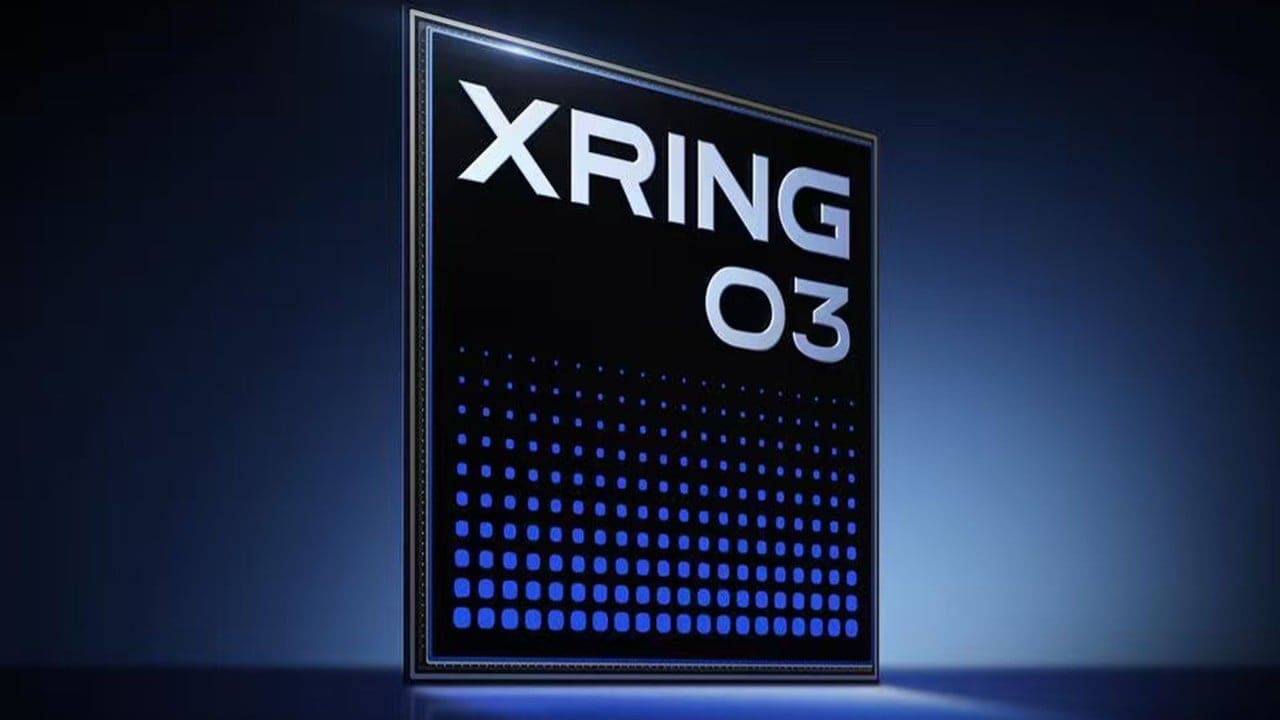
Xiaomi introduced two proprietary processors this week: the Xring O3, a 3-nanometre chip designed for flagship smartphones, and the Xring O100, a 6-nanometre part aimed at automotive AI tasks. The O3 is slated to power the Xiaomi 18 Fold when that device ships in September, while the O100 will find a home in the company's electric-vehicle platform. The announcements come at a moment when Xiaomi's most recent quarterly profit fell and input costs for advanced nodes have climbed across the industry.
At DailyTechWire, we've tracked a wave of Chinese handset and EV makers investing in captive silicon over the past eighteen months, even as export controls tighten access to cutting-edge lithography and design tools. Xiaomi's decision to press ahead suggests management sees custom chips less as a cost-saving exercise and more as a moat, a way to differentiate performance and power efficiency in categories where off-the-shelf system-on-chips have become commoditized.
Why Proprietary Silicon Matters for AI Inference
Modern smartphone and automotive workloads increasingly lean on local inference: voice assistants that parse commands without pinging a cloud server, camera pipelines that apply scene recognition in real time, and driver-monitoring systems that need sub-50-millisecond latency. Generic application processors can handle these tasks, but tuning a chip's neural-processing unit, memory hierarchy, and power gates for specific models delivers measurable gains in frames per second, battery life, and thermal headroom.
Xiaomi's Xring O3, built on a 3-nanometre process, dedicates a larger fraction of die area to tensor cores and on-chip SRAM than the multi-market parts sold by incumbent suppliers. That architectural choice allows the phone to run heavier transformer models, the kind used for multi-modal search and generative text, without throttling the CPU or draining the battery inside an hour. The O100, meanwhile, targets perception fusion: stitching lidar, radar, and camera streams into a unified world model that an autonomous driving stack can consume.
Both chips reflect a broader industry trend. As foundry pricing for advanced nodes rises and geopolitical friction restricts access to the latest extreme-ultraviolet scanners, companies that can amortize design costs across high volumes gain an edge. Xiaomi shipped roughly 40 million smartphones in the second quarter, a volume that justifies the engineering expense of a custom SoC even if per-unit silicon cost remains higher than buying from a merchant vendor.
The Financial Tension: Rising R&D Against Falling Profit
Xiaomi's most recent earnings showed profit under pressure. Component inflation, particularly for memory and display panels, has squeezed gross margin, and the company's push into electric vehicles has added a second capital-intensive business line that won't break even for several quarters. Against that backdrop, ramping a multi-year chip-development program might seem counterintuitive.
Yet the calculus changes when you consider the trajectory of AI workloads. A phone that can run a 7-billion-parameter language model on-device opens new revenue streams: subscription services for advanced photo editing, real-time translation that works offline, and developer platforms that let third-party apps tap the NPU. Those software layers carry higher margins than hardware and create stickiness that discourages users from switching brands.
In the automotive domain, the stakes are even higher. An EV's software-defined architecture means over-the-air updates can unlock new driver-assistance features years after purchase, turning a one-time hardware sale into a recurring-revenue relationship. Owning the inference chip gives Xiaomi control over the feature roadmap and the ability to optimize power budgets, both of which matter when range anxiety remains the top barrier to EV adoption in China's tier-two and tier-three cities.
Regional Context: China's Silicon Self-Sufficiency Push
Xiaomi's chip strategy sits inside a larger national effort to reduce reliance on imported semiconductors. Beijing has channeled subsidies into domestic foundries, electronic-design-automation startups, and packaging houses, aiming to build an end-to-end supply chain that can withstand export restrictions. Companies like Xiaomi benefit indirectly: even if they tape out designs with an overseas foundry today, the engineering teams they build and the intellectual property they accumulate become strategic assets if access to foreign nodes tightens further.
Other Chinese device makers are following similar paths. Oppo and Vivo have both disclosed work on imaging co-processors, while several EV startups have announced partnerships with domestic chip designers to create custom compute modules for autonomous driving. The common thread is a willingness to absorb near-term losses in exchange for long-term control over the technology stack.
That shift has consequences beyond China. If a handful of high-volume brands succeed in designing competitive AI accelerators in-house, the merchant SoC market shrinks, putting pressure on suppliers that have historically served the Android ecosystem. It also fragments software optimization: developers who want to target Xiaomi's NPU, Oppo's imaging engine, and a third vendor's voice processor must maintain separate code paths, raising the barrier to entry for smaller app studios.
What the Roadmap Signals
Xiaomi has not disclosed a full multi-generation roadmap, but the decision to build both a 3-nanometre smartphone chip and a 6-nanometre automotive part in parallel suggests the company sees these two product lines converging over time. Future vehicles will likely incorporate the same large-language models that run on phones, enabling voice assistants that understand context across devices and cloud services that sync preferences seamlessly.
The technical challenge lies in thermal design. A phone can dissipate perhaps five watts continuously; a car's compute stack can draw ten times that, but the module must survive temperature swings from minus 40 to plus 85 degrees Celsius and operate for a decade without performance degradation. Xiaomi's automotive chip uses a more mature process node in part because 6-nanometre yields are higher and the transistors are less prone to electromigration under sustained load.
If the O3 and O100 meet their performance targets when devices ship later this year, expect Xiaomi to accelerate the cadence. A 2-nanometre smartphone part could arrive in 2027, and a second-generation automotive chip with dedicated transformer engines might follow twelve months later. Success will hinge on whether the software ecosystem, particularly third-party developers, embraces Xiaomi's APIs and whether consumers perceive a meaningful difference in everyday tasks.
Risks and Trade-Offs
Vertical integration carries execution risk. Designing a competitive chip requires retaining engineers with expertise in physical design, verification, and power modeling, all of whom command premium salaries in a tight labor market. If Xiaomi's silicon team misses a performance or power target, the company cannot simply switch suppliers mid-cycle the way it could with an off-the-shelf part.
There is also the question of return on investment. Xiaomi's smartphone shipments have plateaued in several key markets, and the EV business remains subscale. If volumes fail to grow, the per-unit cost of custom silicon will remain stubbornly high, eroding any margin benefit. Competitors that stick with merchant chips retain the flexibility to pivot quickly when a new architecture or process node becomes available.
Finally, export controls remain a wildcard. If access to advanced packaging, high-bandwidth memory, or next-generation lithography tightens further, Xiaomi's ability to execute its roadmap could be constrained, forcing the company to rely on older nodes or alternative architectures that sacrifice performance.
Even so, the move to proprietary silicon reflects a clear strategic judgment: in a world where AI inference is migrating to the edge, control over the chip that runs those models is worth the cost and complexity. Whether that judgment proves correct will become evident over the next two product cycles, as Xiaomi's devices reach the market and users decide if the on-device AI features justify the price premium.