TSMC's Supply Chain Inches Closer to Taiwan as Nichias Plans Local Production
Japanese materials supplier partners with Gold Stone to manufacture critical plastic components on the island, reducing reliance on imported chipmaking infrastructure
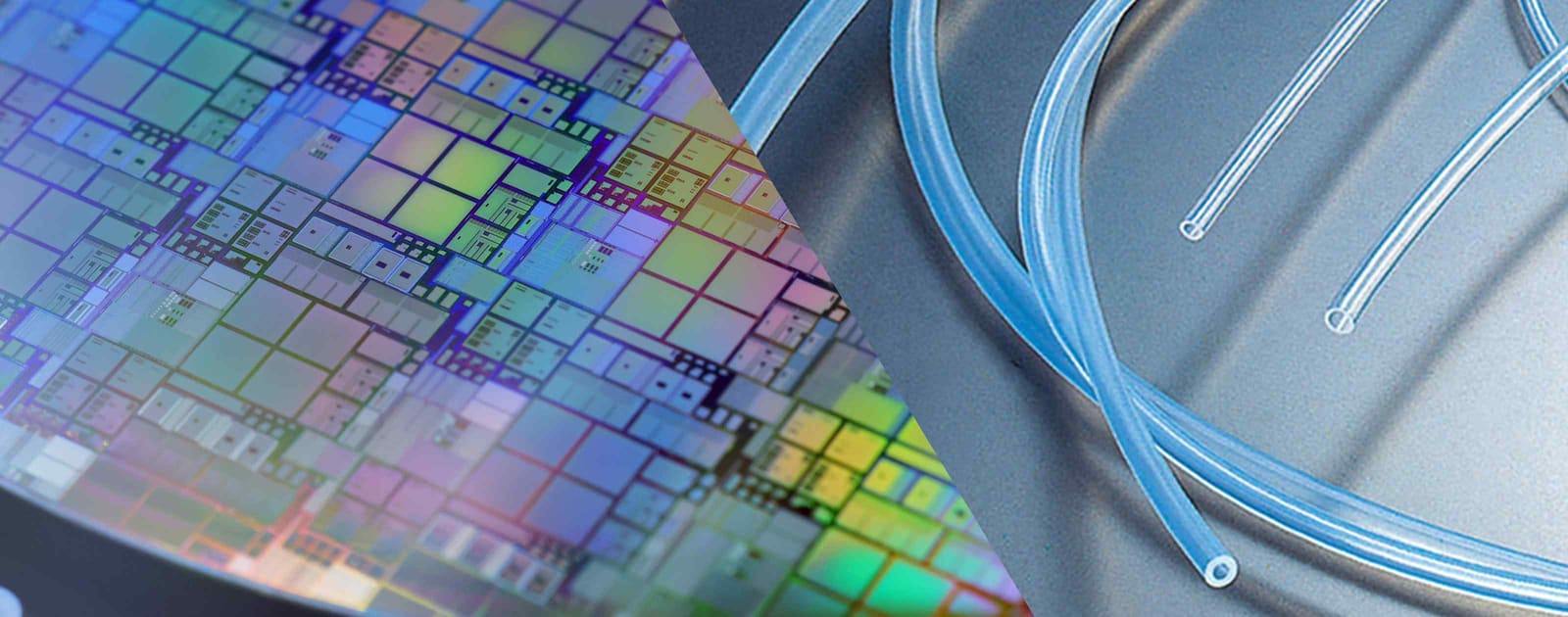
The Invisible Tubes That Keep Fabs Running
Inside every advanced semiconductor fabrication facility, a network of specialized plastic tubes quietly performs one of the most critical tasks in chipmaking: transporting ultra-pure chemicals without contamination. These perfluoroalkoxy (PFA) tubes must withstand corrosive substances, maintain zero particle shedding, and deliver liquids at precise temperatures. When supply runs short, entire production lines stall.
That vulnerability is now driving Nichias, a key materials supplier to TSMC, to localize production. The Japanese company is partnering with Gold Stone Development to construct a manufacturing plant in Taiwan dedicated to these essential plastic components, according to Nichias. The move represents a broader shift in semiconductor supply chains: rather than relying on long-distance logistics for every input, leading chipmakers are pulling more of their material suppliers onto the same island where the world's most advanced chips are made.
At DailyTechWire, we've tracked how supply chain fragility has repeatedly delayed capacity expansions across Asia's foundries. The decision to manufacture PFA tubing locally in Taiwan signals that the industry has learned its lesson. Geography is no longer just about labor costs or tax incentives. It's about resilience when a single day of downtime can cost tens of millions of dollars.
Why Plastic Tubes Matter More Than You Think
PFA tubes are not commodity items. They form the circulatory system of a fab, channeling photoresists, etchants, cleaning solvents, and dopants from storage tanks to process tools. Any degradation, outgassing, or particle release contaminates wafers and destroys yield. As nodes shrink to 3 nanometers and below, tolerance for impurities approaches zero.
Nichias has supplied these components to TSMC for years, but production has historically been concentrated in Japan. That geographic separation created lead-time risk. When TSMC accelerated its capacity buildout in 2023 and 2024, driven by AI chip demand, materials suppliers struggled to keep pace. Shipping delays, customs bottlenecks, and inventory mismatches became recurring friction points.
The new Taiwan facility aims to eliminate that lag. By co-locating production near TSMC's Hsinchu and southern Taiwan fabs, Nichias and Gold Stone can respond to demand surges within days instead of weeks. This is especially important as TSMC ramps 2-nanometer production in 2025 and prepares for sub-2-nanometer nodes, where process complexity and chemical usage both increase.
Localizing the Invisible Layer of Chipmaking
The partnership between Nichias and Gold Stone Development reflects a broader reconfiguration of Taiwan's semiconductor ecosystem. Gold Stone, a Taiwanese industrial materials firm, brings local real estate, regulatory navigation, and workforce access. Nichias contributes process know-how and quality control systems honed over decades in Japan's precision manufacturing sector.
This is not a technology transfer in the traditional sense. It's a hybrid model: Japanese engineering standards applied to Taiwan-based production, optimized for the unique demands of the island's fabs. The plant will manufacture PFA tubes in various diameters and configurations, tailored to specific process tools used by TSMC and other Taiwanese chipmakers.
The timing aligns with Taiwan's push to deepen its semiconductor supply chain. Over the past three years, the island has attracted investments in photoresist production, specialty gases, and advanced packaging materials. PFA tubing is another piece of that puzzle. Each localized supplier reduces the number of potential choke points that could halt production.
The Bottleneck That Almost Derailed Expansion
Supply chain disruptions in 2022 and 2023 exposed how dependent Taiwan's fabs were on imported materials. Nichias, along with other Japanese suppliers, faced logistics snarls as air freight capacity tightened and container shipping costs spiked. Lead times for certain materials stretched from four weeks to twelve.
For TSMC, which operates on razor-thin inventory buffers to minimize working capital, those delays forced uncomfortable choices: slow down new tool installations, ration materials across fabs, or pay premiums for expedited shipping. None of those options scaled well when the company was simultaneously trying to meet surging demand for AI accelerators and high-performance compute chips.
Nichias' decision to build in Taiwan addresses that structural weakness. It also reflects a calculation that demand for advanced chips and the materials that enable them will remain elevated for years. AI training and inference workloads continue to grow. Edge compute, autonomous systems, and next-generation data centers all require leading-edge silicon. That creates sustained demand for the unglamorous but essential components like PFA tubes.
What This Means for Asia's Chip Corridor
The Nichias-Gold Stone plant is part of a larger pattern: the center of gravity in semiconductor materials is shifting from Japan to Taiwan. Japanese firms still dominate in precision chemicals and advanced polymers, but production is migrating closer to the fabs that consume them.
This localization trend has implications beyond logistics. It tightens the integration between toolmakers, materials suppliers, and foundries. When a materials supplier operates next door, it can co-develop formulations and components in real time, shortening innovation cycles. That's a competitive advantage for Taiwan's chip ecosystem, especially as Samsung and Intel push to close the gap with TSMC.
It also raises questions about redundancy. Concentrating more of the supply chain in Taiwan increases efficiency but also increases exposure to geopolitical risk and natural disasters. The industry's answer so far has been selective diversification: build in Taiwan for speed, maintain backup capacity in Japan and elsewhere for insurance.
The Quiet Infrastructure Race
While headlines focus on new fabs and nanometer milestones, the real infrastructure race in semiconductors is happening one layer beneath: in the suppliers who make the tools, chemicals, and components that enable those fabs to run. Nichias' move is a quiet but significant data point in that race.
Taiwan's government has supported these investments with streamlined permitting and, in some cases, financial incentives. The goal is to ensure that the island's dominance in foundry services isn't undermined by dependence on imported materials. Every localized supplier strengthens that position.
For Nichias, the Taiwan plant is both a defensive and offensive move. Defensive, because it protects existing revenue streams from logistics risk. Offensive, because it positions the company to capture a larger share of wallet as TSMC and other Taiwanese foundries expand. Materials suppliers who can deliver just-in-time, with shorter feedback loops, will win more business than those shipping from overseas.
The plant's construction timeline and capacity details have not been disclosed, but industry observers expect it to be operational within 18 to 24 months. That would align with TSMC's next wave of capacity additions and the broader ramp of 2-nanometer and advanced packaging lines across Taiwan.
As chip manufacturing grows more complex and capital-intensive, the invisible infrastructure that supports it becomes more critical. PFA tubes may not be glamorous, but they're emblematic of the hundreds of specialized inputs that must scale in lockstep with leading-edge production. Getting those inputs right, and getting them close, is the difference between a resilient supply chain and a fragile one.