Why Silicon Valley Now Sees Foreign AI Founders as a Competitive Advantage
Andreessen Horowitz is logging million-mile travel budgets chasing international dealflow as enterprise buyers worldwide accelerate AI adoption faster than U.S. startups can serve them.
The Calculus Has Shifted
Forty-four percent of investments in the first two Apps Funds at Andreessen Horowitz went to startups with at least one international founder. That statistic alone would have been unremarkable a decade ago, when Silicon Valley's draw for global talent was well documented. What has changed is the reasoning behind it.
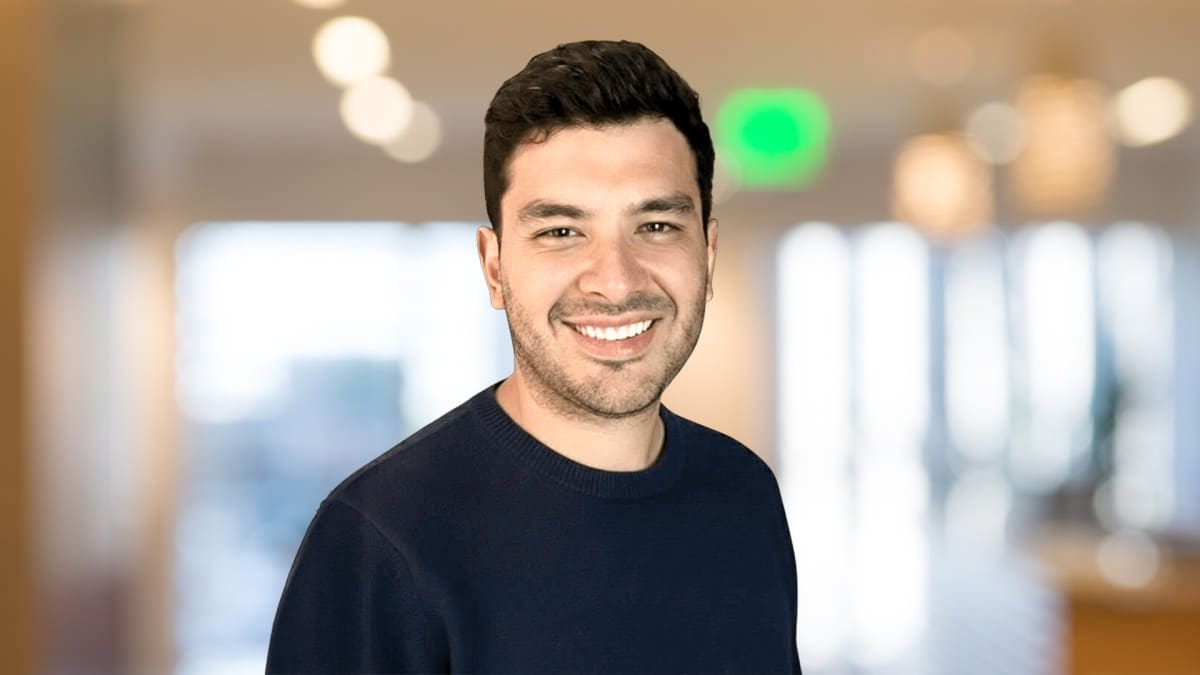
Gabriel Vasquez, a partner at the firm who leads its Borderless Founder network alongside Angela Strange, puts it plainly: having roots outside the United States is no longer just acceptable - it is an advantage. The duo has spent more than a million air miles pursuing dealflow in markets that used to be considered secondary at best. At DailyTechWire, we have tracked venture capital shifting its geographic priorities before, but this marks a pronounced strategic reversal in how tier-one firms evaluate founder origin.
The shift is not philosophical. It is transactional, driven by where customers are signing contracts and how quickly they are doing it.
Enterprise Buyers Outside the U.S. Are Moving Faster
Five years ago, enterprise software startups targeting non-U.S. buyers faced a familiar problem: slow procurement cycles and low willingness to pay. Corporations in Europe, Latin America, and parts of Asia would engage with startups through innovation labs or accelerators but rarely converted into paying customers with meaningful contract values. France even launched a national initiative to encourage procurement from local tech companies, a tacit acknowledgment that the default behavior was inertia.
That pattern has broken. According to Vasquez, seed-stage startups with international founders are now closing deals with Fortune 500 companies in markets previously considered risk-averse. When those early reports began surfacing, the firm initially treated them as outliers. They were not. The volume and velocity of enterprise AI adoption outside the U.S. has surprised even seasoned investors.
AI is the catalyst. Legacy enterprises globally have concluded that third-party AI solutions are not optional. Even in regions where labor costs remain low - Latin America being a prime example - companies are deploying AI agents for customer service, operations, and back-office functions. The automation case is no longer about cost arbitrage alone; it is about availability and accuracy. AI agents operate continuously and improve over time, a value proposition that cheap human labor cannot match.
The Gap Between Demand and Supply
American AI startups are not ignoring international markets. They are simply unable to serve them at scale from day one. Vasquez describes the dynamic as one of prioritization: U.S.-based teams naturally focus on domestic customers first, leaving a window open for local founders who understand regional buying behavior, regulatory nuances, and language.
This is not a marginal advantage. A founder based in São Paulo or Warsaw can move faster in their home market than a San Francisco team trying to expand internationally while also managing U.S. growth. The concept of a single, fixed headquarters is becoming less relevant. Founders are splitting time between their home country and Silicon Valley, raising capital and recruiting in the U.S. while building customer traction locally.
Governments are noticing. Poland recently took an equity stake in ElevenLabs, a voice AI company in the Andreessen Horowitz portfolio. The startup does not have its headquarters in Poland - only a subsidiary - but its founders are Polish, and its customer base includes InPost and LOT Polish Airlines. The investment was less about where the company is incorporated and more about where its talent originates and where it generates revenue.
Talent Arbitrage in Reverse
Recruiting AI engineers in Silicon Valley has become prohibitively competitive. Startups are bidding against Anthropic, OpenAI, and other well-capitalized labs for the same pool of talent. International founders, by contrast, can tap into talent clusters in Stockholm, Krakow, Bangalore, and other cities where the supply-demand imbalance is less extreme.
Vasquez has spent significant time in Stockholm specifically, chasing European academic spinouts that have become some of the most successful AI scaleups. The irony is that much of this talent could have relocated to the U.S. but chose not to - or chose to split their time instead. The traditional narrative held that European talent was one of America's greatest startup advantages, a pipeline of skilled engineers willing to move west. That pipeline still exists, but it is no longer one-way.
What This Means for Venture Strategy
The million air miles Vasquez references are not a metaphor. Venture firms that once expected every portfolio company to relocate to the U.S. are now adjusting their expectations and their travel schedules. Dealflow is increasingly global not because investors are being charitable, but because the best opportunities are distributed.
This does not mean geography is irrelevant. Silicon Valley remains the center of gravity for capital, talent density, and network effects. But the assumption that a startup must be based there to succeed in AI is eroding. The new model is hybrid: raise in the U.S., build where the talent is, and sell where the customers are.
The risk for American startups is that they underestimate how quickly international competitors can scale in their own markets. A founder in Jakarta or Mexico City does not need to crack the U.S. market to build a valuable company. They need to dominate locally and expand regionally, a path that is now viable in ways it was not even three years ago.
The Open Question
Whether this trend persists depends on how durable the current wave of enterprise AI adoption proves to be. If global buyers slow down or revert to cautious procurement behavior, the advantage Vasquez describes could evaporate. But if the shift is structural - if enterprises worldwide have genuinely decided that AI is non-negotiable - then the geography of startup formation will continue to diversify.
For now, the data supports the thesis. International founders are closing deals, raising capital, and building teams that can compete on multiple continents. The question is not whether they can succeed, but whether U.S.-based investors can move fast enough to back them before someone else does.