What Founders Really Learn After Raising Billions
Travis Kalanick's latest fundraise for Atoms surfaces old scars and a stark verdict: only one in a hundred investors adds real value.
The Price of Memory
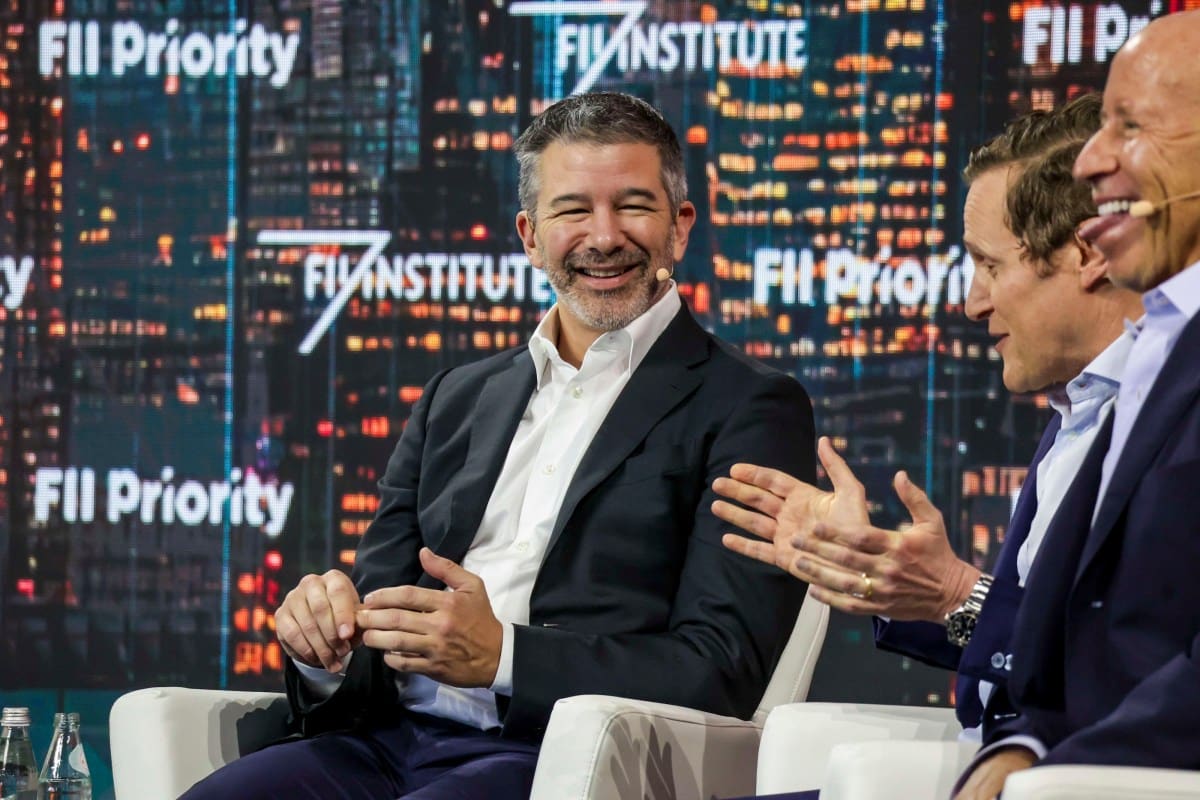
Travis Kalanick has closed one of the largest robotics rounds in recent memory. Atoms, his post-Uber bet on physical automation, secured $1.7 billion in a round led by Andreessen Horowitz, with Ben Horowitz taking a board seat. The number alone would make most founders euphoric. Yet when Kalanick sat down for David Senra's podcast last weekend, the conversation turned not to triumph but to taxonomy: what separates the rare useful investor from the overwhelming majority who, in his words, merely need to "do no harm."
His estimate is unsparing. Ten percent of venture capitalists meet that minimal threshold. One percent are genuinely helpful. The rest occupy a gray zone between distraction and damage.
At DailyTechWire, we have tracked dozens of post-exit founders across Asia and the West who raise again, and the pattern Kalanick describes is not unique. Second-time builders often arrive at similar math, even if they phrase it more diplomatically in public. What makes his account noteworthy is the scale of his experience: roughly $15 billion raised during his Uber tenure, a boardroom coup in 2017 that removed him from the company, and now a return to the fundraising circuit with a valuation north of $10 billion for Atoms. He has seen the full arc.
The Chess Master and the Enthusiast
Kalanick frames the founder-investor dynamic as a mismatch of immersion. The founder is the chess master, living inside every move, every tempo shift, every sacrifice. The investor is the enthusiast who drops by periodically to observe the board. The metaphor is clean, and it explains why even well-intentioned capital often fails to add operational value.
Venture firms operate portfolio models. A single partner may sit on eight to twelve boards, each company navigating distinct markets, technical stacks, regulatory environments, and competitive pressures. The math of attention is unforgiving. If a partner allocates forty hours a week to board work and divides it equally, each company receives three to five hours. A founder, meanwhile, is spending sixty to eighty hours inside the machine.
The gap is not a moral failing. It is structural. Kalanick acknowledges this openly, yet he also insists that many investors struggle to accept the boundary. Everyone wants impact. When advice goes unheeded, the ego friction compounds. Venture capital carries social prestige, board seats confer formal power, and the temptation to confuse those assets with operational insight is strong.
The Benchmark Shadow
Kalanick does not name Benchmark casually. His departure from Uber in 2017 was precipitated by a coalition of investors led by Bill Gurley, a Benchmark partner who had been an early champion of the company. The details have been litigated in the press and in court; the emotional residue remains. On the podcast, Kalanick says he now tells founders not to raise from the firm.
Benchmark, for its part, appears unbowed. The firm closed a $2 billion fundraise across two vehicles in June, a strong signal that limited partners still view its track record as durable. The broader venture ecosystem has largely moved on. But for Kalanick, the episode serves as a case study in how board dynamics can turn adversarial when growth, governance, and personality collide.
Interestingly, his new lead investor Andreessen Horowitz has its own history of tension with Gurley. Marc Andreessen once described Gurley as "my Newman," invoking the Seinfeld nemesis archetype, in a 2015 profile. The firm has been vocal this week in amplifying Kalanick's podcast appearance across social channels, a move that reads as both brand-building and score-settling.
The Victim Mentality Trap
Despite his sharp critique of the venture industry, Kalanick reserves his harshest advice for founders who externalize failure. He warns against "victim mentality," a frame he believes corrodes judgment. The question he forces himself to ask is: what was my part in that dynamic?
In his retrospective, the answer involves two threads. First, he admits he mishandled relationships with people who became disgruntled, allowing small fractures to widen into structural breaks. Second, he now sees his management style at Uber as a liability, not because the decisions were wrong, but because the optics were untenable.
He stands by the choices he made. He insists no rules were broken. But he concedes he "ran too close to the line in too many situations." When a company reaches Uber's scale and cultural visibility, the margin for ambiguity shrinks. The scrutiny intensifies. Behavior that might be tolerated or ignored in a twenty-person startup becomes a crisis at a seventy-billion-dollar company.
Kalanick traces the roots of his intensity to Red Swoosh, his previous venture. The first four years involved no salary, multiple cash crunches, and what he describes as a "super grind" that cost him friendships and stability. He eventually sold the company, but the experience imprinted a scarcity mindset. At Uber, he says, he ran a global giant as if he might starve next week. The precision and urgency that helped him survive Red Swoosh became a source of friction at a different altitude.
How to Build a Bidding War
For all his skepticism, Kalanick does not advise founders to avoid venture capital. He advises them to master the choreography. The goal is to create competitive tension, to make firms bid against one another on terms, valuation, and board composition.
One tactical insight he offers is calibrated disclosure. Too little detail in a pitch deck signals unpreparedness. Too much detail, especially in fast-moving sectors like AI, signals naivety. The world is changing too quickly for five-year plans to be credible. Founders who present exhaustive roadmaps often come across as disconnected from the pace of technological and market evolution.
The sweet spot, in Kalanick's telling, is a plan that demonstrates command of the present and plausible hypotheses about the near future, without overcommitting to specifics that will be obsolete in six months. It is a balance that requires both confidence and epistemic humility, a combination that is difficult to fake.
The Pincus Pile-On
Kalanick's podcast remarks have catalyzed a broader conversation. Mark Pincus, founder of Zynga and several other companies, used the episode as a springboard to revisit his own experience with Accel. According to Pincus, the firm led an investment in his earlier company Support.com during the dot-com era and subsequently pushed to replace him as CEO, citing his age and lack of experience running a public company.
Other founders joined the thread, sharing stories of firms that had sidelined or ousted company leaders. The accounts vary in detail and tone, but the common thread is a perception that venture governance can shift from support to control when confidence erodes or when a firm concludes that founder vision and investor interest have diverged.
These narratives are not new. They surface periodically in Silicon Valley discourse, often triggered by a high-profile exit or a particularly contentious board fight. What is notable this time is the willingness of multiple founders to name firms publicly, a breach of the usual discretion that governs these relationships. The social contract that once kept such grievances private is fraying, at least among a vocal subset of entrepreneurs who have already exited or who feel insulated by subsequent success.
The Atoms Bet
Kalanick's new company, Atoms, operates in robotics, a sector that has absorbed enormous capital over the past three years as labor costs rise and supply chain fragility persists. The $1.7 billion round positions Atoms among the best-funded private robotics companies globally, alongside firms like Figure AI and Agility Robotics.
Details about Atoms' product roadmap and go-to-market strategy remain sparse. Kalanick has historically been disciplined about operational secrecy, a posture that served him well at Uber and that he appears to be replicating. What is clear is that Andreessen Horowitz is betting not just on the technology but on the founder's ability to navigate the same high-stakes, high-conflict environment that defined his last act.
The firm's decision to put Ben Horowitz on the board is a signal of commitment. Horowitz rarely takes board seats at this stage in his career, preferring to delegate to younger partners. His involvement suggests that Andreessen Horowitz views Atoms as a flagship investment, one that could define the firm's robotics portfolio for the next decade.
What One Percent Looks Like
Kalanick's one-percent estimate invites the question: what does a genuinely helpful investor do? The podcast does not offer a detailed taxonomy, but the implication is that such investors bring domain expertise, operational pattern recognition, and network access that materially accelerates the company's trajectory. They do not need to be in the weeds daily, but when they engage, the engagement is precise and the value is legible.
In practice, this often means investors who have built companies themselves, who understand the cadence of hiring, firing, product iteration, and market entry. It also means investors who can read the emotional and strategic state of a founder and offer calibration rather than direction.
The rarity of this profile is not a mystery. Most venture partners come from consulting, finance, or prior investment roles. Fewer have operated at scale. The industry has recognized this gap and has made efforts to recruit former operators, but the transition from building to investing is not trivial. The skill sets overlap but do not map cleanly.
Running Close to the Line
Kalanick's reflection on optics versus substance is worth sitting with. He believes the decisions he made at Uber were correct. He also believes the perception of those decisions became untenable. The tension between those two beliefs is where much of the founder-investor conflict lives.
Investors, particularly those with fiduciary duties to limited partners, are acutely sensitive to reputational risk. A founder who is technically right but optically problematic poses a different kind of threat than one who is simply wrong. The former can erode stakeholder confidence, attract regulatory scrutiny, and complicate future fundraising. The latter can be corrected with better data or strategy.
Kalanick's willingness to own the optics failure is rare. Most founders in his position would double down on the righteousness of their choices and attribute their ouster to investor cowardice or political maneuvering. His framing is more nuanced: the intensity that built Uber also created the conditions for his removal, and both can be true simultaneously.
The Future of Founder-Investor Relations
The conversation Kalanick has restarted is unlikely to resolve cleanly. The structural incentives in venture capital have not changed. Firms still operate portfolio models, still face pressure to deploy capital quickly, and still struggle to provide hands-on support at scale. Founders still need capital, still face asymmetric information problems when choosing investors, and still discover too late which board members will be allies and which will become obstacles.
What may be shifting is the willingness of founders to speak openly about these dynamics while still active in the ecosystem. For years, the convention was to wait until full retirement or irrelevance before airing grievances. Kalanick and Pincus are both raising or advising new companies, yet they are naming firms and individuals in public forums. That shift could recalibrate expectations on both sides, or it could simply raise the temperature without changing the substance.
For now, the one-percent thesis stands as both critique and challenge. If only a handful of investors genuinely add value, the imperative for founders is not to avoid venture capital but to become far more ruthless in selecting who sits across the table. And for investors, the message is simpler: do no harm is not a high bar. It is the minimum.