A New Derivatives Market Takes Shape Around AI Compute
Silicon Data builds pricing infrastructure for an asset class that now swallows more capital than traditional commodities - yet still trades like a black box.
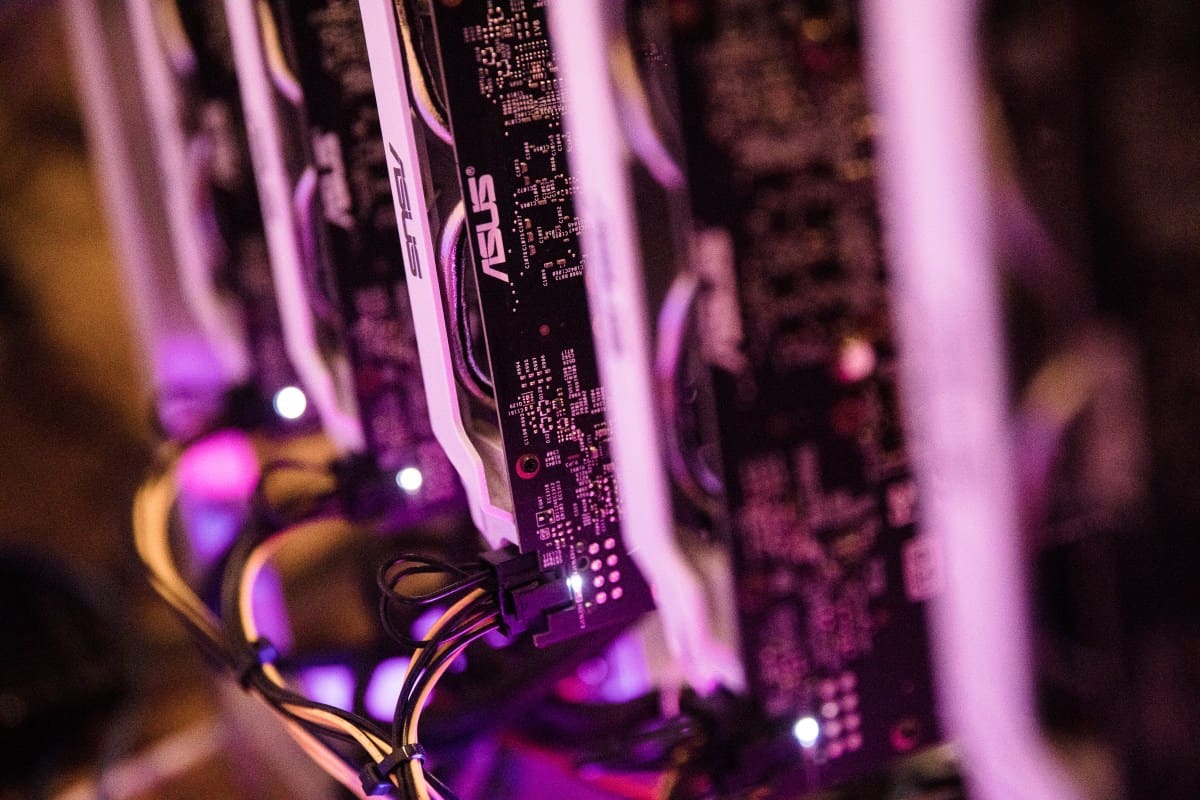
The Unpriced Asset at the Heart of the AI Boom
Hundreds of billions of dollars flow each year into GPUs and the data centers that house them. Yet the industry still lacks a standardized way to value the underlying asset - compute itself. For enterprises spinning up foundation models or scaling inference workloads, compute represents the dominant line item, often eclipsing headcount and cloud storage combined. But unlike oil, electricity, or server capacity in earlier eras, AI compute has no transparent spot market, no futures curve, and no hedging instruments.
Silicon Data, a New York-based startup, is building the derivatives infrastructure to change that. The firm provides pricing benchmarks and risk products that let buyers and sellers of GPU capacity lock in rates, hedge exposure, and trade compute forward - tools the financial industry has long applied to commodities but that have been conspicuously absent from the AI stack.
At DailyTechWire, we've tracked the capital intensity of this cycle closely: hyperscalers and sovereign funds are pouring record sums into inference clusters and training farms, yet price discovery remains opaque. A single H100 node might lease for $2.50 per hour in one region and $4.20 in another, with no clear reference rate and wide bid-ask spreads. Silicon Data's thesis is that as compute becomes the bottleneck resource - and as enterprises face volatile availability - financial primitives will follow.
Why Compute Needs a Pricing Layer
Traditional cloud pricing is list-based and bilateral: a hyperscaler posts a rate card, a customer negotiates a discount, and the transaction stays private. That model breaks down when compute becomes scarce. Over the past eighteen months, lead times for high-end Nvidia chips have stretched to six or nine months, and secondary markets for GPU leases have emerged with little transparency. Buyers cannot compare offers across providers, and sellers have no way to lock in revenue ahead of delivery.
Silicon Data addresses this by aggregating transaction data from data-center operators, cloud resellers, and direct GPU lessors. The company publishes daily reference rates segmented by chip architecture, region, and contract term. Those benchmarks then underpin derivative contracts - swaps, options, and forwards - that let market participants manage price and availability risk. An AI lab scaling a training run over twelve months, for instance, can enter a fixed-rate swap to insulate itself from mid-cycle rate spikes. A colocation provider with excess H100 inventory can sell forward capacity and smooth revenue.
The analogy to electricity deregulation in the 1990s is deliberate. Before power markets matured, utilities and large industrials had no standardized way to hedge their exposure; today, electricity futures trade on multiple exchanges with deep liquidity. Silicon Data's founders argue that compute is following the same trajectory: a capital-intensive, infrastructure-heavy asset that starts opaque and eventually demands financial tooling.
The Mechanics of a Compute Swap
A typical Silicon Data contract might look like this: a customer agrees to pay a fixed monthly rate for 1,000 H100-equivalent GPU-hours, while Silicon Data or a counterparty pays the floating spot rate. If spot prices rise, the customer is protected; if they fall, the customer pays the difference. Settlement happens in cash, not physical delivery, which means the instrument can be used purely for hedging or for speculative positioning.
The startup also offers option structures - calls and puts on compute capacity - that give buyers the right, but not the obligation, to secure GPU time at a strike price. These products appeal to firms with lumpy workloads: a research team planning a large training run in Q3 can buy a call option in Q1, locking in access without committing capital upfront. If the run is delayed or cancelled, the team loses only the premium, not the full lease cost.
Silicon Data does not own or operate data centers; it is purely a price-discovery and risk-transfer layer. The firm partners with infrastructure providers to source real-time availability and transaction data, then uses that feed to mark its derivatives to market. Counterparties include hedge funds, AI-native companies, and increasingly, traditional enterprises with large inference footprints.
Institutional Interest and the Path to Liquidity
The market is nascent, but early traction is visible. According to Silicon Data, trading volume in its compute derivatives has grown more than fivefold quarter-over-quarter since launch, and the firm has onboarded counterparties ranging from Silicon Valley labs to quantitative trading desks in Hong Kong and London. Institutional appetite reflects a broader trend: as AI capex becomes material to corporate balance sheets, CFOs and treasurers are asking for the same risk-management tools they use for foreign exchange, interest rates, and commodities.
One open question is standardization. Today, GPU performance varies not just by chip generation but by interconnect topology, memory configuration, and software stack. A standardized "compute unit" analogous to a megawatt-hour or a barrel of oil does not yet exist, and market participants are experimenting with different denominations - FLOPs, tokens per second, or GPU-hour equivalents. Silicon Data has adopted a hybrid approach, benchmarking specific hardware configurations while offering conversion factors for cross-architecture hedging.
Regulatory clarity remains another hurdle. Derivatives on physical commodities fall under the purview of the Commodity Futures Trading Commission in the United States, but compute is an intangible service. Silicon Data structures its contracts as over-the-counter swaps and relies on bilateral collateral agreements rather than exchange clearing, a model that scales with counterparty credit but may face scrutiny as volumes grow.
Implications for the AI Stack
If compute derivatives gain traction, the effects will ripple through the AI value chain. Startups and research labs could plan multi-year roadmaps with predictable cost structures, reducing the penalty for long-duration projects. Infrastructure providers could monetize future capacity and finance buildouts against forward revenue. And speculators - funds that see compute as an asymmetric bet on AI adoption - could enter the market without owning hardware, deepening liquidity and tightening spreads.
The development also signals a maturation of the AI economy. In the early 2010s, cloud pricing was simple and abundant; by the late 2010s, it was negotiated and opaque; now, as scarcity bites and capital intensity soars, the market is reaching for financial instruments that other infrastructure sectors adopted decades ago. Silicon Data is betting that the next phase of the AI buildout will look less like a land grab and more like a managed commodity market, with hedging, arbitrage, and price discovery as standard features.
Whether that vision materializes depends on continued capital inflows, stable demand for training and inference, and willingness among incumbents to share transaction data. But the trajectory is clear: compute is no longer just a technical input. It is an asset class, and the tools to trade it are arriving.