Binance Hands Market Execution to AI Agents With Minimal Exchange-Level Guardrails
The world's largest crypto exchange now allows autonomous agents to trade real assets, placing the burden of risk controls squarely on individual users through sub-account sandboxes.
Autonomous Trading Goes Live
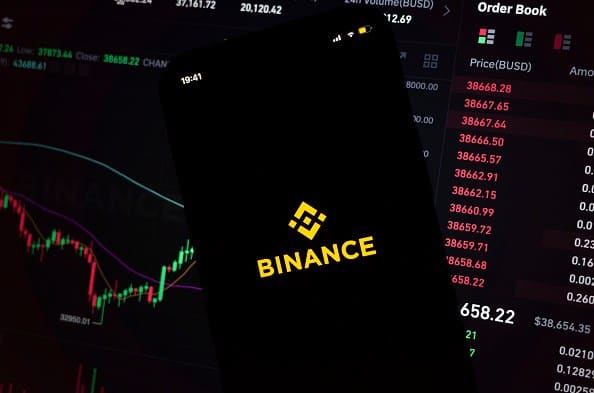
Binance introduced Agent OS last week, a platform that connects AI agents directly to its trading and payments infrastructure. The service allows developers to build applications that can analyze market conditions, monitor portfolios, and execute trades without requiring manual user input for each transaction. With more than 300 million registered users, Binance becomes the latest major exchange to open financial execution pathways to autonomous software.
Agent OS bundles existing Binance developer tools, including APIs, the Wallet Agentic Hub, and x402 transaction verification, with newly added support for Model Context Protocol integration. The platform works with tools such as OpenAI's ChatGPT and Codex, Anthropic's Claude Code, and Cursor. Once authorized, an agent can pull market data, review account balances, and place orders across spot and futures markets.
At DailyTechWire, we've tracked similar moves by Kraken, Coinbase, and OKX earlier this year, each racing to position themselves as the preferred infrastructure layer for agentic finance. What distinguishes Binance's rollout is the degree to which it delegates safety architecture to end users rather than imposing platform-wide transaction ceilings or mandatory approval workflows.
User-Configured Sandboxes, Not Exchange-Wide Limits
Binance's primary risk mitigation mechanism is the sub-account structure. Users assign a dedicated sub-account to each agent, fund it with a specific amount, and configure permissions for activities such as spot trading or derivatives. Withdrawals from these sub-accounts are disabled by default, creating what Jeff Li, vice president of product at Binance, described as a sandbox around agent activity.
Critically, Binance does not impose a separate cap on trade volume or loss within those sub-accounts. The amount a user deposits effectively becomes the maximum exposure. Users can also toggle whether an agent must request approval for every order or operate autonomously once permissions are set. That design choice places the entire burden of position sizing, risk tolerance, and behavioral oversight on the individual account holder.
The exchange applies its standard security, risk-control, and anti-money-laundering policies to sub-account APIs, but those measures focus on detecting suspicious patterns rather than limiting the scale or frequency of legitimate agent activity. For users unfamiliar with API permissioning or risk management, the absence of hard platform-level caps may introduce unexpected exposure.
Reasoning Happens Off-Platform
When asked how Binance monitors the decision-making process that leads an agent to execute a particular trade, Li acknowledged that reasoning occurs outside the exchange's systems. The logic resides either on the user's local machine or within the third-party AI application they've chosen to deploy. Binance can observe the resulting trading activity, transaction timestamps, and order flow, but it has no visibility into whether an agent's decision was influenced by faulty data, prompt injection, or adversarial manipulation.
In the event of a compromised agent or a prompt-injection attack that tricks the AI into executing unintended trades, Li pointed again to the sub-account as the primary line of defense. Because withdrawals are blocked and funds are siloed, a compromised agent cannot drain the main account or transfer assets elsewhere. Yet within the sub-account itself, there is no secondary circuit breaker if an agent begins executing high-frequency trades, overleveraged futures positions, or rapid liquidations.
This architecture reflects a broader design philosophy: Binance is providing the pipes and the permissioning layer, but it is not acting as a guardrail against poor agent behavior or flawed models. That responsibility rests with the user who configures the agent, funds the account, and decides whether to enable autonomous execution.
Beyond Trading: Payments and On-Chain Activity
While trading is the initial focal point, Agent OS also connects agents to payments and decentralized-finance workflows. Through x402 integration, agents can send and settle payments. The Agentic Wallet allows them to interact with tokens and DeFi protocols, including swaps, liquidity provision, and staking.
Unlike exchange trading, where transaction limits are user-defined through sub-account funding, Binance imposes default daily caps on wallet-based activity. Regular token swaps are capped at 50,000 dollars per day, DeFi transactions carry a default 100,000-dollar daily limit, and x402 payments are restricted to 20 dollars per day. These wallet-level caps represent a more cautious approach than the open-ended sub-account model used for spot and futures trading, likely reflecting the irreversible nature of on-chain transactions and the heightened risk of social-engineering attacks in payment contexts.
Li described Agent OS as Binance's first step toward enabling developers to build AI-powered applications that span crypto and traditional markets. The platform is designed to be extensible, with future integrations potentially covering portfolio rebalancing, cross-exchange arbitrage, and automated tax reporting.
The Agentic Infrastructure Race
Binance is entering a crowded field. Kraken launched an open-source command-line tool with a built-in MCP server in March, allowing AI agents to execute spot and futures trades. Coinbase followed in June with Coinbase for Agents, which connects AI directly to user accounts and permits trading, payments, and other financial workflows within user-set boundaries. OKX introduced an open-source MCP toolkit earlier this year, enabling similar functionality.
Each exchange is positioning itself as the infrastructure backbone for a future in which users interact with financial systems through conversational interfaces and delegate execution to autonomous agents. The competitive dynamic centers on developer adoption: whichever platform offers the most comprehensive API surface, the smoothest permissioning flow, and the widest range of supported AI tools is likely to capture the largest share of agentic trading volume.
Yet the regulatory landscape remains unsettled. No major jurisdiction has issued clear guidance on liability when an AI agent executes a trade that results in significant loss, particularly if that trade was influenced by model hallucination, adversarial input, or a bug in the agent's code. Exchanges are betting that user-configured sandboxes and terms-of-service clauses will shield them from liability, but that assumption has not been tested in court.
Risk Transfer in the Age of Autonomous Execution
Binance's Agent OS highlights a fundamental tension in the design of agentic finance platforms. On one hand, developers and power users demand flexibility, low friction, and the ability to deploy custom strategies without platform interference. On the other hand, the absence of exchange-imposed guardrails transfers risk to users who may lack the technical sophistication to assess agent reliability, configure appropriate limits, or monitor for anomalous behavior.
The sub-account model is elegant in its simplicity: it isolates exposure, prevents withdrawal, and gives users granular control over permissions. But it does not protect against the most common failure modes of AI agents, such as overconfidence in model predictions, failure to account for liquidity constraints, or susceptibility to adversarial prompts. Binance's decision to leave reasoning opaque and limit its own visibility into agent decision-making reflects a deliberate choice to act as infrastructure rather than fiduciary.
As agent-driven trading moves from experiment to production, the industry will need to confront questions about transparency, auditability, and the appropriate division of responsibility between platforms and users. For now, Binance is placing its bet on user empowerment, trusting that those who deploy AI agents will also take ownership of the risks they introduce.