What Meta's Smart Glasses Actually Collect From You
Camera rolls stay local by default, but voice transcripts and AI queries open a different set of doors.
The Privacy Calculus Nobody Reads
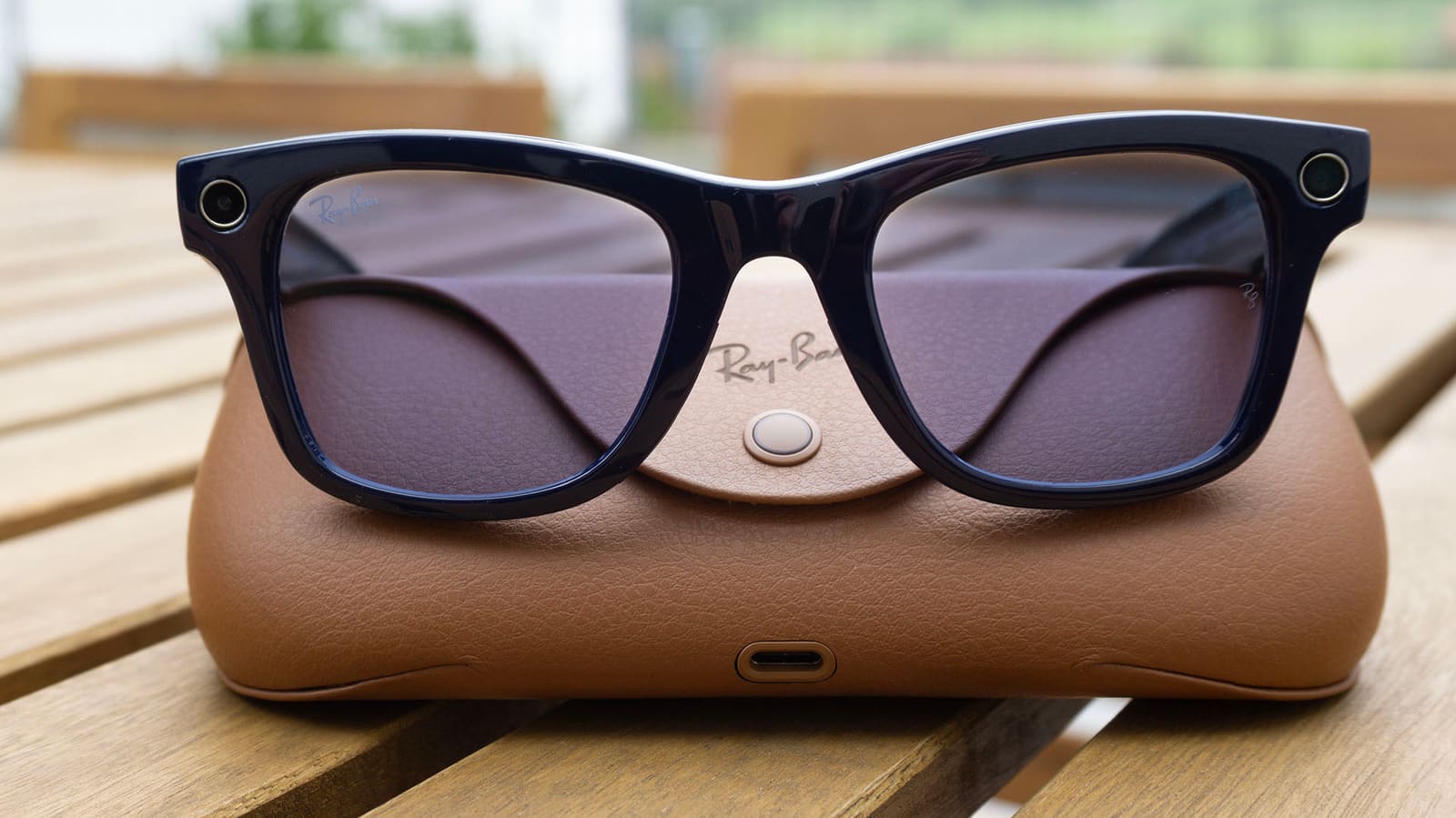
Meta's smart eyewear has moved from curiosity to mainstream accessory over the past three years, but the data collection mechanics behind the product remain opaque to most wearers. At DailyTechWire, we've tracked how consumer hardware companies layer AI features into devices that sit inches from your eyes, and the Ray-Ban collaboration is now the highest-volume example of ambient capture meeting cloud inference.
The core question isn't whether Meta collects data from its glasses. It does. The real issue is that collection varies wildly depending on which feature you activate, and the company's disclosure model assumes users will parse settings menus and privacy policies before they ask their frames to identify a landmark or dictate a text message.
We spoke with Meta and reviewed the product's privacy architecture. Here's what actually happens to the photos, voice clips, and camera feeds you generate when you wear the hardware.
Local Storage vs Cloud Sync
Photos and videos captured through the glasses remain on your phone by default. Meta confirmed that content shot with the device stays local unless you explicitly share it to Instagram, Facebook, or another platform. That baseline is more conservative than many users expect, given the company's reputation for vacuuming up data across its apps.
The picture changes if you enable cloud media storage. When that setting is active, every capture uploads to Meta's servers and stays there for thirty days. The feature is optional, but it powers voice-driven sharing and a function called autocapture, which tries to predict when you want to save a moment. If you delete an image from the companion app's gallery, it disappears from the cloud as well.
Meta states it does not use photos or videos stored in the cloud to train AI models or target advertisements. That's a meaningful constraint, though it applies only to media you shoot with the camera button or voice command. The moment you invoke an AI feature that requires vision, a separate data pipeline opens.
AI Queries Create a Persistent Record
Live AI and visual question-answering rely on the glasses' camera to analyze what you're looking at. Each time you ask the assistant to identify an object, translate text, or describe a scene, the device captures a still image. Those frames are not saved to your camera roll. They go straight to Meta's infrastructure.
The company stores these images and uses them to improve its models. Third-party contractors review and label a subset of the captures. Meta says it filters the data to reduce the chance that reviewers see personally identifying information, but the process is inherently leaky. Reports have surfaced of contractors encountering sensitive footage, including medical documents and private spaces.
People who use the glasses for accessibility face a harder trade-off. Blind and low-vision users benefit enormously from real-time scene description, but they also generate more AI queries than the average wearer. Every interaction becomes training data, and every frame passes through a review queue the user cannot audit.
If you rely on visual AI features in environments where privacy matters, the safest approach is to avoid invoking them around documents, screens, or settings you wouldn't want recorded. Meta does not offer a way to opt out of this collection while still using the camera-based assistant.
Voice Transcripts Go to Human Reviewers
Voice commands create another data trail. Whenever you interact with Meta AI through speech, the glasses record your audio and generate a transcript. Both artifacts are uploaded and stored.
Until recently, users in most regions could prevent Meta from saving these recordings. That option has been removed for people in the United States. European users retain the ability to opt out, a reflection of stricter data protection rules under GDPR. Meta says machine learning systems and trained reviewers process the recordings to improve transcription accuracy and reduce errors when the assistant misinterprets commands.
The glasses also capture audio by mistake. False wake detections happen when background noise or conversation triggers the assistant unintentionally. Meta labels these clips and says it deletes them within ninety days. In practice, the voice activity log in the companion app often contains dozens of snippets users never intended to create.
You can manually delete recordings by navigating to Settings, then Glasses, then Glasses Privacy, then Voice Activity Log. The interface lets you purge everything at once or review entries individually. Most users we've observed are surprised by the volume of audio Meta has accumulated, even when they rarely address the assistant.
The LED Indicator Problem
Meta built a white LED into the frame that blinks during recording. If you cover the light with tape, the camera is supposed to shut down. The company designed this failsafe to prevent covert recording, but it has not held up in the field.
Aftermarket accessories now exist specifically to block the LED without triggering the detection system. Tutorials circulate on modifying the hardware with drills or other tools to physically disable the indicator. Meta pushed a software update that attempts to detect tampering and disable the camera if the LED circuit is broken, but the cat-and-mouse dynamic continues.
Instagram has banned accounts that post videos of people harassing strangers while wearing modified glasses. The platform's enforcement is reactive, not preventive. Once someone has recorded covertly and uploaded the footage, the harm is done. Meta says it's working to identify and suspend users who violate terms of service, but the technical and social mechanisms to stop misuse remain incomplete.
Data Residency and Regional Gaps
The difference in opt-out rights between U.S. and EU users highlights a broader asymmetry in how Meta handles data from its hardware products. European privacy law forces the company to offer more granular controls. American users have fewer levers, and the gap is especially stark for voice data.
This divergence matters as wearable AI hardware scales. If Meta ships millions of units in markets with weak privacy regimes, the baseline data collection will be more expansive than in jurisdictions where regulation constrains the company. The result is a two-tier system where your rights depend on your shipping address.
What You Can Control, and What You Cannot
If you want to minimize what Meta collects, disable cloud media storage unless you specifically need voice-driven sharing or autocapture. Avoid using AI features that require the camera in sensitive contexts. Manually review and delete voice activity logs on a regular schedule.
But understand the limits. If you use Live AI or ask the assistant to identify something you're seeing, that image will be stored and reviewed. If you live in the United States and use voice commands, those recordings will be processed by human contractors. There is no setting to prevent this while retaining the feature.
The privacy model Meta has built for its smart glasses is not uniform. It segments data flows by feature, and the most useful capabilities come with the highest collection overhead. The company's disclosure is buried in settings menus and policy documents, not surfaced at the moment of interaction. That design choice shifts the burden to users, who are expected to understand the trade-offs before they speak a wake word or glance at a sign and ask for a translation.
For a product worn on your face all day, that's a steep ask.