Google Maps Becomes an Ordering Platform With Food and Hotel Booking
Ask Maps now connects users to Toast, Square, and Uber Eats, turning the navigation app into a transactional layer for everyday commerce.
From Navigation to Transaction
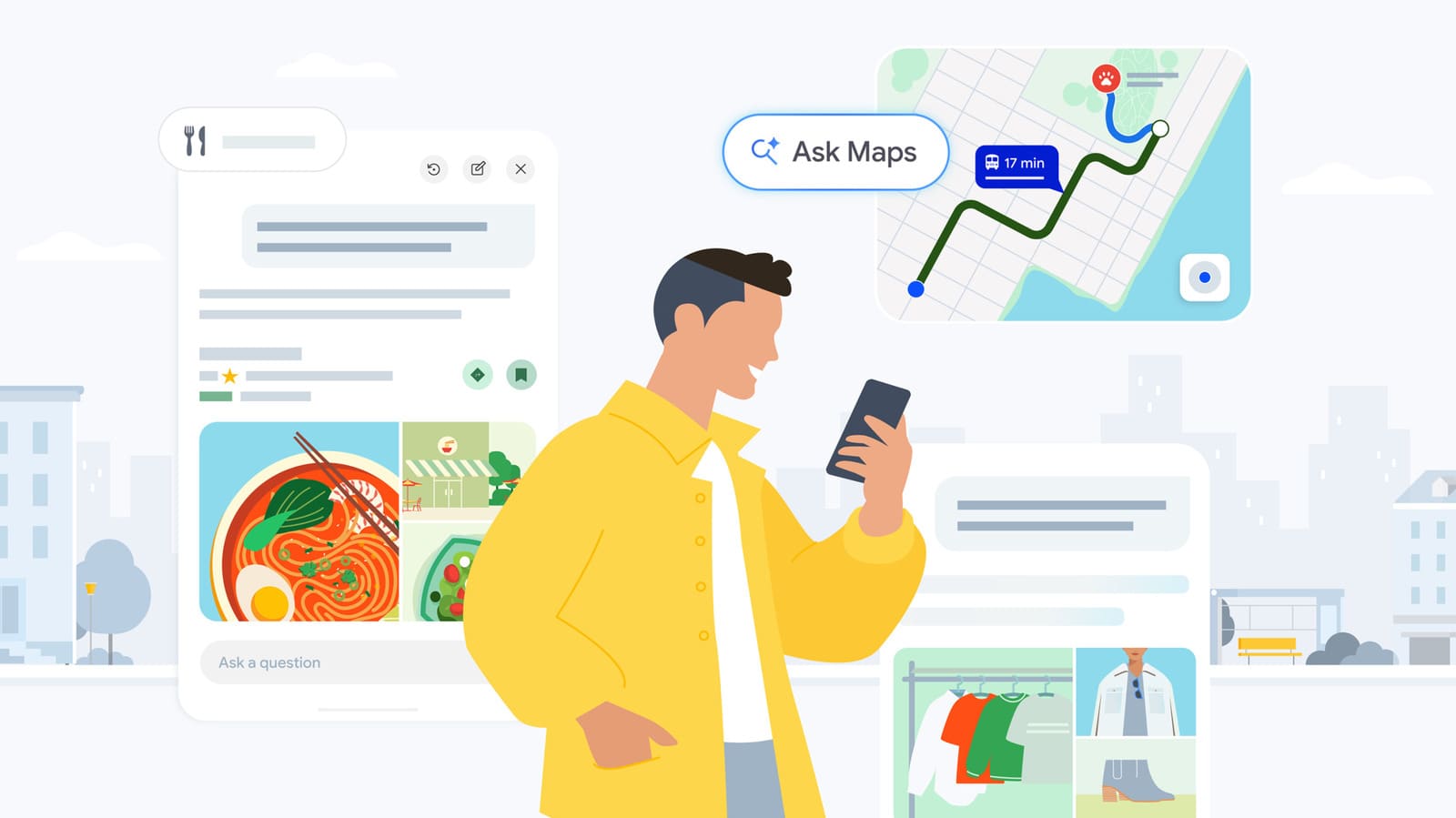
Google Maps is no longer content to simply show you where to go. The company has expanded its Ask Maps chatbot with capabilities that turn the mapping platform into a commerce interface, allowing users to order meals, reserve hotel rooms, and purchase event tickets through natural language conversation. The shift represents a meaningful evolution in how location services intersect with consumer spending, particularly as competition intensifies among platforms seeking to own the final step in local discovery.
Ask Maps launched earlier this year as part of a broader overhaul to the navigation suite, initially positioned as a way to surface contextual information that traditional map interfaces struggle to deliver. The latest update adds what Google terms "agentic capabilities," essentially embedding transactional workflows directly into the chat experience. Amanda Leicht-Moore, senior product director at Google Maps, demonstrated the feature by requesting avocado toast and an oat milk latte near her address. The chatbot returned a curated list, and she proceeded to place an order without leaving the interface.
The food ordering function relies on partnerships with Toast, Square, and Uber Eats. Toast and Square integrations are live now, with Uber Eats scheduled to follow. Leicht-Moore noted that this marks the first time users can order food conversationally within Maps, and that the feature will continue to evolve as Google co-develops the Universal Commerce Protocol for food with its partners. That protocol, announced at I/O 2026, is designed to standardize how agentic systems handle commerce transactions across different vendors and categories.
Hotel Booking and Event Discovery
The same infrastructure extends to hotel reservations. Users can describe their requirements in plain language, specifying budget constraints, room size preferences, or proximity to specific attractions. Ask Maps processes those criteria, compares pricing, and checks real-time availability before surfacing options. From there, users click through to partner websites to finalize bookings. The integration also applies to live events, enabling searches for comedy shows, concerts, and other performances based on location and timing.
At DailyTechWire, we've tracked the rise of conversational commerce interfaces across Asia and North America, and Google's approach here is notable for its emphasis on partner ecosystems rather than building a closed transaction layer. By routing users to Toast, Square, and third-party hotel sites, Google avoids the regulatory and operational complexity of becoming a merchant of record, while still capturing behavioral data and search intent. The trade-off is a less seamless checkout experience compared to platforms like WeChat or Grab, which handle payments end-to-end.
Personal Intelligence Integration
Google is also bringing Personal Intelligence to Ask Maps, a feature that debuted earlier this year through Gemini. The integration allows the chatbot to connect with other Google services, starting with Gmail, to personalize responses based on user data. If you ask for restaurant recommendations near your hotel, Ask Maps can scan your Gmail inbox to confirm your reservation details before generating suggestions. Calendar integration and other app connections are planned for later rollout.
Maz Khorasani, product director for Google Maps, emphasized that the Personal Intelligence connection is opt-in and disabled by default. Users must explicitly grant permission for Ask Maps to access Gmail or other services. Additionally, Google is introducing conversation history for Ask Maps, provided users have enabled History settings in Maps. This allows the chatbot to recall past interactions and continue threads across sessions.
The privacy model here mirrors Google's broader strategy of incremental consent, where features are gated behind explicit user action rather than bundled into broad terms of service. That approach has become more common as regulators in Europe and parts of Asia scrutinize data-sharing practices, particularly when AI systems synthesize information from multiple personal accounts.
Live Transit Widgets and Community Contributions
For public transit users, Ask Maps now generates live widgets within the conversational interface. If your commute involves a ferry or light rail line, those widgets display real-time wait times, delays, and service updates without requiring a separate query or app switch. The feature is rolling out globally wherever Ask Maps is available.
Google is also opening Ask Maps to contributions from its Local Guides community. Users can suggest edits by uploading photos of storefront signage, for example when a business changes its hours. Ask Maps will prompt the user to confirm the details before submitting the edit on their behalf. Google reviews these contributions using the same verification process it applies to manual edits, aiming to balance speed with accuracy.
The Local Guides integration is an interesting hedge against stale data, a persistent challenge for mapping platforms as businesses update hours, menus, and contact information. By lowering the friction to submit corrections, Google can theoretically keep its dataset fresher, though the risk of spam or adversarial edits remains. The company has not disclosed whether it will apply additional scrutiny to AI-mediated submissions compared to those entered manually.
Geographic Expansion and Rollout Timeline
Ask Maps is expanding to Australia, Brazil, Canada, Indonesia, Japan, and Mexico, alongside 150 additional countries and territories where the chatbot supports English. Live transit widgets and Personal Intelligence are available everywhere Ask Maps operates. Food ordering, hotel and event discovery, and conversational contributions are launching first in the United States, with international availability to follow.
The phased rollout reflects both regulatory complexity and the need to onboard local partners. Food ordering, in particular, requires integrations with point-of-sale systems and delivery platforms that vary significantly by market. In Southeast Asia, for instance, dominant players like Grab and Gojek operate their own super-app ecosystems, making it unclear how Google will position Ask Maps against entrenched local competitors. Similarly, in China, where Google Maps has limited presence, Baidu Maps and Amap have long offered integrated ordering and booking features.
The broader question for Google is whether users will shift their transactional behavior to Maps, or whether the app remains primarily a navigation tool. The company has tried before to embed commerce into its products, with mixed results. Google Shopping has struggled to compete with Amazon, and earlier attempts to integrate reservations into Search have not fundamentally changed how people book restaurants or hotels. The conversational interface may lower friction, but it also introduces new points of failure, particularly if the chatbot misinterprets intent or surfaces suboptimal results.
For now, Ask Maps represents Google's latest attempt to monetize its mapping data and user base beyond advertising. The partnerships with Toast, Square, and Uber Eats suggest a revenue-share model, though Google has not disclosed financial terms. If the platform gains traction, it could open a new revenue stream at a time when the company faces pressure to diversify beyond search ads. But success will depend on execution, partner density, and whether users find value in consolidating discovery and transaction into a single interface.