Waymo Ramps Up Federal Lobbying to Shape Autonomous Vehicle Rules
The Alphabet subsidiary more than doubled its Washington spending in Q2, outpacing most AV rivals as it pushes for faster deployment of fully driverless taxis
The Spending Surge
Waymo spent more than $1 million on federal lobbying between April and June 2026, according to disclosure filings. The outlay represents a sharp acceleration: the Alphabet-owned autonomous vehicle operator spent less than half that amount in the same quarter a year earlier.
The increase positions Waymo near the top of AV industry lobbying, with spending levels approaching those of Uber and significantly ahead of Amazon's Zoox and Tesla. At DailyTechWire, we've tracked how regulatory uncertainty around autonomous vehicle deployment has pushed operators to deepen their Washington engagement, and Waymo's latest filings underscore that trend.
The timing of the spending surge is not coincidental. Federal agencies including the National Highway Traffic Safety Administration and the Federal Motor Carrier Safety Administration are currently weighing frameworks that will determine how quickly robotaxi operators can scale driverless services without safety drivers, how liability is assigned in the event of collisions, and whether state-level patchwork regulations will give way to national standards.
Two Competing Visions
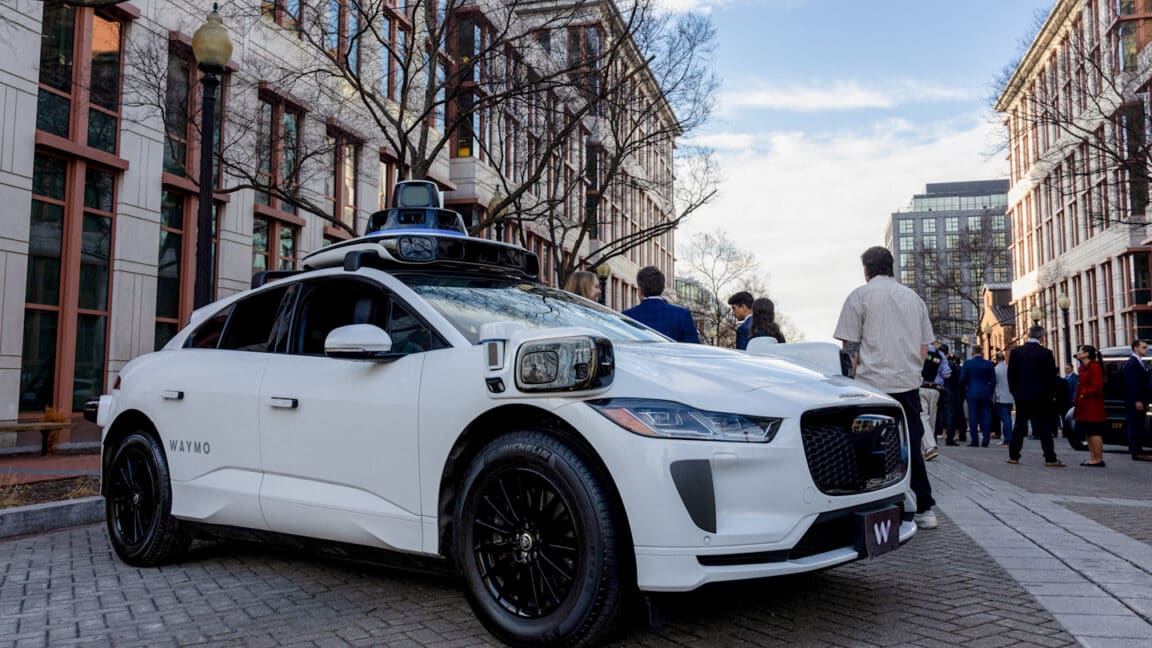
The lobbying battle reflects a deeper strategic divide over how autonomous ride-hailing should enter the market. Waymo has long advocated for regulations that allow fully driverless vehicles to operate commercially as soon as they meet safety benchmarks. The company already runs paid robotaxi services in parts of Phoenix, San Francisco, and Los Angeles, and has been methodically expanding its geofenced operating domains.
Uber, by contrast, has championed a hybrid model in which autonomous vehicles gradually integrate into existing ride-hail fleets. Under this vision, robotaxis would operate alongside human drivers, with the mix shifting over time as technology matures and public trust builds. Uber's approach aligns with its core business model: the company does not manufacture AVs but instead partners with operators and views itself as the platform layer connecting autonomous fleets to riders.
The strategic divergence shapes how each company frames its regulatory asks. Waymo's lobbying emphasizes the safety case for full autonomy, the economic benefits of removing the cost of human drivers, and the need for federal preemption to prevent a fragmented state-by-state rollout. Uber's messaging stresses workforce transition, consumer choice, and the value of incremental deployment that keeps human drivers employed during the technology ramp.
The Broader Lobbying Landscape
Waymo's increased spending places it in a crowded field. Uber has historically maintained a robust Washington presence, and its lobbying expenditures remain among the highest in the mobility sector. Amazon's Zoox, which is developing purpose-built autonomous shuttles, has also invested in federal engagement, though at a lower absolute level. Tesla, despite its high public profile and CEO Elon Musk's vocal commentary on regulation, has spent less on direct lobbying than Waymo or Uber in recent quarters.
The lobbying efforts target multiple agencies and congressional committees. Key issues include federal motor vehicle safety standards, which currently assume the presence of a human driver; liability frameworks that determine whether manufacturers, software developers, or fleet operators bear responsibility in crashes; and data-sharing requirements that balance transparency with competitive sensitivity.
Waymo's spending increase also reflects the company's maturing commercial operations. As its fleet expands and the number of paid trips grows, regulatory clarity becomes more urgent. Ambiguity around permitting, insurance, and interstate operations creates friction for scaling, and Waymo appears to be betting that a coordinated federal push can accelerate the path to broader deployment.
What the Stakes Mean for Asia
While the lobbying battle plays out in Washington, its implications ripple across the Pacific. Autonomous vehicle regulation in the United States often sets a reference point for frameworks in Japan, South Korea, Singapore, and increasingly China, even as Beijing pursues its own standards.
Seoul and Tokyo have both signaled interest in permitting driverless taxi trials in controlled urban zones, and policymakers in those capitals are watching how U.S. regulators handle questions of liability, safety validation, and public acceptance. If Waymo succeeds in securing a favorable federal framework, it may embolden Asian governments to move faster on their own approvals. Conversely, if the U.S. regulatory process stalls or imposes onerous data-sharing requirements, Asian regulators may adopt a more cautious posture.
Singapore's Land Transport Authority has already granted limited approvals for autonomous shuttle pilots, and the city-state's regulatory model, which emphasizes rigorous testing and phased deployment, shares elements with both the Waymo and Uber visions. The outcome of the U.S. lobbying contest may influence whether Singapore leans toward full autonomy or hybrid models as it scales beyond pilots.
The Road Ahead
The lobbying surge is unlikely to yield immediate regulatory wins. Federal rulemaking moves slowly, and any comprehensive AV framework will require coordination across multiple agencies, input from state regulators, and consensus among industry players with divergent interests. But the spending levels signal that Waymo views this period as a critical window.
For Waymo, the prize is clear: a regulatory environment that allows it to operate driverless taxis at scale across multiple states without needing to navigate dozens of individual state approval processes. For Uber, the goal is to ensure that regulations do not lock out hybrid models or create winner-take-all dynamics that favor vertically integrated operators like Waymo.
The lobbying battle is also a proxy for a broader question about the future of urban mobility. Will autonomous vehicles arrive as a distinct, fully driverless service layer that replaces human-driven ride-hail, or will they integrate gradually into existing fleets, with human drivers and robots coexisting for years? The answer will be shaped as much by regulatory decisions in Washington as by technology milestones in Mountain View or San Francisco test zones.
Waymo's doubled lobbying spend is a clear signal that the company believes the policy battlefield is now as important as the engineering one.