OpenAI's Teen Chatbot Rollout Faces Scrutiny Over Safety Promises
Advocacy groups and researchers demand independent verification of age-gating, moderation capacity, and parental alert systems before recommending the product to families
A Product Shaped by Tragedy
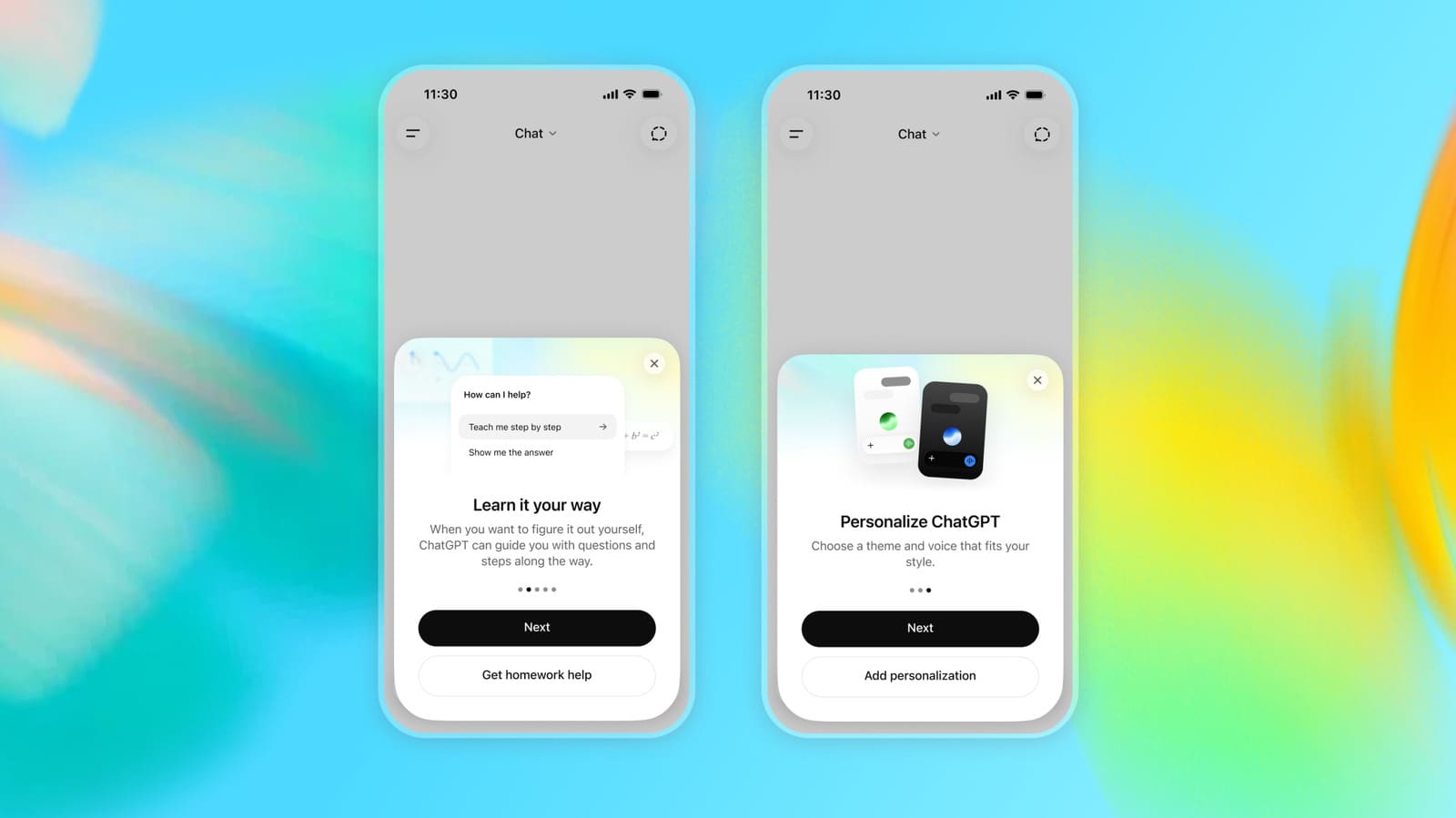
OpenAI introduced a dedicated teen experience for its flagship chatbot this week, automatically routing users identified as under 18 to a version designed with additional guardrails. The move follows months of development that began after a lawsuit alleged the chatbot contributed to the suicide of a 16-year-old. Lauren Jonas, who leads youth and family initiatives at OpenAI, emphasized that the shift happens seamlessly for existing users without requiring new accounts or manual opt-ins.
The company's approach centers on automatic age detection rather than self-reporting. Once a user is classified as a teen, the interface prioritizes educational tools that OpenAI has tested over the past year, including study assistance modes and data visualization capabilities. The underlying model also received updated behavioral specifications intended to prevent the formation of unhealthy emotional attachments. According to OpenAI, the system will no longer use language that suggests reciprocal feelings or romantic interest when interacting with young users.
The Evidence Gap
Child safety organizations acknowledge the direction but stress that commitments on paper mean little without rigorous, independent validation. Robbie Torney, who evaluates AI products for Common Sense Media, put it plainly: announcements are one thing, but families need proof that safety mechanisms function as advertised before they can endorse the product.
Josh Golin, who directs Fairplay, a nonprofit focused on digital childhood policy, pointed to a familiar pattern. Social media platforms have repeatedly failed to deliver on safety promises, he noted, and OpenAI itself has struggled with enforcement. The company already maintained restrictions around suicide, violence, and substance use prior to this launch, yet those safeguards have proven inconsistent or have degraded over time.
The age-detection system itself remains opaque. OpenAI has not published accuracy metrics showing how often the classifier correctly identifies teens versus how often it misses them or flags adults incorrectly. Torney highlighted a telling episode: when OpenAI considered rolling out adult-oriented creative writing features earlier this year, internal concerns about the age estimator's reliability reportedly contributed to the decision to delay. If the system cannot reliably distinguish teens from adults, the entire framework collapses.
Teens are also likely to probe for workarounds. Virtual private networks, account manipulation, and other tactics have repeatedly undermined age verification efforts on platforms like Discord. OpenAI's reliance on automated classification makes it vulnerable to the same evasion techniques.
The One-Hour Commitment
OpenAI's most concrete pledge involves parental notifications. The company stated that every flagged conversation undergoes review by a full-time employee before an alert is sent, with a target response time of one hour. Jonas affirmed on CNN that OpenAI has sufficient staffing to meet this standard.
Experts remain skeptical. Torney questioned whether the automated classifiers that flag conversations for human review can be trusted in the first place. If the initial detection layer fails, no amount of human moderation downstream will catch harmful interactions. He also asked for transparency around volume: how many chats are flagged daily, how many moderators are on staff, and how much time each review actually takes.
Golin echoed the concern. Without hard numbers, it is difficult to believe OpenAI has hired enough personnel to conduct thorough reviews at scale, especially given the one-hour commitment. When pressed for specifics on what types of eating disorder conversations would trigger alerts, OpenAI provided only a vague reference to "serious self-harm."
Common Sense Media tested the company's parental notification system last November. Even after sending explicit messages about suicide and self-harm, alerts took between 24 hours and more than 48 hours to arrive. In some cases, no notification came at all. Torney acknowledged that improvements may have been made since then, but cautioned that meaningful progress requires substantial investment in both technology and human moderators.
Cultural Context and Global Scale
Effective moderation of distress signals requires cultural fluency. Teens in different countries express emotional crises in distinct ways, and the appropriate response varies by context. A young person in the United States may benefit from a crisis hotline referral, while a teen in the Netherlands or Singapore might need a different kind of support. OpenAI operates globally, and its moderation workforce must reflect that geographic and cultural diversity to meet the one-hour response target with nuance.
Torney emphasized that this is not a problem that can be solved with a one-size-fits-all algorithm. Deciding whether to involve a parent, contact law enforcement, or direct a user to a mental health resource demands human judgment informed by local norms and available services.
Why Eating Disorders Demand Attention
The focus on eating disorders is well-founded. Ellen Fitzsimmons-Craft, who studies psychology at Washington University in St. Louis, pointed to a 2023 meta-analysis showing that 22 percent of children and adolescents screen positive for disordered eating. Despite this prevalence, fewer than 20 percent of those affected ever receive specialized treatment.
Anorexia, in particular, carries the highest mortality rate among mental health conditions affecting teenagers, according to Torney. In situations where inaction could lead to death, notifying a trusted adult is not just advisable but necessary.
Fitzsimmons-Craft supports parental alerts because the most effective treatments for adolescent eating disorders involve family participation. One evidence-based approach tasks parents with actively managing the restoration of their child's weight under the guidance of a therapist. She acknowledged that not all families are equipped to provide this support, and in some cases parents may contribute to the problem. Still, family-based treatment remains the best available intervention.
Golin, while agreeing that parents should be informed if their child is in crisis, argued that features of this nature should be piloted with smaller groups and tested not only for accuracy but for whether they lead to better outcomes overall. The broad rollout, he suggested, appears driven more by public relations concerns than by careful consideration of what young people actually need.
The Opt-In Problem
A significant limitation of OpenAI's approach is the requirement that parents and teens link their accounts to enable alerts. Golin noted that most parents do not use parental oversight tools, partly because they are often difficult to locate and configure. A recent study by the Cybersafety Research Center tested 86 safety features across Instagram, Snapchat, TikTok, and YouTube. Nearly 60 percent either did not function as described or were too cumbersome to use effectively.
Fairplay's own research found that Instagram's teen account safety features required parents to navigate multiple layers of menus. Golin argued that effective safety must be the default state, not an opt-in feature. Time limits, content filters, and other protections should be active from the moment a young person creates an account, with parents able to adjust settings if desired. Placing the burden on parents to activate safeguards virtually guarantees low adoption.
OpenAI told us it currently limits alerts to accounts where parental controls have been linked, and that its goal is to connect users with real-world support. The company said it will continue refining these protections in collaboration with experts, families, and young people. It did not, however, clarify what happens if the system flags a harmful conversation on an unlinked account.
What Comes Next
The launch of a teen-specific ChatGPT experience is not inherently misguided. Pew Research Center data from early last year showed that roughly a quarter of US teens were already using the chatbot for schoolwork, and usage has likely grown since then. Creating an environment with stronger guardrails is a logical step.
The question is whether OpenAI has built something that actually works. Advocacy groups and researchers are calling for the kind of transparency and independent testing that has been conspicuously absent from most AI product launches. Age-detection accuracy rates, moderation staffing levels, alert response times, and false-positive rates should all be public information. Without that data, parents and educators are left to take the company's word, a proposition that recent history suggests is unwise.
At DailyTechWire, we have tracked the collision between generative AI and child safety policy across multiple markets. Regulatory frameworks remain fragmented, and companies have largely been left to self-police. OpenAI's commitments this week represent a step forward in acknowledging the problem, but implementation will determine whether the effort is meaningful or merely performative. For now, the company has made promises. The evidence to support them has yet to arrive.