RoboStore Builds US Factory After Losing Access to Chinese Humanoid Supply
A distributor that placed over 1,500 Unitree robots at MIT, Harvard, and OpenAI must now manufacture its own hardware on Long Island as Washington tightens foreign robotics rules.
From Distribution to Domestic Manufacturing
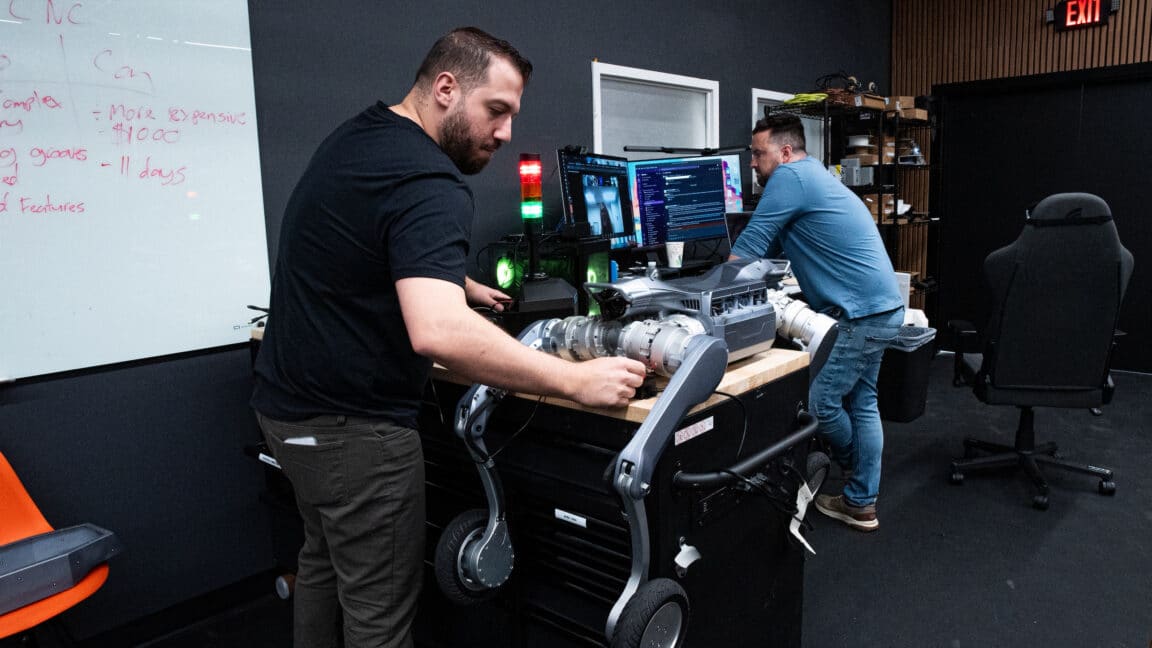
RoboStore, which has supplied humanoid and quadruped robots to more than 150 North American universities and technology firms, is establishing a production facility on Long Island after federal policy changes severed its relationship with Unitree Robotics, the Hangzhou-based manufacturer whose affordable bipedal and four-legged models had become the de facto standard for academic labs and corporate AI teams. The shift illustrates how quickly trade restrictions can force operational pivots even in specialized hardware markets.
Founder and CEO Teddy Haggerty confirmed that the company has delivered approximately 1,500 units to customers including Cisco, OpenAI, Nvidia, Harvard, and MIT. Those deployments had made RoboStore the primary conduit for Chinese-made humanoid platforms entering the United States, a role that proved untenable once Washington began scrutinizing robotics supply chains with the same rigor it applied to semiconductors and telecommunications infrastructure.
The Unitree Advantage and Its Sudden End
Unitree's appeal lay in pricing and accessibility. While Boston Dynamics' Spot quadruped retails north of $75,000 and most research-grade humanoids command six-figure budgets, Unitree's G1 humanoid launched at under $20,000, and its Go2 robot dog sold for less than $3,000 in base configurations. That price gap enabled university robotics labs with modest grants to acquire multiple units, accelerating research in locomotion, manipulation, and reinforcement learning.
At DailyTechWire, we've tracked the rapid adoption of low-cost Chinese robotics platforms across North American campuses since 2023. The G1 in particular became a common sight in computer-vision and embodied-AI labs because teams could afford to run parallel experiments without the capital-expenditure approvals required for premium hardware. OpenAI's robotics research group, which dissolved and reconstituted multiple times, reportedly used Unitree quadrupeds for early physical grounding tests before pivoting back to simulation.
That ecosystem now faces a supply interruption. While the exact regulatory mechanism remains opaque, federal agencies have expanded export-control and import-screening frameworks to cover autonomous systems capable of navigation, object manipulation, and network connectivity. The measures mirror earlier actions against DJI drones and Huawei networking gear, driven by concerns that embedded sensors and wireless modules could facilitate surveillance or data exfiltration.
Building a Domestic Alternative
RoboStore's Long Island facility will focus on assembly and integration rather than component fabrication. Haggerty has not disclosed which actuator suppliers, sensor vendors, or compute-module partners the company will rely on, but the timeline suggests an emphasis on speed over vertical integration. Given the lead times for custom servo motors and the scarcity of high-torque harmonic drives outside a handful of Japanese and South Korean suppliers, the first RoboStore-branded units will likely incorporate off-the-shelf actuators from established motion-control vendors.
The bigger question is software. Unitree ships its robots with proprietary control stacks and SDKs that abstract away low-level motor commands, enabling researchers to script behaviors in Python without deep embedded-systems knowledge. Replicating that developer experience will require either licensing middleware from a third party or building a new toolchain from scratch. Universities that standardized curricula and lab assignments around Unitree's API may face migration friction if RoboStore's platform diverges significantly.
There is also the matter of performance parity. Unitree's latest humanoid, the G1 EDU, features 23 degrees of freedom, joint-torque sensing, and onboard NVIDIA Jetson compute, all within a 35-kilogram frame. Matching those specifications at a comparable price point will test whether RoboStore can negotiate the same component pricing that Unitree enjoyed through volume contracts and proximity to Shenzhen's supply base.
Policy Pressure and the Robotics Cold War
The move to restrict Chinese robotics follows a pattern. In semiconductors, the United States deployed the foreign direct product rule to choke off access to advanced lithography. In telecoms, it blacklisted suppliers and pressured allies to do the same. Robotics represents the next frontier because autonomous platforms combine sensors, connectivity, and physical agency, raising concerns about dual-use applications in logistics, defense, and critical infrastructure.
China has responded with its own export controls on rare-earth processing, gallium, and germanium, materials essential for power electronics and RF components. The result is a fragmenting supply chain in which hardware startups must navigate not only technical challenges but also geopolitical fault lines. For a distributor like RoboStore, the choice was binary: exit the market or reshore production.
Other importers face similar reckonings. Small quadruped and humanoid platforms from companies such as Deep Robotics and LimX Dynamics have also gained traction in North America, particularly among hobbyists and smaller research teams. If those channels close, demand will either shift to pricier domestic alternatives like Agility Robotics' Digit or stall until new entrants scale up.
What Comes Next for Research Labs
Universities that invested in Unitree-based curricula now confront a dilemma. Existing units will continue to function, but hardware failures, battery degradation, and the need for replacement parts could strand labs with unsupported equipment. Some institutions are exploring refurbishment pipelines and third-party repair networks, while others are budgeting for wholesale platform migrations.
The disruption may also accelerate open-source hardware efforts. Projects like the Open Dynamic Robot Initiative, which publishes actuator designs and control code under permissive licenses, could see renewed interest as teams seek alternatives to proprietary ecosystems vulnerable to supply shocks. However, open-source robots remain expensive to fabricate in small quantities, and few academic machine shops have the precision tooling required for high-performance actuators.
For corporate buyers, the calculus is different. Nvidia and Amazon have the capital to commission custom platforms or acquire robotics startups outright. Smaller AI labs that relied on affordable hardware for embodied-intelligence experiments may delay physical deployments and return to simulation, a shift that could widen the gap between well-funded players and the rest of the field.
The Long Island Bet
RoboStore's Long Island facility is a wager that demand for accessible humanoid robots will persist despite higher costs and longer lead times. The company has not announced pricing for its domestic models, but industry observers expect a markup of at least 30 to 50 percent over the Unitree equivalents, reflecting higher labor costs, smaller production runs, and the absence of Shenzhen's component ecosystem.
Success will depend on execution speed and ecosystem stickiness. If RoboStore can ship units within six months and maintain API compatibility with existing Unitree workflows, it may retain much of its customer base. If the transition drags or introduces breaking changes, competitors will fill the void. Agility Robotics, Boston Dynamics, and a cohort of venture-backed humanoid startups are all racing to bring costs down, and any stumble by RoboStore accelerates their timelines.
The broader lesson is that hardware supply chains, once thought to be governed purely by economics, are now instruments of strategic competition. For researchers and startups caught in the middle, the priority is resilience: diversified suppliers, modular architectures, and contingency plans for the next policy shift. The era of frictionless global hardware commerce is over, and the robotics industry is still learning what comes next.