Washington Throws Weight Behind AI Training on Published Works
A 20-page administration brief argues that constraining LLM development would threaten US competitiveness, as courts continue to test the boundaries of fair use in machine learning.
A Line in the Sand
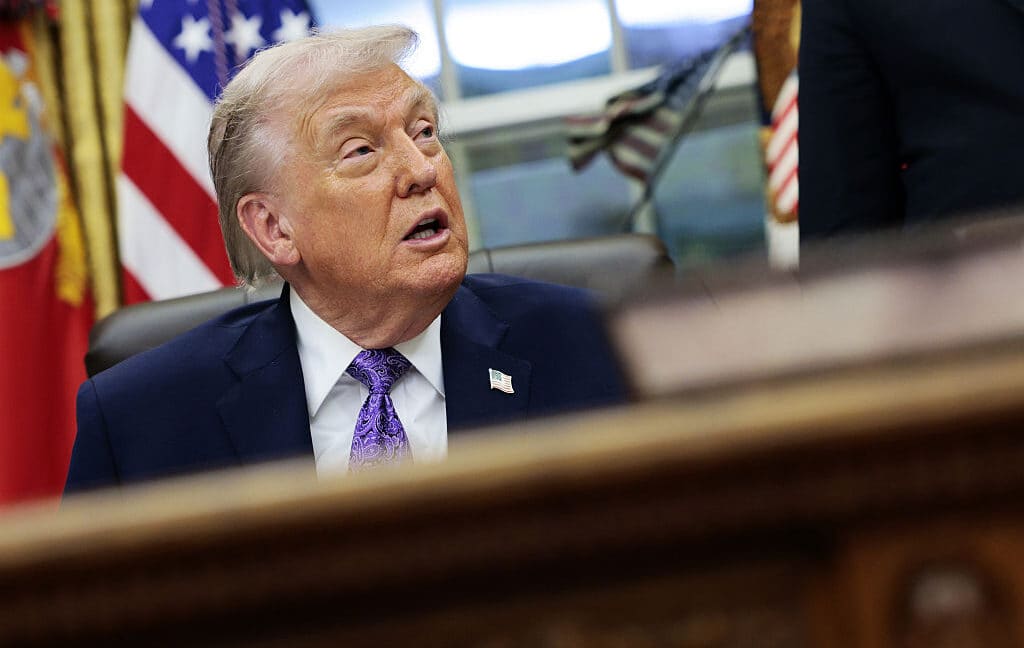
The Trump administration has entered the copyright battlefield with a clear position: artificial intelligence development is too important to American competitiveness to let traditional intellectual property doctrine stand in the way. In a 20-page brief filed in the Southern District of New York, federal lawyers argued that OpenAI's practice of training large language models on copyrighted text without permission falls within legal bounds, and that restricting such methods would damage US economic interests.
The brief arrived in the context of a lawsuit brought by The New York Times against OpenAI, one of several high-profile cases testing whether AI companies can legally ingest millions of copyrighted works - books, articles, photographs, code - to build models that power chatbots and generative tools. At DailyTechWire, we've tracked these cases across jurisdictions for two years, and this marks the first time a sitting US administration has formally backed the industry's interpretation of fair use.
"The United States has a strong interest in continuing to develop a robust and competitive artificial intelligence industry that sets the standard for the practice and procedure of AI use globally," the brief states, citing an executive order signed by President Trump in 2025 that prioritized retaining US leadership in AI. The language is unambiguous: the government views unfettered access to training data as a strategic asset, not a legal gray area to be resolved by publishers and platforms alone.
The Fair Use Pivot
The heart of the dispute is whether training an LLM on copyrighted material without a license qualifies as "transformative use," a concept central to fair use doctrine. Publishers argue that ingesting their work to build a commercial product that can summarize, paraphrase, or even replicate their content is straightforward infringement. OpenAI and its peers counter that the models learn patterns and relationships in language, not specific texts, and that the output is fundamentally different from the input.
The administration brief sides firmly with the latter view. It warns that "constraining LLM development under a misunderstanding of fair use doctrine would thwart such creative and scientific progress while hindering American prosperity and economic mobility." The framing is economic as much as legal: the brief treats model training as infrastructure, comparable to indexing the web or building a library catalog, rather than as unauthorized reproduction.
This argument has found some support in the courts. Last year, Judge William Alsup ruled in a case involving Anthropic that the company's use of copyrighted books to train its models was not itself infringing. Anthropic was ordered to pay a $1.5 billion settlement to a group of authors, but the penalty stemmed from the company's reliance on pirated shadow libraries to obtain the texts, not from the act of training. Judge Alsup likened the process to a human reader learning from books: "Like any reader aspiring to be a writer, Anthropic's LLMs trained upon works not to race ahead and replicate or supplant them, but to turn a hard corner and create something different."
That analogy has become a touchstone for defenders of current training practices. But it glosses over a key difference: scale. A human might read thousands of books in a lifetime; an LLM ingests millions of documents in days, and the resulting model can generate text on demand for billions of users. Whether that distinction matters under copyright law remains an open question.
Strategic Signaling, Limited Jurisdiction
The brief filed by the Trump administration is not a ruling, and the authors have no direct authority over the case in the Southern District of New York. But interventions of this kind carry weight. They signal to judges, to AI companies, and to international competitors how the executive branch views the stakes. The reference to global leadership is telling: Beijing, Seoul, and Brussels are all wrestling with how to regulate AI training data, and Washington is making clear it does not intend to handicap its own industry with restrictions that other jurisdictions might avoid.
For OpenAI, the brief is a public relations and legal asset. The company has faced mounting criticism from publishers, artists, and musicians who argue that its business model rests on unpaid labor - theirs. The administration's support reframes that critique as a threat to national competitiveness. It also raises the political cost for courts that might rule against the company: a decision that limits training practices could now be portrayed as undermining US strategic interests.
At the same time, the brief does little to address the concerns of rights holders. The New York Times and other plaintiffs argue that their journalism funds the very datasets that AI companies use to build products that compete with them. If a user asks ChatGPT to summarize a Times article instead of clicking through to the site, the Times loses both the reader and the ad revenue. The administration brief does not grapple with this dynamic, focusing instead on the broader economic case for AI development.
What Comes Next
The case in New York is one of several that will shape the boundaries of permissible AI training. Other lawsuits involve visual artists, software developers, and music publishers, each raising slightly different questions about what kinds of use are transformative and what kinds are merely extractive. The outcomes will determine whether AI companies must negotiate licenses with rights holders, build models on public domain or licensed data alone, or continue as they have.
The administration's brief suggests that, at least at the federal level, the preference is for minimal friction. That aligns with the approach taken by other major AI hubs - China has issued guidelines that implicitly permit training on publicly available data, and the EU's AI Act carves out research exceptions. But it also sets up a potential clash between the executive branch's industrial policy goals and the judiciary's interpretation of century-old copyright statutes.
For now, the momentum in the courts has favored AI companies. The Anthropic case established that training itself is not automatically infringing, even if the methods of obtaining data might be. Other cases have been dismissed or settled quietly. But the volume of litigation is increasing, and as models grow more capable of reproducing or closely mimicking copyrighted works, judges may find the "transformative use" argument harder to accept.
The Trump administration's brief will not end the debate, but it clarifies where power sits. Washington has decided that the economic upside of unrestricted AI development outweighs the legal claims of publishers and creators. Whether courts will defer to that logic, or carve out a different balance, will become clear in the months ahead.