Federal Agencies Sued Over Undisclosed AI Safety Framework
Lawsuit demands transparency on Trump administration's frontier model review process, raising questions about legal authority and corporate influence
A Black Box Inside Government
Four federal agencies now face legal pressure to open the curtain on how Washington evaluates cutting-edge AI systems before they reach the market. The lawsuit, filed by Protect Democracy, targets what the nonprofit describes as a largely opaque framework for safety reviews that operates beyond public or congressional scrutiny.
At DailyTechWire, we've tracked the growing tension between AI governance ambitions and procedural transparency across Asia and the West. This case crystallizes a pattern we've observed: governments building regulatory infrastructure in haste, often with private-sector input that remains invisible to the public record.
The core complaint centers on what Protect Democracy calls "almost no details" available about the review process itself. The framework reportedly governs safety assessments for frontier models, the most capable AI systems that labs rush to deploy. Yet basic questions remain unanswered: which legal statute authorizes these reviews, which companies helped design the criteria, and how officials select the "trusted partners" who gain early access to the framework's inner workings.
The Opacity Problem
Transparency advocates argue that secrecy around AI safety protocols creates multiple risks. Without published criteria, developers cannot align their testing with government expectations. Researchers and civil-society groups cannot audit whether the framework addresses known risks like model collapse, adversarial attacks, or dual-use hazards. And Congress lacks the visibility needed to legislate effectively or conduct oversight.
The lawsuit surfaces a tension familiar to Asia's tech policy watchers. In Seoul, Taipei, and Singapore, regulators have struggled to balance speed with openness when crafting AI governance frameworks. Early drafts often circulate among incumbent players, giving them first-mover advantage in shaping rules that later bind competitors. The dynamic mirrors complaints in the US case: insider access breeds asymmetry, and asymmetry erodes trust.
Protect Democracy notes that even the identities of the entities consulted during framework construction remain undisclosed. That opacity matters. If large incumbents dominate the design process, the resulting framework may embed assumptions that favor scale and capital over novel approaches. Startups, academic labs, and international entrants could find themselves navigating a system optimized for a handful of Californian giants.
Legal Authority in Question
Beyond transparency, the lawsuit probes the legal foundation for these reviews. Federal agencies derive their power from statutes passed by Congress. If no clear legislative mandate supports pre-release AI safety assessments, the framework may rest on shaky ground.
This question echoes debates in other jurisdictions. The European Union's AI Act provides explicit legal basis for conformity assessments and market surveillance. China's Cyberspace Administration operates under State Council directives that outline approval pathways for generative AI services. In contrast, the US approach appears to rely on executive discretion and voluntary cooperation, a model that critics say lacks durability and democratic legitimacy.
The lawsuit does not name which four agencies are defendants, but the landscape of federal AI policy suggests candidates: the National Institute of Standards and Technology, which publishes the AI Risk Management Framework; the Department of Commerce, which oversees export controls on advanced chips and model weights; the Office of Science and Technology Policy, which coordinates cross-agency AI initiatives; and possibly the Department of Homeland Security, given its role in critical infrastructure protection.
Each agency brings different statutory tools and institutional cultures. NIST operates through standards development, a consensus-driven process typically open to public comment. Commerce wields export-control authority under the International Emergency Economic Powers Act and the Export Administration Regulations, frameworks designed for national security, not safety testing. Blending these authorities without clear legislative guidance invites the kind of legal challenge Protect Democracy has now mounted.
The Trusted Partner Puzzle
The lawsuit highlights the role of unnamed "trusted partners" who evidently enjoy privileged access to the framework. This arrangement raises fairness and competition concerns. If a subset of companies knows the review criteria in advance, they can tailor model architectures, training procedures, and documentation to meet those benchmarks. Competitors operating in the dark must guess or reverse-engineer requirements after the fact.
Asia's AI ecosystem offers cautionary tales. In several markets, early regulatory consultations involved only the largest domestic players, sidelining startups and foreign entrants. The result: standards that implicitly favored established architectures and hindered interoperability. Developers in Bengaluru, Jakarta, and Hanoi have complained that opaque certification processes lock them out of lucrative markets, even when their models match or exceed incumbent performance on objective benchmarks.
Transparency in partner selection also matters for accountability. If the framework reflects input from firms with specific commercial interests, those interests may shape the rules in subtle ways. For example, a company heavily invested in reinforcement learning from human feedback might advocate for evaluation criteria that privilege RLHF-trained models, disadvantaging alternative alignment techniques. Without disclosure, the public cannot assess whether the framework serves broad safety goals or narrow competitive advantage.
What Comes Next
The lawsuit seeks to compel the agencies to release documents under the Freedom of Information Act and the Administrative Procedure Act. If successful, it could force publication of the framework's criteria, the list of consulted entities, and internal communications that reveal how officials justified their legal authority.
Such disclosure would not only inform developers and researchers. It would also provide a template for other jurisdictions grappling with similar challenges. At DailyTechWire, we've noted growing interest among ASEAN and South Asian regulators in pre-deployment safety reviews. Many are watching US and EU models for lessons. A transparent, legally grounded framework could accelerate convergence and reduce fragmentation. Conversely, a secretive, legally ambiguous process risks exporting dysfunction.
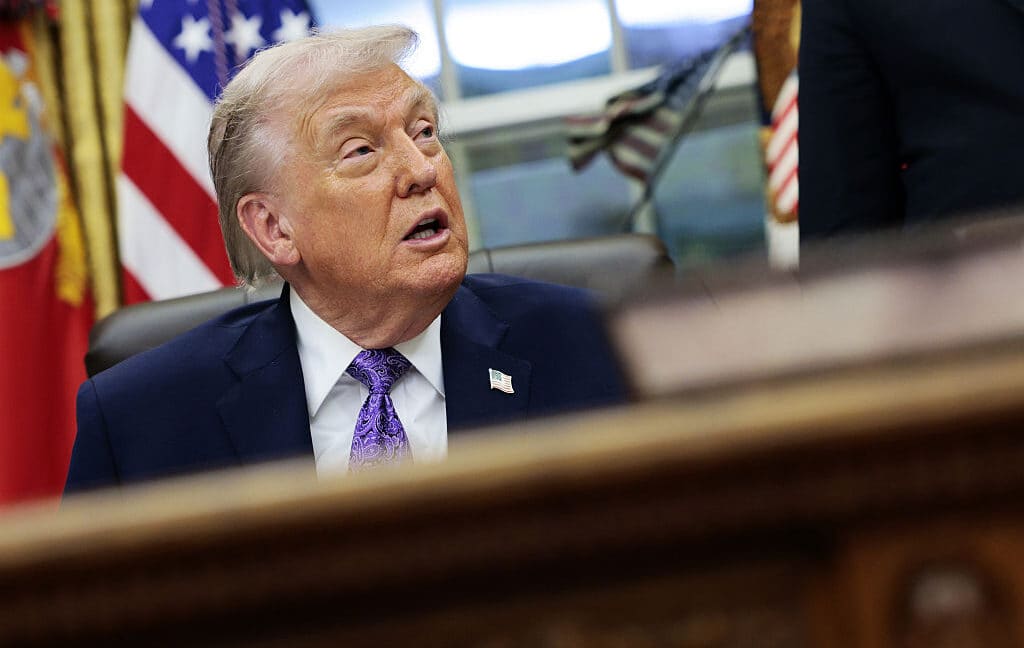
The case also tests the durability of executive-led AI governance. Administrations change, and frameworks built on discretion rather than statute can evaporate overnight. If the Trump administration's review process lacks clear legislative roots, a future administration could dismantle it just as easily, leaving developers with no continuity. That uncertainty chills investment and undermines long-term planning.
For now, the agencies have not publicly responded to the lawsuit. Their legal strategy will likely hinge on exemptions within FOIA, particularly those protecting national security information and deliberative process. Whether courts will accept those arguments in the AI safety context remains an open question. Safety testing, after all, differs from intelligence operations or military procurement. The case for secrecy is weaker when the goal is public protection, not adversary denial.
The lawsuit arrives as frontier AI development accelerates. Labs are training models with trillions of parameters, deploying them in high-stakes domains from healthcare to infrastructure management. The stakes of a flawed or captured review process grow with each capability leap. Transparency is not a luxury in this environment. It is a precondition for trust, competition, and effective governance.