Power Grids and Parent Chats: Asia's Data Center Resistance
From Australian farmlands to Indian cities, communities are organizing against infrastructure demands of AI computing facilities
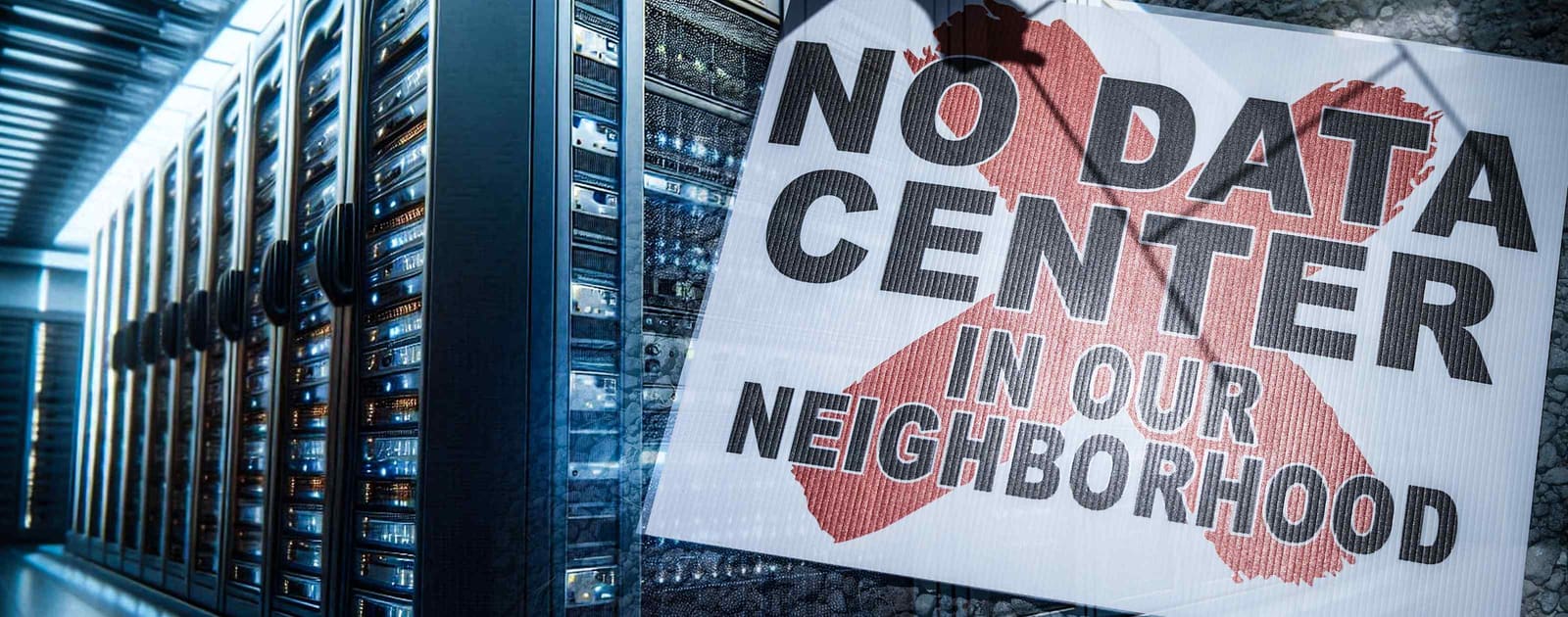
When School Parents Become Infrastructure Activists
A WhatsApp group for preschool parents in Moss Vale, a rural Australian town midway between Sydney and Canberra, has become an unlikely organizing hub against a gas-fired power plant. The facility's purpose: feeding electricity to data centers planned for the surrounding farmland. It is one signal among many that the infrastructure buildout for artificial intelligence is colliding with community tolerance across the Asia-Pacific region.
At DailyTechWire, we have tracked data center announcements in the region for the past eighteen months. What began as a race among Singapore, Tokyo, and Sydney to attract hyperscale operators has evolved into a pattern of local resistance, regulatory delays, and revised power agreements. The tension is not ideological. It is arithmetic. A single large-scale AI training facility can demand as much electricity as a regional hospital network or a small manufacturing city, and communities are asking whether the trade-off makes sense.
The Arithmetic of AI Infrastructure
Modern AI workloads, particularly training runs for frontier models, require dense clusters of graphics processing units that generate extraordinary heat and draw sustained power. A facility hosting tens of thousands of GPUs can pull between 50 and 150 megawatts, enough to supply tens of thousands of homes. Cooling systems add another layer of demand, whether through traditional chillers or newer liquid-cooling architectures that reduce energy overhead but require significant water throughput.
In markets where grid capacity is already constrained by industrial growth, residential expansion, or aging transmission infrastructure, a new data center is not a marginal addition. It is a structural shock. Operators have historically negotiated power purchase agreements with utilities or invested in on-site generation, but both paths are now drawing scrutiny. Communities near proposed sites are questioning whether private computing demand should be prioritized over public services, especially when the facilities employ relatively few people once operational.
Australia's Rural Flashpoints
Moss Vale's opposition reflects a broader pattern in regional Australia, where data center developers have targeted areas with available land, proximity to fiber routes, and cooler climates that reduce cooling costs. The gas-fired plant proposal, intended to provide baseload power independent of the grid, triggered concerns about emissions, noise, and the precedent of building generation capacity for a single commercial tenant.
Residents organized quickly, moving from informal parent chats to formal submissions to local councils and state planning authorities. The campaign has drawn support from environmental groups and energy policy advocates who argue that dedicating new fossil-fuel generation to data centers undermines national emissions targets. Operators, in turn, point to commitments to offset emissions and invest in renewable certificates, but the optics remain difficult. A gas plant built to train large language models is a tangible symbol of AI's resource appetite.
India's Urban Friction
In Indian cities, the friction takes a different form. Bengaluru, Hyderabad, and Mumbai have seen steady data center investment over the past five years, driven by domestic cloud adoption and the growth of Indian AI startups. But urban grids in these metros are stretched. Power cuts, though less frequent than a decade ago, still occur during peak summer months. Industrial customers pay premium rates and negotiate backup arrangements, but data centers operate on a different time horizon. Downtime is measured in lost training hours and inference latency, making reliability non-negotiable.
Community groups in residential areas adjacent to proposed sites have raised concerns about transformer upgrades, backup generator noise, and the visual footprint of large facilities. In one case, a neighborhood association in a Bengaluru suburb successfully delayed a project by challenging the environmental clearance process, arguing that the impact assessment underestimated diesel generator usage during grid outages. The delay added six months to the project timeline and prompted the developer to redesign the site layout and commit to a higher share of on-site solar capacity.
Regulatory Responses and Policy Gaps
Governments across the region are recalibrating. Singapore, which has imposed a moratorium on new data center developments in the past due to land and power constraints, has selectively lifted restrictions for facilities that meet efficiency benchmarks and demonstrate renewable energy sourcing. The city-state's approach reflects a calculated bet: attract high-value AI compute while maintaining grid stability and emissions commitments.
Japan is pursuing a different model, with the Ministry of Economy, Trade and Industry encouraging co-location of data centers near renewable energy projects, particularly offshore wind farms in northern prefectures. The strategy aims to match generation and load geographically, reducing transmission losses and creating incentives for renewable buildout. Early pilots have shown promise, but the model requires long development timelines and coordination across utilities, developers, and local governments.
India's policy framework remains fragmented. Data centers fall under state jurisdiction for land use and environmental clearances, but power procurement often involves central government agencies and state electricity boards. The lack of a unified approval pathway has created bottlenecks, and some operators have turned to captive solar and wind projects to secure dedicated capacity, bypassing the grid entirely for a portion of their load.
The Economics of Opposition
Resistance to data centers is not uniform. In regions with high unemployment or limited industrial investment, local governments often welcome projects for the construction phase employment and ongoing tax revenue. But the post-construction reality is sobering. A hyperscale facility might employ a few dozen technicians and engineers, far fewer than a comparable manufacturing plant. The economic benefit accrues primarily to the operator and the utility, not to the surrounding community.
This dynamic has fueled a growing ask: community benefit agreements that tie data center approvals to local infrastructure upgrades, workforce training programs, or direct financial contributions to municipal budgets. Some operators have embraced the model, seeing it as a cost of securing social license. Others view it as a regulatory overstep that raises project costs and sets a precedent for future developments.
What Comes Next
The collision between AI infrastructure and community priorities will intensify as model training scales and inference workloads grow. Operators are exploring offshore data centers, floating platforms, and even space-based computing concepts to sidestep land and grid constraints, but these remain speculative. The near-term reality is terrestrial, grid-connected, and subject to local approval.
For policymakers, the challenge is balancing economic competitiveness with grid stability and social equity. A region that cannot host AI infrastructure risks losing investment to competitors, but one that forces projects through over community opposition risks backlash and long-term friction. The answer likely lies in early stakeholder engagement, transparent impact assessments, and genuine benefit-sharing mechanisms, not just token gestures.
At DailyTechWire, we see this as a test case for how the technology industry negotiates its physical footprint in an era of resource-intensive computing. The preschool parents in Moss Vale are not opposing progress. They are asking who benefits and who pays. That is a question the industry will answer, one way or another, in every community it enters.