China's IPO Pipeline Shifts Toward Semiconductor Self-Reliance
Export restrictions have quietly reoriented public-market ambitions, concentrating capital and founder energy on bottleneck technologies where Washington holds leverage.
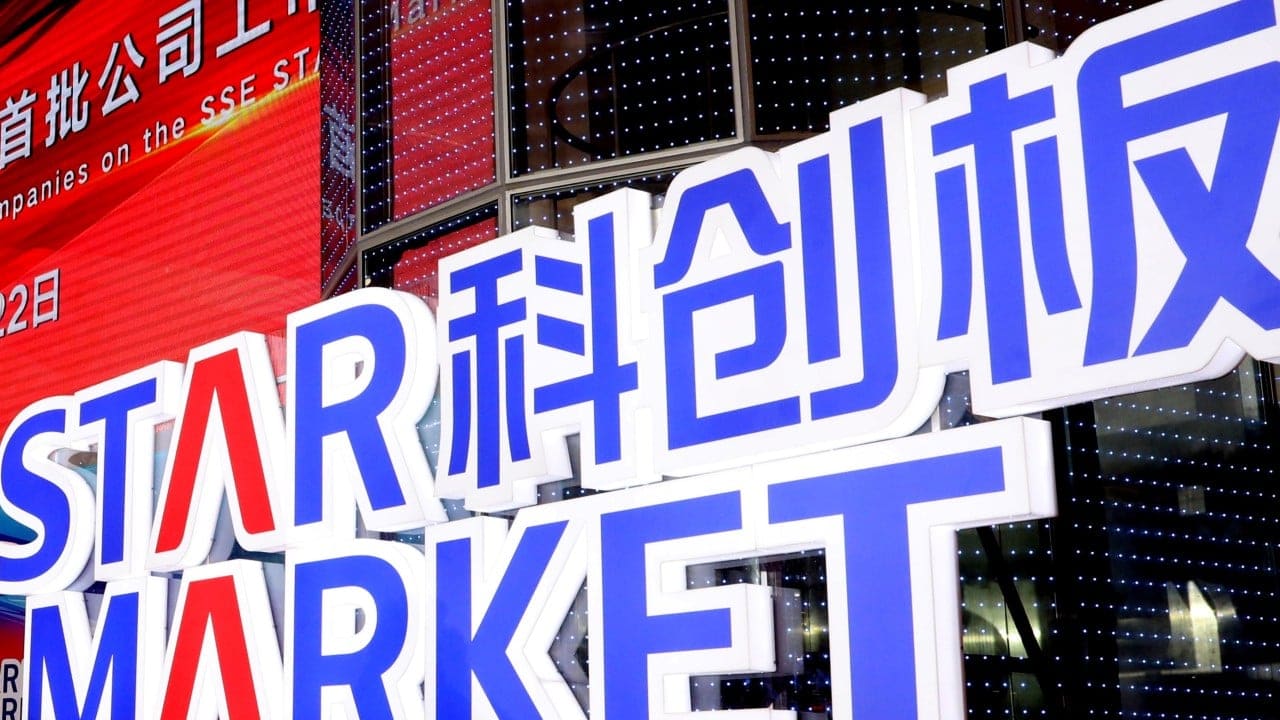
A Quiet Reorientation
Walk through the filings on Shanghai's Star Market this year and a pattern emerges that would have seemed improbable half a decade ago. One in five companies launching initial public offerings now works on problems that sit at the intersection of national urgency and technological vulnerability: advanced chip design tools, photoresist chemicals, high-precision manufacturing equipment. In 2022, that figure was 8.1 per cent, according to Morgan Stanley data. The shift is not a coincidence. It is the downstream consequence of export-control architecture that has made certain technologies both strategically critical and commercially attractive.
At DailyTechWire, we've tracked capital flows across Asia's semiconductor and tooling ecosystems for years, and this reorientation of China's public-market pipeline represents one of the clearest signals yet that Washington's restrictions have achieved a structural effect. The question is no longer whether export controls matter; it is what kind of innovation environment they produce.
The Chokepoint Economy
Beijing's language around technological sovereignty has sharpened in recent years, but the term "chokepoint" carries specific weight. It refers to categories where a small number of foreign suppliers - often American or allied firms - control inputs that are difficult to substitute and essential to downstream production. Extreme ultraviolet lithography machines, certain grades of semiconductor manufacturing chemicals, electronic design automation software for chips below seven nanometers: these are not merely high-value products. They are gatekeeper technologies.
Export restrictions have turned these chokepoints into funding magnets. Venture capital, state-backed funds, and now public-market investors are pouring resources into firms that promise even partial substitution. The Star Market, launched in 2019 as China's answer to Nasdaq, has become a natural listing venue. Its rules favor hard-tech companies, and its investor base has grown comfortable with long development cycles and uncertain timelines - precisely the profile of firms working on lithography optics or advanced packaging.
The 20 per cent figure from Morgan Stanley captures companies whose core business revolves around solving these dependencies. But the indirect effect is broader. Firms in adjacent fields - materials science, precision robotics, test and measurement - are also seeing elevated valuations and faster paths to liquidity, because their technologies feed into chokepoint solutions.
Policy as Market Signal
What makes this shift noteworthy is not that Beijing prioritizes self-reliance; that has been explicit policy since at least 2015. What has changed is the synchronization of state guidance, investor behavior, and founder ambition. Export controls have clarified the target. They have made it easier for policymakers to justify subsidies, for limited partners to explain concentration risk, and for engineers to pitch their startups as both commercially viable and strategically essential.
This is a feedback loop. When the U.S. tightened rules on advanced chip sales in 2022 and again in 2023, it did not just restrict supply - it validated the thesis that domestic alternatives were worth funding. Every new round of controls sends a signal to China's innovation ecosystem: the technologies we restrict are the technologies you should build. The IPO data reflects that signal being received.
It is worth noting that not all chokepoint companies succeed, and not all will generate returns. Some are pursuing problems that may take a decade or more to solve, if they can be solved atfully. Extreme ultraviolet lithography remains out of reach for any firm outside ASML's orbit, despite years of effort and significant state backing. But the capital is flowing regardless, because the strategic imperative overrides short-term commercial logic.
Implications for Regional Tech Ecosystems
The concentration of IPO activity around chokepoint technologies has ripple effects beyond China's borders. Component suppliers in Taiwan, South Korea, and Japan are watching carefully. Some are adjusting product roadmaps to avoid triggering export-control tripwires; others are exploring partnerships with Chinese firms that operate below restricted performance thresholds. At the same time, Southeast Asian countries are positioning themselves as neutral assembly and test hubs, hoping to capture value in a fragmenting supply chain.
For investors, the shift introduces new categories of risk. A company that goes public with a mission to replace an American tool or component is making a bet not just on technology, but on the durability of the policy environment that created the opportunity. If restrictions ease, the commercial case weakens. If they tighten further, the technical challenge may become insurmountable. This is policy-dependent innovation, and it behaves differently from market-driven R&D.
At the same time, the surge in chokepoint-focused IPOs is creating a talent vortex. Engineers who might once have joined consumer internet platforms or electric-vehicle startups are now being recruited into semiconductor tooling, materials science, and precision manufacturing. The long-term effects on China's innovation mix are difficult to predict, but the near-term effect is clear: the country's most ambitious technical talent is increasingly oriented toward solving problems defined by export controls.
The Export-Control Dividend
Washington's goal with export restrictions was to slow China's progress in advanced semiconductors and related fields. By most measures, that has occurred. Chinese firms have struggled to produce cutting-edge chips at scale, and the gap in process technology between leading Chinese fabs and TSMC or Samsung has widened. But the controls have also had a mobilizing effect. They have turned chokepoint technologies into a national project, with funding, talent, and political capital aligned behind them.
The IPO trend is one manifestation of that mobilization. It is not clear that more listings translate into faster breakthroughs - capital is necessary but not sufficient - but they do indicate where China's innovation economy is placing its bets. The Star Market's pipeline is now a barometer of technological sovereignty, and the concentration of chokepoint companies suggests that the export-control era has not dampened ambition. It has redirected it.
Whether this redirection produces the substitutions Beijing hopes for remains an open question. Some technologies may prove too complex, too expensive, or too dependent on accumulated know-how to replicate quickly. But the shift in IPO composition is already a fact, and it points to a broader truth: export controls do not just constrain; they also shape. They create incentives, define markets, and reorient the flows of capital and talent. The U.S. has learned to wield them as an instrument of strategic competition. China, in turn, has learned to treat them as a roadmap.