Inside the USB Fraud: How Cheap Flash Drives Hide MicroSD Cards to Fake Capacity
A teardown of budget drives from Chinese suppliers reveals a hardware scam that silently erases user data when storage limits are exceeded
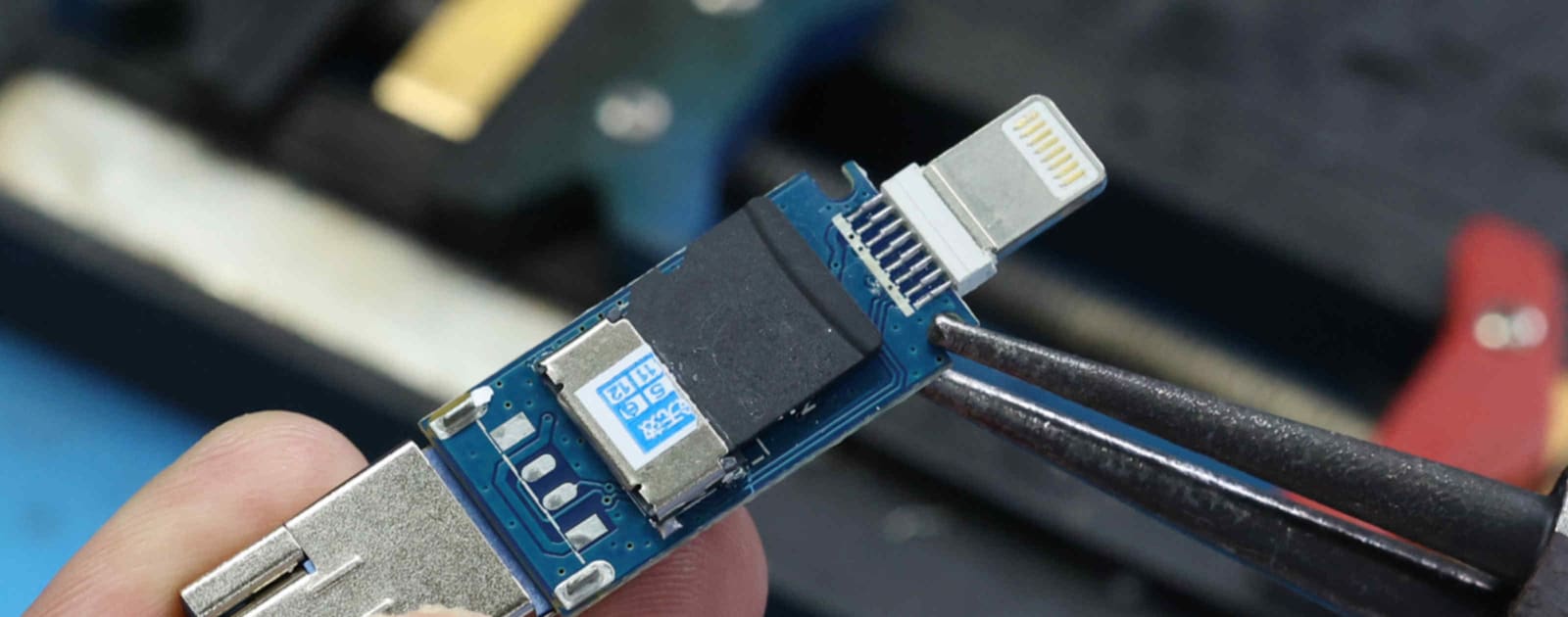
The Hardware Deception
Open the casing of a bargain USB flash drive purchased from a major e-commerce platform, and you might find something unexpected: not a soldered memory chip, but a microSD card wedged inside. This is not a design choice. It is fraud at the component level.
A recent examination of underpriced USB drives sourced from online marketplaces uncovered that half the units tested fell short of their advertised storage capacity. Every device in this subset originated from Chinese manufacturing chains. The pattern is consistent: inflated specifications, rock-bottom pricing, and a concealed microSD card in place of the NAND flash memory a legitimate USB drive would use.
At DailyTechWire, we have tracked the proliferation of counterfeit electronics across Asian supply chains, but this case stands out for its brazenness. The deception is not software trickery alone. It is a physical swap, designed to pass a cursory file-transfer test while failing silently once the real capacity threshold is crossed.
What Happens When You Exceed the Real Limit
The mechanics of the scam are straightforward. A drive advertised as 128GB or 256GB contains a microSD card with a fraction of that capacity, often 8GB or 16GB. Firmware on the controller chip reports the inflated number to the operating system. When a user copies files that exceed the true capacity, the drive does not throw an error. It accepts the data, then quietly discards it.
This is not a bug. It is engineered behavior. The controller maintains a file table that lists every file as successfully written, even when the underlying storage has run out of space. Users discover the problem only when they attempt to open a file and find it corrupted or missing entirely. By then, the original may be deleted, and the backup is a ghost.
The risk is highest for users who rely on USB drives for archival storage, photographers transferring shoots, or small businesses that lack centralized backup infrastructure. In each case, the assumption of data integrity is foundational. The fraud exploits that trust.
Why MicroSD Cards Instead of NAND Chips
The substitution makes economic sense for counterfeiters. Bulk microSD cards of low capacity are cheaper than the NAND flash modules used in legitimate USB drives. The assembly process is simpler: no need for pick-and-place soldering of surface-mount components. A microSD slot or adhesive mount suffices.
The price gap widens further when counterfeiters source reject or recycled microSD cards, common in gray-market electronics channels across Shenzhen and surrounding manufacturing hubs. These components may have failed quality control at their original production lines, then been resold through brokers who strip branding and repackage them for secondary use.
For the end consumer, the result is a product that costs less than half the price of a name-brand drive but delivers none of the reliability. The savings evaporate the moment data is lost.
The E-Commerce Enabler
Online marketplaces have become the primary distribution channel for these devices. The business model relies on high-volume, low-margin sales, often fulfilled through third-party sellers with minimal vetting. Listings bundle generic product photos, vague brand names, and customer reviews that skew positive in the early days before widespread failures surface.
Complaint patterns emerge slowly. A user who loses files may blame their own error or assume a one-off defect. When negative reviews accumulate, the seller can simply close the storefront and reopen under a new name. The platform's recommendation algorithms, meanwhile, continue to surface similar products based on price and shipping speed.
Regulatory oversight has struggled to keep pace. Customs inspections focus on safety and intellectual property, not the internal hardware configuration of flash drives. A counterfeit drive with fake capacity passes through as easily as a legitimate one, provided it carries no trademarked branding.
The Broader Counterfeit Electronics Landscape
This USB drive scam fits into a wider pattern of component-level fraud that has accelerated alongside the growth of cross-border e-commerce in Asia. We have documented similar schemes in power banks with inflated battery ratings, HDMI cables that fail signal integrity tests, and smartphone chargers that substitute lower-grade capacitors.
The common thread is the exploitation of information asymmetry. Consumers cannot easily verify internal specifications without destructive testing. Trust defaults to the seller's claims, reinforced by platform reputation systems that counterfeiters have learned to game.
In markets where price sensitivity is high, the incentive to cut corners intensifies. A manufacturer shaving costs by 30 percent through component substitution can undercut competitors and still maintain margin. The risk of reputational damage is diffuse, spread across anonymous seller accounts and jurisdictional boundaries that complicate enforcement.
What Users Can Do
Verification tools exist but require proactive use. Software utilities can write test files across the full advertised capacity of a drive, then read them back to confirm integrity. These tests take time, often hours for high-capacity drives, and most users skip them.
Purchasing from established brands through authorized retailers remains the most reliable safeguard. The price premium reflects not just marketing but supply chain controls, quality assurance, and warranty support. A legitimate 128GB USB drive from a tier-one manufacturer costs three to four times the price of a suspect unit on a marketplace, but the gap narrows when the cost of data loss is factored in.
For organizations, the solution is policy: centralized procurement, approved vendor lists, and mandatory testing of storage media before deployment. Individual consumers have fewer resources, but the principle holds. The cheapest option is rarely the most economical once risk is accounted for.
The Path Forward
Enforcement will require coordination across platforms, regulators, and manufacturers. E-commerce sites can tighten seller verification, require proof of component sourcing, and flag listings with pricing anomalies. Customs agencies can add spot checks for storage device capacity to existing inspection protocols. Industry groups can fund public awareness campaigns that educate buyers on the risks.
None of these measures is sufficient alone. The counterfeit electronics trade is adaptive, shifting to new products and platforms as old channels close. But the combination of technical verification, regulatory pressure, and informed consumers can raise the cost of fraud high enough to deter the marginal operator.
For now, the burden falls disproportionately on the user. The USB drive that promises 256GB for the price of a coffee may deliver exactly what it costs: nothing.