OpenAI Pulls the Plug on Atlas, Bets on Embedding AI Into Existing Workflows
The company's retreat from standalone browsers signals a broader rethink: rather than building new destinations, AI players are racing to colonize the tools users already inhabit.
The End of a Short Experiment
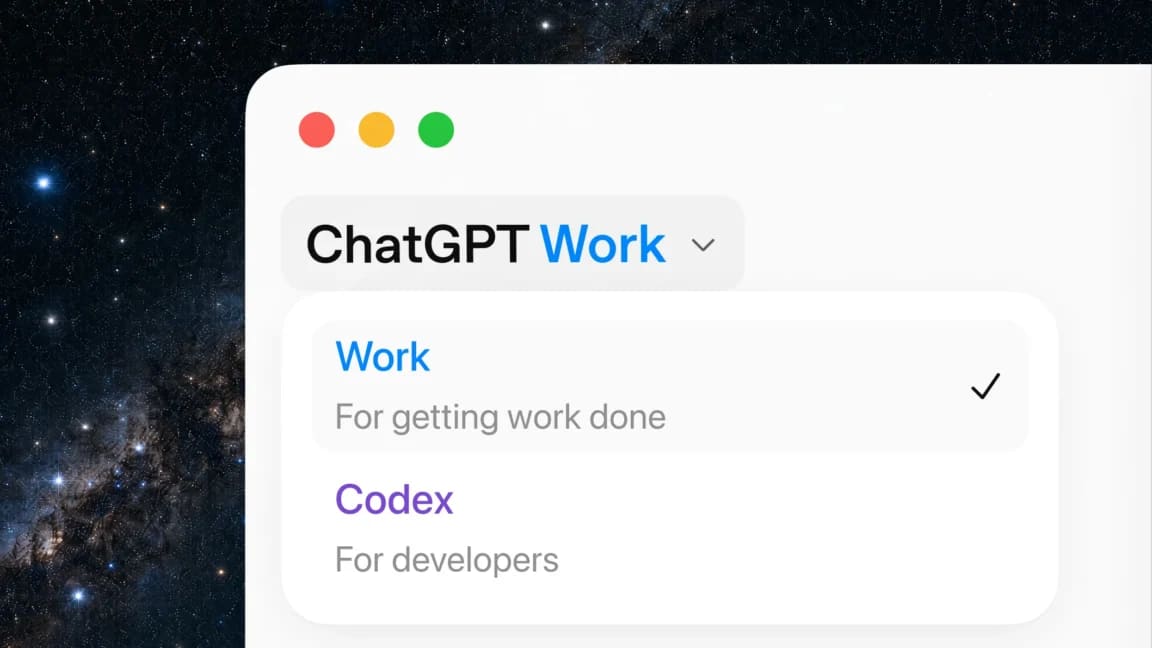
OpenAI has decided to discontinue Atlas, the AI-powered browser it introduced last October. The product, which embedded ChatGPT directly into the browsing experience, will be shut down as the company consolidates its agent-driven web features into platforms users already occupy: a redesigned ChatGPT desktop application and a new extension for Google Chrome.
The decision follows internal directives from OpenAI's applications chief Fidji Simo to pare back what she described as "side quests." That same cost-discipline push led the company to shutter Sora, its video-generation tool, earlier this year. For a firm that raised billions on the promise of generative AI's transformative potential, the moves underscore a more pragmatic calculus: not every experiment justifies ongoing investment, especially when distribution remains the hardest problem to solve.
A Year of Browser Wars That Nobody Won
Over the past twelve months, the AI sector mounted an ambitious - if scattershot - campaign to dethrone Chrome as the default gateway to the internet. Perplexity shipped Comet, a search-first browser designed to surface answers rather than links. The Browser Company unveiled Dia, positioning it as a context-aware companion that anticipates user intent. Meanwhile, Google and Microsoft retrofitted Chrome and Edge with agentic features, betting that incremental upgrades would be enough to hold their ground.
OpenAI's Atlas was part of that wave. But the company appears to have reached a conclusion that aligns with what we've observed across the region's enterprise software players: users don't switch browsers lightly, and building a new one from scratch means fighting an uphill battle against muscle memory, saved passwords, and years of accumulated extensions.
Rather than try to migrate hundreds of millions of people to a new product, OpenAI is doing what incumbents fear most - inserting itself into the workflows those users already rely on.
What Replaces Atlas
OpenAI is launching a Chrome extension that gives ChatGPT direct access to the context of any web page a user is viewing. The extension allows users to ask questions about content on screen, generate summaries, or initiate longer agentic tasks without leaving their browser. It's a direct challenge to Google's Gemini Side Panel, which offers similar in-browser assistance but is tightly coupled to Google's own search and knowledge graph.
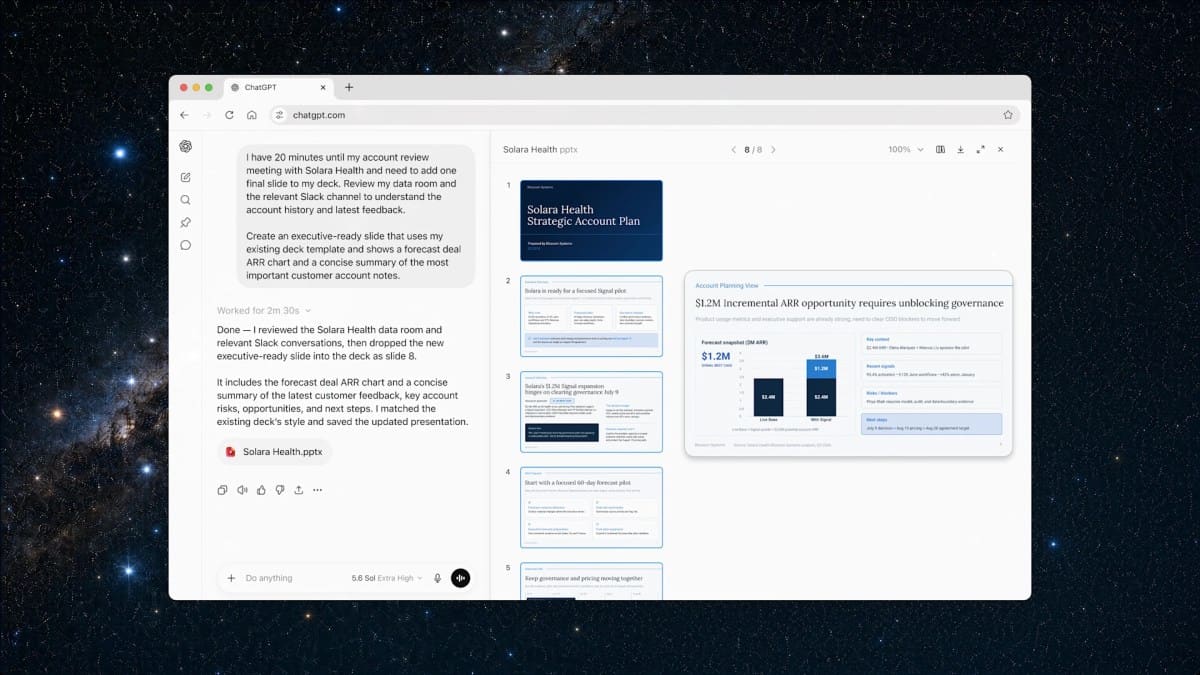
At the same time, the ChatGPT desktop app is receiving a significant overhaul. The updated application now includes a more capable browser component that lets users navigate websites, authenticate into accounts, download files, and interact with pages - all without switching contexts. Behind the scenes, a separate cloud-based browser runs remotely on OpenAI's infrastructure, serving as the execution environment where ChatGPT's agents can complete tasks autonomously on a user's behalf.
Together, these updates transform ChatGPT from a conversational interface into what OpenAI is positioning as a "continuous workspace" - a single surface that spans Chrome, the desktop, and a back-end agent layer.
The Strategic Bet on Ambient Intelligence
The pivot reflects a broader strategic shift in how AI companies think about product architecture. Early in the generative AI boom, the prevailing assumption was that new capabilities would demand new interfaces. If AI could browse, reason, and act, surely users would want a dedicated environment purpose-built for those tasks.
That thesis has not held. What we're seeing instead, from Seoul to San Francisco, is a race to make AI ambient - embedded in the tools people already use, surfaced only when needed, and invisible the rest of the time. Microsoft's Copilot strategy follows this playbook. So does Anthropic's partnership with Notion and Slack. And now OpenAI is aligning with the same logic.
The Chrome extension is particularly telling. By building on top of Google's browser, OpenAI gains immediate access to the largest user base on the web. It also inherits Chrome's security model, update infrastructure, and ecosystem of complementary extensions. The trade-off is that Google controls the platform - and could, in theory, throttle or block OpenAI's extension if competitive pressures escalate. But for now, the distribution advantage outweighs the risk.
Competitive Pressure and the Agent Layer
OpenAI's decision to shut down Atlas and double down on cross-platform integration also reflects the intensifying competition in the agent space. The real battleground isn't browsers - it's the orchestration layer that sits between user intent and execution. Whoever controls that layer can aggregate demand, negotiate with service providers, and capture margin on transactions.
Google's Gemini Side Panel is one front in this fight. But the larger contest involves players like Anthropic, which has been piloting "computer use" capabilities that let Claude interact with desktop applications, and startups across Asia building vertical agents for e-commerce, finance, and logistics. OpenAI's cloud browser - the remote execution environment that runs agent tasks - positions the company to compete in that arena without requiring users to adopt a new primary interface.
The risk, of course, is fragmentation. If every AI provider ships its own extension, desktop app, and agent runtime, users will face a thicket of overlapping tools with unclear boundaries. The industry hasn't yet settled on standards for agent interoperability, permissions, or auditing. Until it does, we're likely to see a proliferation of proprietary stacks, each optimizing for lock-in rather than composability.
What This Means for the Browser as a Platform
OpenAI's retreat from Atlas doesn't mean the browser is irrelevant. It means the browser is infrastructure - essential, ubiquitous, and increasingly commoditized. The value has shifted from the chrome (lowercase) around the viewport to the intelligence that can be injected into it.
That shift has implications for the broader tech stack. If browsers become dumb pipes for agentic workflows, then the companies that control the agent layer gain leverage over the entire web. They can intercept user queries, rewrite requests, and route transactions through their own systems. That's a powerful position, and one that regulators in Brussels, Beijing, and Washington are beginning to scrutinize.
For now, OpenAI is betting that users want AI where they already are - not in a new app they have to download, learn, and integrate into their routines. It's a pragmatic bet, and one that aligns with the broader trend toward invisible, ambient intelligence. Whether it's the right bet will depend on how quickly the company can scale its agent capabilities, how effectively it can compete with Google's native integration, and whether users trust OpenAI enough to grant it access to their browsing context.
The browser wars of 2025 and early 2026 may have been a detour. But the war for the agent layer is just beginning, and OpenAI is repositioning itself for that fight.