U.S. Imposes 100% Tariff on Industrial Drones as Supply Chain Gaps Widen
New levies target heavy and thermal-equipped models, forcing operators into a market where alternatives remain scarce and domestic manufacturing infrastructure lags years behind China.
The New Tariff Wall
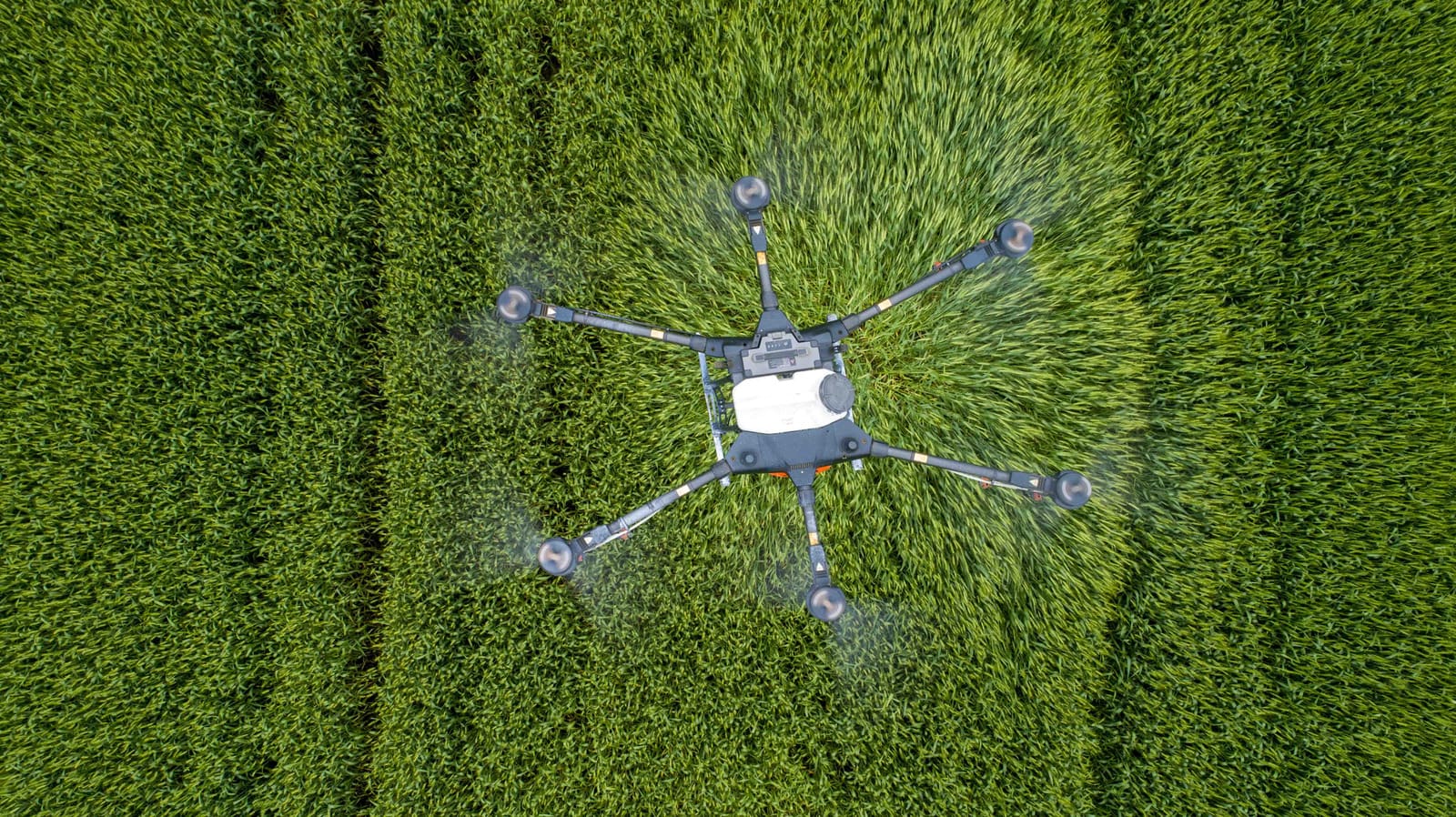
Washington has drawn a sharp line through the commercial drone market. Heavy platforms exceeding 25 kilograms, along with any unit equipped with docking stations or thermal imaging, now face a 100 percent tariff. Lighter consumer and prosumer models will see a 25 percent levy, while imports from the European Union, Japan, South Korea, Switzerland, and Taiwan carry a 15 percent charge if their components originate primarily in those jurisdictions. United Kingdom-manufactured drones receive a 10 percent rate.
The White House framed the move as both a national security measure and an industrial policy lever, aiming to encourage domestic production of airframes, sensors, and flight controllers. A parallel set of incentive programs will open for U.S. companies willing to invest in drone component manufacturing. The administration also closed what it described as a loophole that allowed firms to import Chinese subassemblies and complete final integration domestically.
Who Bears the Cost
Importers and distributors will pay the tariffs at the border, then pass those costs to end users. Utilities inspecting high-voltage transmission lines, agricultural operators spraying fields at scale, and emergency-response teams conducting thermal search missions all rely on platforms that now carry significantly higher price tags. Even if future court challenges succeed in overturning the levies, buyers are unlikely to see retroactive refunds; the money flows into the Treasury and stays there.
At DailyTechWire, we've tracked similar tariff cycles across semiconductors, solar panels, and lithium-ion cells. In each case, the initial shock to procurement budgets forces organizations to either absorb the premium or delay capital expenditure until alternative suppliers emerge. The drone sector is no different, except that the alternative supplier base remains thin.
The Capability Gap
Chinese manufacturers have spent the past decade building vertically integrated production ecosystems that span carbon-fiber molding, brushless motor winding, gimbal assembly, and computer-vision algorithm tuning. The result is a product portfolio that combines flight endurance, payload capacity, and sensor fidelity at price points Western competitors have struggled to match.
Thermal imaging, in particular, illustrates the challenge. High-resolution long-wave infrared sensors require specialized fabrication and calibration. Integrating those sensors into a stabilized gimbal, pairing them with a flight controller that can maintain station-keeping in gusty conditions, and wrapping the package in a weather-resistant airframe demands both component supply density and engineering iteration. Few companies outside China have completed that loop at commercial scale.
Power utilities, for example, use thermal drones to identify hot spots on insulators and detect early-stage failures in transformer bushings. Switching to a platform with lower thermal resolution or shorter flight time reduces the inspection envelope and increases the frequency of manual field visits. The operational trade-off is real, and it shows up in maintenance budgets and grid reliability metrics.
The On-Shoring Question
The administration's incentive programs aim to seed a domestic supply chain. Yet the obstacles are structural, not merely financial. Smartphone production offers a useful parallel: despite repeated policy pushes, the United States has not rebuilt the supplier networks, process know-how, and labor pipelines that migrated to Asia over two decades. Drones demand many of the same inputs, from precision injection molding to multi-layer circuit-board assembly to firmware optimization.
Building a single high-volume factory is feasible with enough capital. Building the ecosystem around it takes years. Engineers need hands-on experience with failure modes; suppliers need predictable order volumes to justify tooling investment; logistics networks need to handle components that arrive just-in-time rather than sitting in expensive inventory. China's advantage lies not in any single factory, but in the density of specialized firms within a few hundred kilometers of one another.
Regulatory Layering
The tariff announcement follows an earlier Federal Communications Commission decision to revoke authorization for certain LiDAR-equipped models previously cleared for sale, citing potential military applications. That move affected platforms used in precision agriculture and topographic surveying, adding another constraint to an already tightening market.
A separate legislative effort to ban new consumer products from specific Chinese manufacturers remains in progress, though its scope and timeline remain unclear. Taken together, the regulatory and tariff layers create a patchwork that operators must navigate case by case, checking whether a given model falls under trade restrictions, FCC approvals, or both.
What Comes Next
In the near term, expect price increases across the commercial drone market. Distributors will adjust their invoices, and procurement managers will revisit capital plans. Some operators will extend the service life of existing fleets, deferring upgrades until clarity improves or alternatives appear.
Over the medium term, non-Chinese manufacturers may expand production, particularly in jurisdictions that enjoy lower tariff rates. European and South Korean firms have demonstrated capability in fixed-wing survey platforms and tethered systems; whether they can scale into the heavier multirotor segment remains to be seen.
The longer-term outcome hinges on whether U.S. policy can translate subsidy dollars into functioning supply chains. History suggests that industrial ecosystems are easier to lose than to rebuild. For now, operators face a narrower menu, higher costs, and the question of how long they can stretch the capabilities they already have.