Unitree's $53 Billion Valuation Sets a Risky Benchmark for China's Next Tech Wave
A humanoid robotics maker's explosive debut is forcing investors to rethink how they price companies building tomorrow's infrastructure, not just today's revenue.

A 486% Pop and a New Pricing Puzzle
When Unitree Robotics began trading in Shanghai on August 19, it carried a valuation of RMB 61 billion, or roughly $9.1 billion. That figure already represented 36 times the humanoid robot maker's 2025 revenue and 219 times its earnings. By the morning close, shares had climbed 486%, pushing the company's market capitalization to RMB 357.5 billion, approximately $53 billion. One early backer had floated RMB 200 billion as reasonable, with RMB 400 billion possible in the near term. The actual number landed somewhere in between.
At DailyTechWire, we've tracked dozens of IPOs across the region, and few have delivered that kind of first-day performance in recent memory. The immediate question is whether Unitree represents a one-off frenzy or the opening act of a broader repricing across China's emerging-tech sector. The answer matters because a growing roster of companies developing nascent technologies is preparing to approach public markets, and Unitree has just handed them a benchmark.
Why Unitree Commands Attention
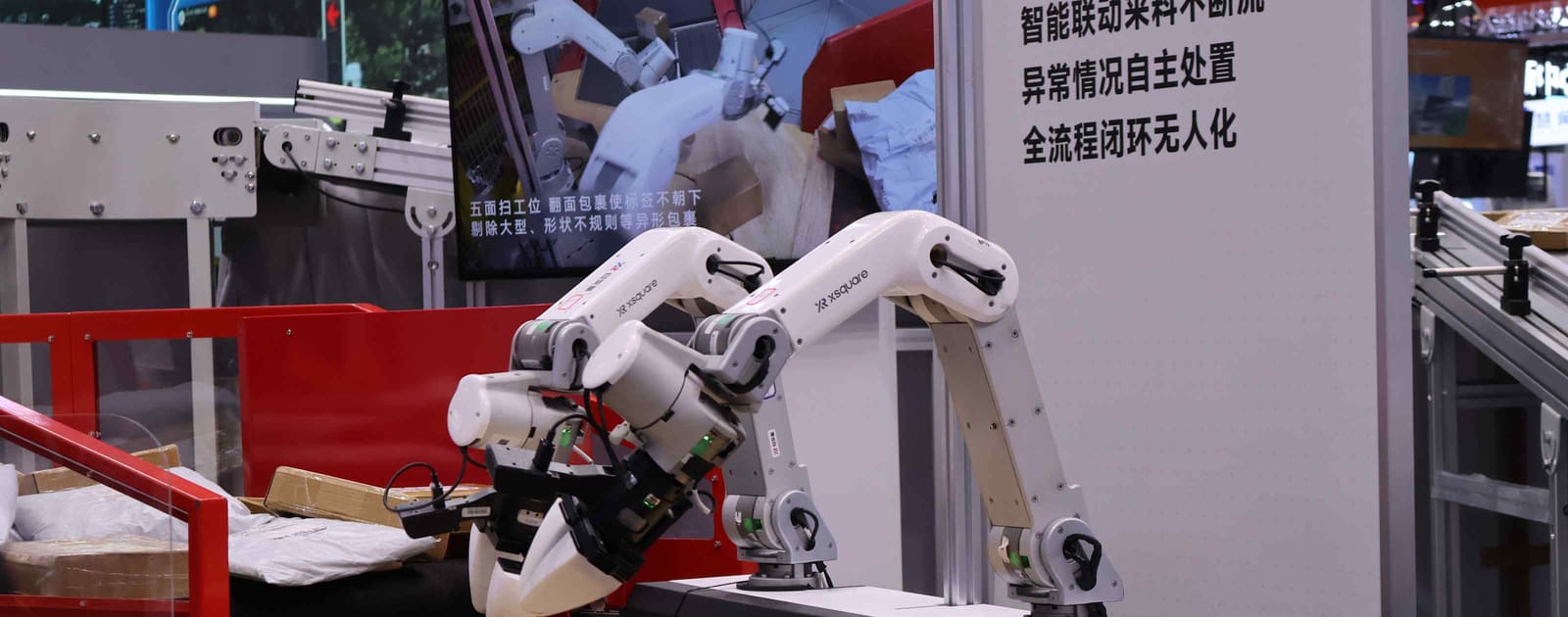
Unitree is not a typical startup riding hype alone. The company has spent ten years refining the unglamorous but essential disciplines of robotics: engineering for manufacturability, supply-chain integration, and cost control. While many peers have focused on eye-catching demos, Unitree has concentrated on making products that can be built at scale and sold to customers who will actually deploy them. That operational rigor translates into something rare in emerging tech: proof that difficult engineering can yield commercially viable hardware.
The company's revenue for 2025 reached RMB 1.7 billion, equivalent to about $252 million. That figure is modest by the standards of mature tech giants, but it demonstrates traction in a category that barely existed when Unitree started. Investors are betting not on what the company earns today, but on the possibility that it controls a critical layer of tomorrow's robotics stack, from actuators and sensors to software frameworks that others will license or build upon.
The Valuation Conundrum
Traditional metrics struggle to capture this dynamic. Price-to-earnings multiples in the hundreds or price-to-sales ratios above thirty would trigger alarm bells in most sectors. But for companies whose core value lies in future infrastructure rather than current cash flow, those ratios can feel beside the point. The real question is whether Unitree, or any company in a similar position, can grow into its valuation before investor patience runs out.
Unitree's surge creates a reference point for that calculation. When BrainCo, a developer of noninvasive brain-computer interfaces, reportedly filed confidentially for a Hong Kong listing, it entered a market where comparables remain scarce. BrainCo and Unitree operate in different domains, but both face the same challenge: convincing public-market investors to price them on potential rather than performance. Unitree's debut suggests that appetite exists, at least for now.
Precedent, Not Parallel
The risk is that Unitree's valuation becomes a floor rather than a ceiling. If investors treat a $53 billion market cap as the starting point for any company with a plausible claim to embodied intelligence or adjacent fields, valuations could decouple from the messy realities of product development, regulatory approvals, and market adoption. Robotics may eventually become a large addressable market, but that does not guarantee every richly valued company today will survive the journey.
Winreal Investment, an early backer of Unitree, has emphasized that experience and real-world deployment still matter. Chairman Huang Jinping has noted that rising valuations are no substitute for products that function in actual operating environments, not just controlled labs. That perspective is worth keeping in mind as more companies approach listing.
The Queue Behind Unitree
A cluster of Chinese technology companies is now preparing for public debuts, many of them working on technologies that sit somewhere between research and revenue. DeepSeek, focused on AI infrastructure, is among the names circulating in pre-IPO conversations. Each of these companies will face the same valuation puzzle Unitree just solved, or at least appeared to solve: how to translate long-term strategic importance into a number that public investors will accept.
Unitree's first-day performance offers one data point. Whether that data point reflects sustainable investor conviction or a short-term frenzy will become clearer as more companies test the market. The precedent is now set. The question is whether it holds.
Scarcity, Commercialization, and Expectations
Three factors are likely to shape how Unitree's valuation ripples outward. The first is scarcity. Public investors in China have limited options for gaining exposure to robotics, brain-computer interfaces, or cutting-edge AI infrastructure. When a credible player in one of those categories lists, demand can concentrate quickly.
The second is commercialization. Unitree has products in the field and revenue on the books. Companies that lack both will struggle to command similar multiples, even if their technology appears promising. Investors may tolerate high price-to-sales ratios, but they remain wary of companies that have yet to prove they can sell anything at all.
The third is expectations management. Unitree's early backers floated a range of valuations before the IPO, priming the market for a large number. That anchoring effect may have contributed to the first-day surge. Other companies will try similar strategies, and the market will eventually decide which expectations are justified and which are not.
What This Means for Asia's Tech Landscape
Unitree's debut is a signal, not a verdict. It tells us that China's public markets are willing to price emerging technology companies on their potential role in future infrastructure, not just their current financials. That openness creates opportunity for founders and investors, but it also introduces volatility. If a handful of highly valued IPOs fail to deliver on their roadmaps, the window could close as quickly as it opened.
For now, the precedent is in place. Companies preparing to list will look at Unitree's $53 billion valuation and adjust their own expectations accordingly. Investors will weigh the gap between today's products and tomorrow's promises. And the market will test whether the narrative around embodied intelligence, brain-computer interfaces, and AI infrastructure can support the valuations being assigned to it.
The next few quarters will reveal whether Unitree's surge was the start of a broader repricing or an outlier that other companies cannot replicate. Either way, the benchmark has been set, and the queue behind Unitree is getting longer.