Why Disrupt 2026 Became a Battleground for Early-Stage Capital
San Francisco's largest startup gathering positions itself as the answer to competitive deal flow, but the real test is whether three days can justify the trip for time-pressed investors.

The Pitch to Investors Has Changed
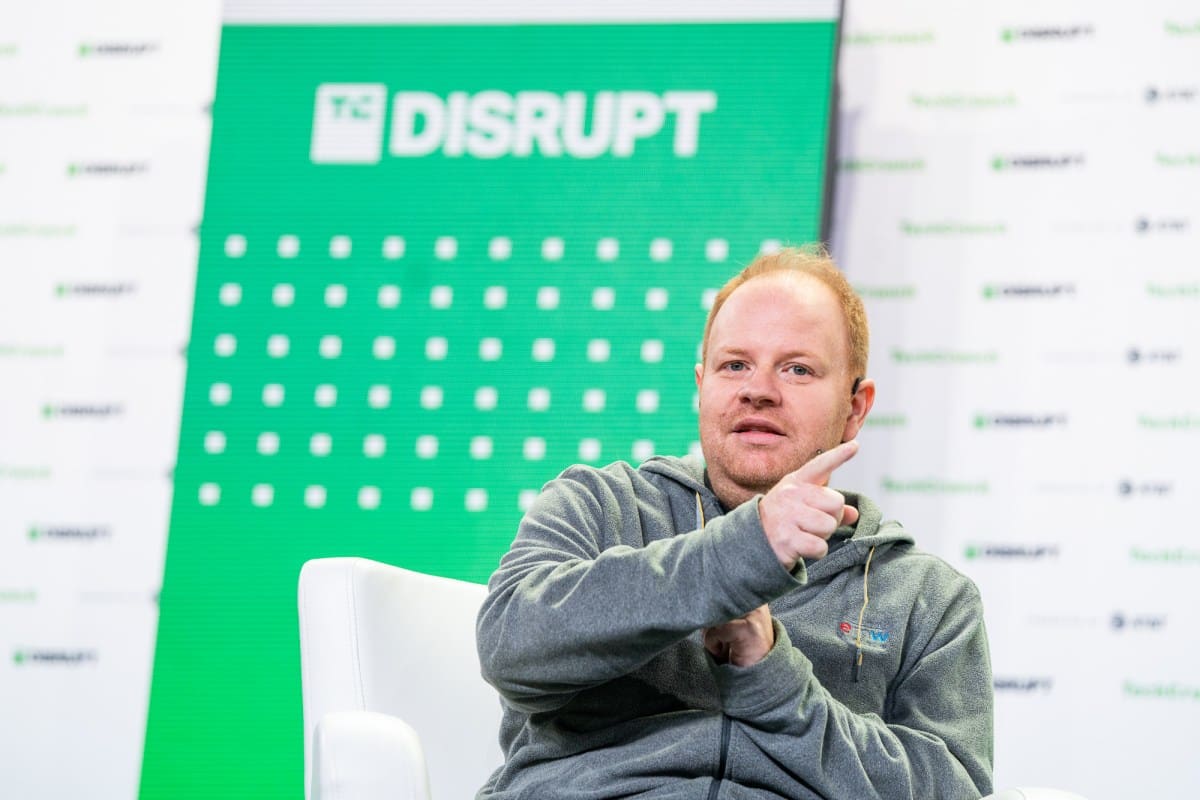
TechCrunch Disrupt 2026 is making a different argument this year. Instead of positioning itself as a broad industry gathering, the October 13-15 event at Moscone West is leaning heavily into infrastructure built specifically for investors hunting early-stage opportunities. The conference organizers have structured programming, meeting tools, and access tiers around a single premise: deal flow quality matters more than crowd size, and three days in San Francisco can compress months of sourcing work.
At DailyTechWire, we've tracked how venture conferences have evolved post-pandemic. Many struggled to justify their value as remote work normalized and Zoom introductions became standard. Disrupt's response has been to build out what it calls "curated connection infrastructure," a system that includes AI-powered meeting matching, dedicated spaces for founder-investor conversations, and early access to participant lists. The question is whether that infrastructure delivers returns that justify the cost and time commitment.
Startup Battlefield 200 as Filtering Mechanism
The centerpiece of Disrupt's investor proposition is Startup Battlefield 200, a competition that selects 200 pre-Series A companies from a pool of thousands of applicants. According to the organizers, alumni from past Battlefield cohorts have collectively raised over 32 billion dollars and generated more than 250 exits. Those numbers position the program as a filtering mechanism rather than just a pitch stage.
The value proposition is straightforward: TechCrunch's editorial and events teams spend months vetting applications, conducting diligence, and narrowing the field. By the time founders reach the Battlefield stage, they've been through multiple rounds of screening. For investors, that translates to a pre-filtered pipeline where the initial qualification work has already been done.
But filtering alone doesn't guarantee fit. The companies selected reflect TechCrunch's editorial lens, which tends to favor certain sectors and narratives over others. Investors focused on deep tech, life sciences, or non-consumer categories may find the mix less aligned with their mandates. The real test is whether the companies that make the cut match the investment theses of the people in the room.
Tiered Access and the Deal Flow Café
Disrupt 2026 offers different pass types, with the Investor Pass unlocking specific perks designed to accelerate sourcing. One of these is the Deal Flow Café, a dedicated space where only founders actively raising capital and investors can gather. The idea is to create a low-friction environment for introductions that might not happen on a crowded expo floor.
The Investor Pass also includes early access to the full founder list, allowing investors to identify potential matches before the event begins. Combined with the conference app's AI-powered meeting scheduler, the system is designed to replace serendipity with intentionality. Instead of hoping to bump into the right founder, investors can scan profiles, request meetings, and build agendas in advance.
This approach reflects a broader shift in how conferences are trying to prove their value. The pitch is no longer about exposure or inspiration but about operational efficiency. Can three days at Disrupt replace weeks of cold outreach, referral chasing, and calendar coordination? For angel investors and scouts writing smaller checks, the answer may be yes. For later-stage firms with established deal flow channels, the calculus is less clear.
Programming Built Around Market Intelligence
Beyond sourcing, Disrupt 2026 has structured its programming to deliver market intelligence across six stages. The Smart Systems Stage focuses on compute, infrastructure, and energy economics, areas that have become critical as AI infrastructure spending accelerates. The Smart Money Stage covers fintech, embedded finance, and the intersection of AI and capital markets. Both are designed to help investors build conviction around emerging categories.
The speaker lineup includes operators like Rivian's RJ Scaringe, Amazon's Panos Panay, Replit's Amjad Masad, and Cerebras' Andrew Feldman. For growth-stage and late-stage investors, these sessions offer a chance to hear directly from the companies they might be underwriting or the markets they're trying to model. The format is less about networking and more about gathering the context needed to make faster decisions.
Past years have featured investors like Elad Gil and Vinod Khosla, and the programming mix reflects an assumption that investors attend not just to meet founders but to calibrate their understanding of where capital is moving. The challenge is that conference talks, even with high-profile speakers, rarely deliver insights that aren't available through other channels. The differentiation comes down to timing and access.
The Cost-Benefit Calculation
Disrupt is offering discounts of up to 300 dollars on passes through August 22, after which pricing increases. For investors, the decision to attend hinges on a straightforward ROI question: can the trip generate enough qualified leads, market insights, or strategic connections to justify the ticket price, travel costs, and three days out of the office?
For angel investors, pre-seed funds, and scouts, the volume of early-stage companies in one place makes the math easier. A single strong connection can justify the expense. For seed and Series A funds, the value depends on whether the curated meetings deliver founders who are both raising and aligned with the fund's thesis. For growth and late-stage investors, the case is weaker unless the goal is market intelligence or strategic partnership exploration rather than direct deal sourcing.
The broader context matters too. Disrupt is happening at a moment when early-stage funding remains competitive but selective. Investors are under pressure to find differentiated opportunities before term sheets multiply. Conferences that promise access to vetted, pitch-ready founders are positioning themselves as solutions to that pressure. The risk is that everyone in the room is chasing the same companies, which can drive up valuations and compress decision timelines.
What Disrupt Reveals About Venture Infrastructure
Disrupt 2026's investor-focused positioning reflects a larger trend in how venture events are evolving. As remote tools have made it easier to meet founders without travel, conferences have had to justify their existence by building more deliberate infrastructure around deal flow. That means dedicated spaces, matching algorithms, and programming designed to deliver actionable insights rather than just inspiration.
The question is whether this model scales. Disrupt attracts around 10,000 attendees, a mix of founders, investors, and operators. That volume creates competition for attention, which can be both an advantage and a drawback. For investors, the crowd signals that other capital sources are also in the room, which can validate interest in a company but also increase the pressure to move quickly.
At DailyTechWire, we've seen similar dynamics play out at other large conferences. The ones that succeed for investors are those that reduce friction in the earliest stages of the relationship, making it easier to identify fit, schedule conversations, and follow up after the event. The ones that struggle treat investors as passive attendees rather than active participants with specific sourcing goals.
The October Test
Disrupt 2026 will ultimately be judged on whether the infrastructure it's built translates into deals. For investors who attend, the metric is simple: did the trip generate introductions that led to term sheets, or at minimum, to companies that entered the pipeline and stayed there?
The organizers are betting that the combination of vetted startups, curated meetings, and concentrated programming will deliver that outcome. The discount window closing on August 22 is designed to push fence-sitters into committing. But the real cost isn't the ticket price or the hotel, it's the opportunity cost of three days spent in San Francisco instead of somewhere else.
For investors who thrive on volume and speed, Disrupt offers a compressed version of what might otherwise take weeks or months. For those who rely on referrals, proprietary networks, or sector-specific channels, the value is less obvious. The conference is positioning itself as essential infrastructure for early-stage capital, but whether that positioning holds depends on whether the companies in the room turn into the exits that justify the trip.