X Square Robot Brings Warehouse Automation to China's Parcel Sorting Challenge
Beijing-based startup targets human-level speed in logistics facilities handling 200 billion packages annually
The Scale of China's Sorting Problem
China processes more than 200 billion parcels every year, a volume that strains both labor supply and the physical endurance of warehouse workers who spend shifts moving boxes at speed. At DailyTechWire, we've tracked automation deployments across Asia's logistics networks for years, and the parcel-sorting segment remains one of the hardest nuts to crack: the task demands not just speed but the dexterity to handle irregular shapes, varying weights, and the judgment to route items correctly under time pressure.
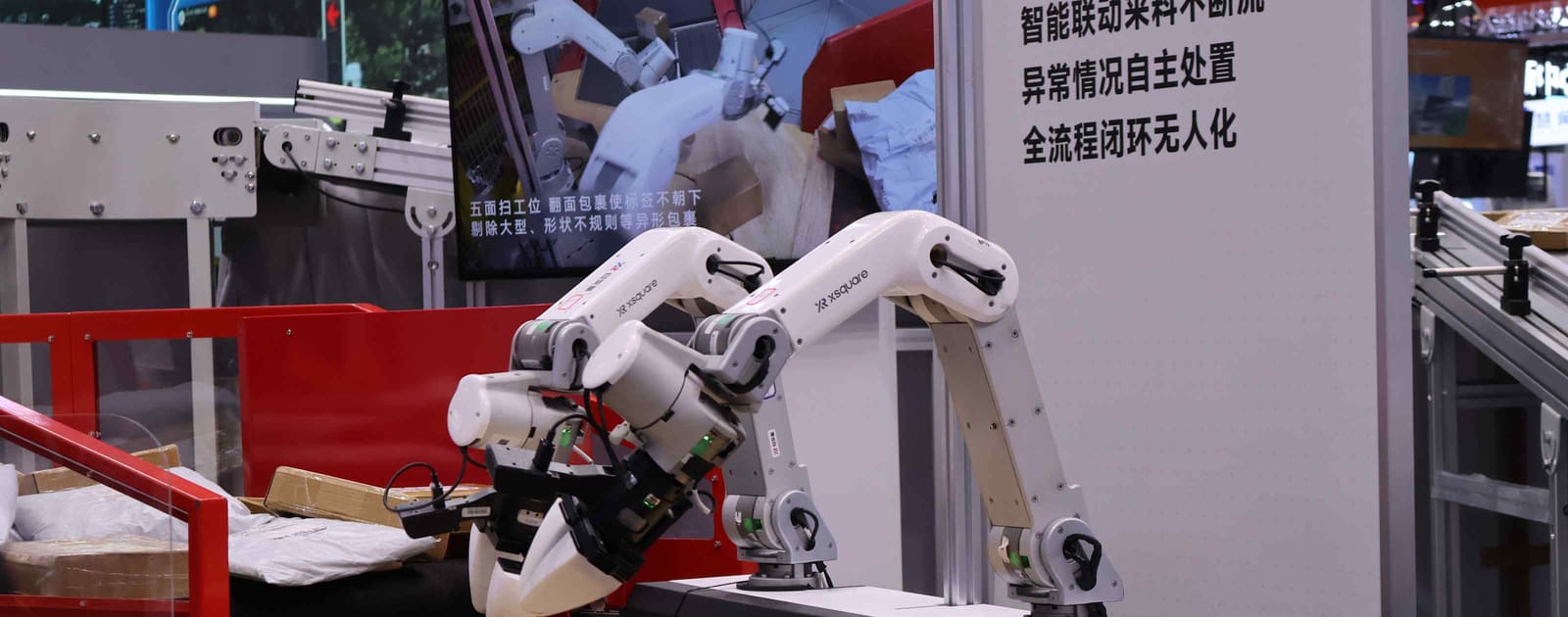
X Square Robot, a Beijing-based startup, unveiled its answer to that challenge at the 2024 World Robot Conference in the Chinese capital. The company demonstrated robotic arms engineered to approach the sorting pace of experienced human workers, a threshold that has eluded many earlier automation attempts in high-throughput environments.
Hardware Meets High Throughput
The robotic systems showcased by X Square Robot are designed for integration into existing warehouse infrastructure, a pragmatic choice given the capital intensity of logistics real estate in China's tier-one and tier-two cities. Rather than requiring greenfield builds, the arms slot into conveyor lines and sorting stations already in operation, reducing deployment friction for logistics providers weighing automation investments.
Speed is the headline metric. The company's arms are calibrated to pick, scan, and route parcels at rates that narrow the gap with human sorters, who typically handle dozens of items per minute in peak-season conditions. Achieving that tempo in a robotic system requires low-latency vision processing, real-time path planning, and grippers capable of adapting to the tactile unpredictability of cardboard, poly mailers, and irregularly taped packages.
The Labor and Economics Angle
China's logistics workforce has grown in lockstep with e-commerce penetration, but wage inflation and turnover in sorting roles are pushing operators to reconsider their cost structures. Sorting work is physically repetitive and often seasonal, with demand spiking around Singles' Day, Chinese New Year, and the 618 shopping festival. Temporary hiring at scale has become a recurring pain point, and retention in lower-tier cities where many fulfillment hubs are located is uneven.
X Square Robot's pitch hinges on predictable throughput and uptime. A robotic arm doesn't call in sick during peak season, doesn't require overtime premiums, and can run extended shifts with minimal supervision once calibrated. For logistics operators running thin margins on per-parcel fees, those attributes translate into modeling exercises around payback periods and total cost of ownership.
The company has indicated it will begin commercial rollouts soon, though it has not disclosed which logistics partners or geographic markets will see the first deployments. Given the concentration of parcel volume in eastern China and the established presence of major logistics networks in cities like Hangzhou, Shanghai, and Guangzhou, those corridors are logical early targets.
Technical Hurdles and the Fine-Tuning Ahead
Matching human speed in a controlled demo is one milestone; maintaining that performance across millions of parcels in varied conditions is another. Warehouse environments introduce dust, lighting variability, package damage, and the occasional mislabeled item. Vision systems must handle glare from overhead LEDs, smudged barcodes, and packages stacked at awkward angles. Gripper reliability under continuous duty cycles is another stress test, especially when handling the flimsiest poly mailers alongside rigid boxes.
X Square Robot will also need to prove interoperability with the warehouse management systems and tracking platforms that logistics operators already run. Seamless data handoffs between robotic sorters and upstream/downstream processes are non-negotiable in networks where package traceability and routing accuracy are contractual obligations.
The startup enters a field where incumbents like Geek+ and Hai Robotics have already secured deployments in Chinese warehouses, though those players have focused more heavily on autonomous mobile robots for goods-to-person workflows. Robotic arms for direct parcel sorting represent a different technical and commercial bet, one that targets a labor-intensive choke point rather than horizontal transport.
Implications for Asia's Logistics Automation Race
China's push into warehouse robotics mirrors broader regional trends. Across Southeast Asia, logistics operators are piloting sortation automation in Singapore, Bangkok, and Jakarta, driven by similar labor constraints and the explosive growth of cross-border e-commerce. India's third-party logistics providers are watching Chinese automation deployments closely, weighing when to make comparable investments as their own parcel volumes climb.
The 200 billion parcel figure underscores the sheer scale of the addressable market. Even modest penetration rates for robotic sorting translate into substantial unit deployments and recurring revenue streams from maintenance, software updates, and fleet management services. For X Square Robot, the path from conference demo to multi-site commercial operation will determine whether it captures a meaningful slice of that opportunity or remains a niche player in a crowded field.
At DailyTechWire, we'll be tracking deployment announcements, throughput benchmarks from live operations, and any partnerships with the major logistics networks that move the bulk of China's parcels. The technology on display in Beijing is promising, but the real test unfolds in the warehouses where uptime, accuracy, and cost per parcel sorted decide which automation bets pay off.