UBTech Sells 921 Full-Size Humanoids in Six Months as Robot Revenue Surges
The Hong Kong-listed robotics firm flipped its revenue mix toward industrial humanoids, with embodied AI products now driving nearly half of total sales.
The Numbers Tell a New Story
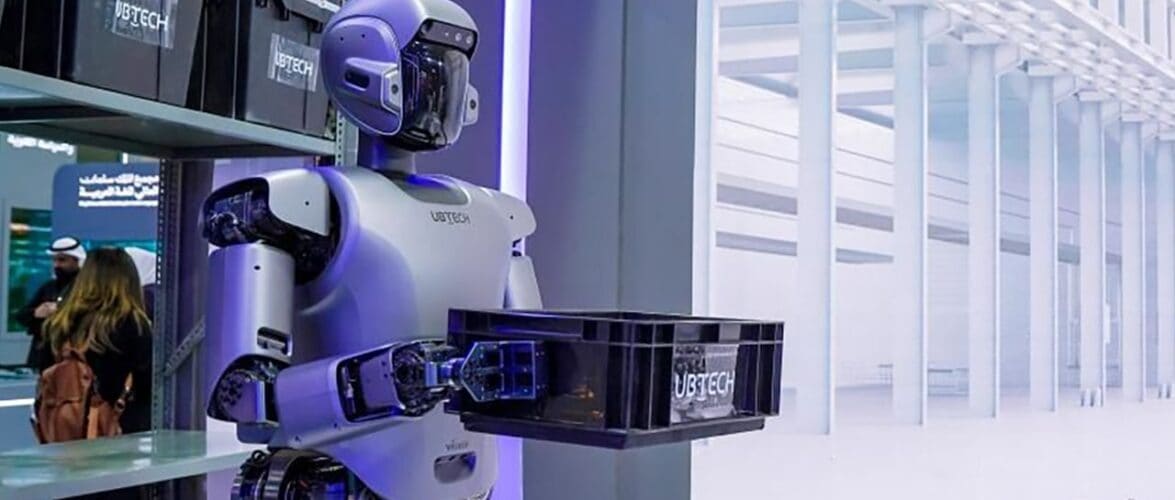
UBTech Robotics reported revenue of RMB 1.27 billion (USD 188.5 million) for the first half of 2026, according to the company's interim results released on August 28, more than doubling from the same period a year earlier. The headline figure, however, masks a more fundamental shift: full-size embodied humanoid robots now account for nearly half of the company's business, overtaking education and smaller-form-factor robots that once defined UBTech's identity. Revenue from full-size humanoid products and services hit RMB 590.3 million (USD 87.6 million), up from RMB 38.2 million twelve months prior. The company shipped 921 units in the category during the six-month window.
At DailyTechWire, we've tracked the humanoid hardware race closely across Shenzhen, Tokyo, and the Bay Area. Volume in the triple digits marks a threshold: these machines are no longer prototypes wheeled out for trade-show demonstrations. They are being purchased, integrated into production lines, and - critically - generating repeat purchase orders that create a flywheel of iteration and cost reduction.
From Education Kits to Factory Floors
UBTech built its name on education robotics, selling programmable kits and small humanoids to schools and STEM programs. That segment still exists, but the pivot toward industrial-scale embodied AI reflects both market pull and the maturation of bipedal locomotion stacks. Full-size humanoids - machines roughly the height and build of an adult human - can navigate environments designed for human workers without requiring conveyor redesigns or custom tooling. They slot into automotive assembly, electronics packaging, and warehouse picking, roles where labor shortages and wage inflation are acute across China's Tier-2 manufacturing hubs.
The fifteen-fold revenue increase suggests UBTech has moved beyond pilot contracts into volume deployments. At an average selling price implied by the disclosed figures, each unit generates roughly RMB 640,000 (around USD 95,000), a price point that begins to pencil out against two-shift human labor over a three-year amortization window. That calculation becomes more favorable as battery endurance improves and as software updates - delivered over-the-air - expand task repertoires without hardware swaps.
The Asia Advantage in Embodied AI
UBTech's trajectory mirrors broader momentum in Asia's robotics corridor. While Western humanoid startups chase venture milestones and prototype aesthetics, Chinese and South Korean firms are competing on unit economics and supply-chain integration. UBTech benefits from proximity to Shenzhen's component ecosystem: servo motors, vision modules, and compute boards that can be iterated weekly rather than quarterly. The company's Shenzhen headquarters sits less than an hour from suppliers of harmonic drives and torque sensors, the mechanical components that determine whether a humanoid can reliably manipulate objects or stumbles under variable loads.
Japan's industrial robotics giants - Fanuc, Yaskawa - have historically dominated fixed automation. Humanoids represent a wedge for newer entrants, because bipedal mobility and dexterous manipulation require software-defined behavior rather than deterministic path planning. UBTech's revenue mix signals that embodied AI is no longer a research curiosity; it is a category with measurable attach rates and renewal cycles.
Deployment Context and Margin Pressure
Shipping 921 units in six months does not yet make UBTech a mass-market player - Tesla's announced ambitions for Optimus, for example, target annual volumes in the tens of thousands - but it establishes proof of manufacturing scalability. The company has not disclosed gross margins for the humanoid segment, and that opacity matters. Early-stage robotics hardware often carries negative or single-digit margins as firms prioritize footprint over profitability, subsidizing deployments to collect operational data that feed the next training cycle.
The interim results show group revenue more than doubling, but whether UBTech is burning cash or approaching breakeven on humanoid units remains an open question. Investors will scrutinize the second-half results for signs of margin expansion: if per-unit costs are falling faster than average selling prices, the business model begins to resemble enterprise SaaS economics, where the marginal cost of software updates is near zero and the installed base becomes a platform for recurring revenue.
What Comes Next for Industrial Humanoids
The humanoid robot market is entering a phase where hardware commoditization and software differentiation will separate winners from subscale players. UBTech's volume gives it an edge in data collection - each deployed unit generates telemetry on gait stability, grasp success rates, and failure modes - that can be funneled back into reinforcement-learning pipelines. That feedback loop is harder to replicate than the mechanical design itself, which is why we expect consolidation among the dozens of humanoid startups that have proliferated since 2024.
Export controls on AI accelerators and robotics components, particularly those imposed by the United States and echoed by allied jurisdictions, add a layer of geopolitical friction. UBTech's reliance on domestic supply chains insulates it from some of that risk, but also constrains its addressable market if it seeks to expand beyond China and Southeast Asia. The company has not announced major deployments in Europe or North America, and regulatory hurdles around workplace safety certification for autonomous humanoids remain uneven across jurisdictions.
For now, the story is about execution in the home market. China's manufacturing sector is under pressure to automate as the working-age population shrinks and as wages in coastal provinces converge toward those in Eastern Europe. Humanoids that can be deployed without retooling factory layouts offer a faster path to automation than traditional industrial arms, especially for small and medium enterprises that lack the capital or floor space for fixed cells.
The Broader Implication for Embodied AI
UBTech's interim results offer a data point that the embodied AI wave - robots that perceive, reason, and act in unstructured environments - is translating into revenue at a pace faster than many observers anticipated. The fifteen-fold jump in humanoid sales is not an isolated event; it follows a string of announcements from Chinese logistics firms, automakers, and contract manufacturers integrating bipedal robots into live operations. At DailyTechWire, we see this as the leading edge of a multi-year cycle where the cost curve for humanoid hardware crosses the viability threshold for a widening set of use cases.
The question is no longer whether humanoids will work in industrial settings - 921 units deployed suggests they already do - but how quickly the category scales, and whether the economics hold as competition intensifies and customers demand lower prices. UBTech's ability to maintain revenue growth while expanding margin will determine whether it remains a category leader or becomes a subscale supplier in a market where scale and software moats decide the winners.