China's Capacitor Makers See Revenue Surge on AI Server Demand
Manufacturers of multilayer ceramic capacitors report sharp first-half gains as artificial intelligence hardware drives unprecedented component volumes
The Invisible Backbone of AI Hardware
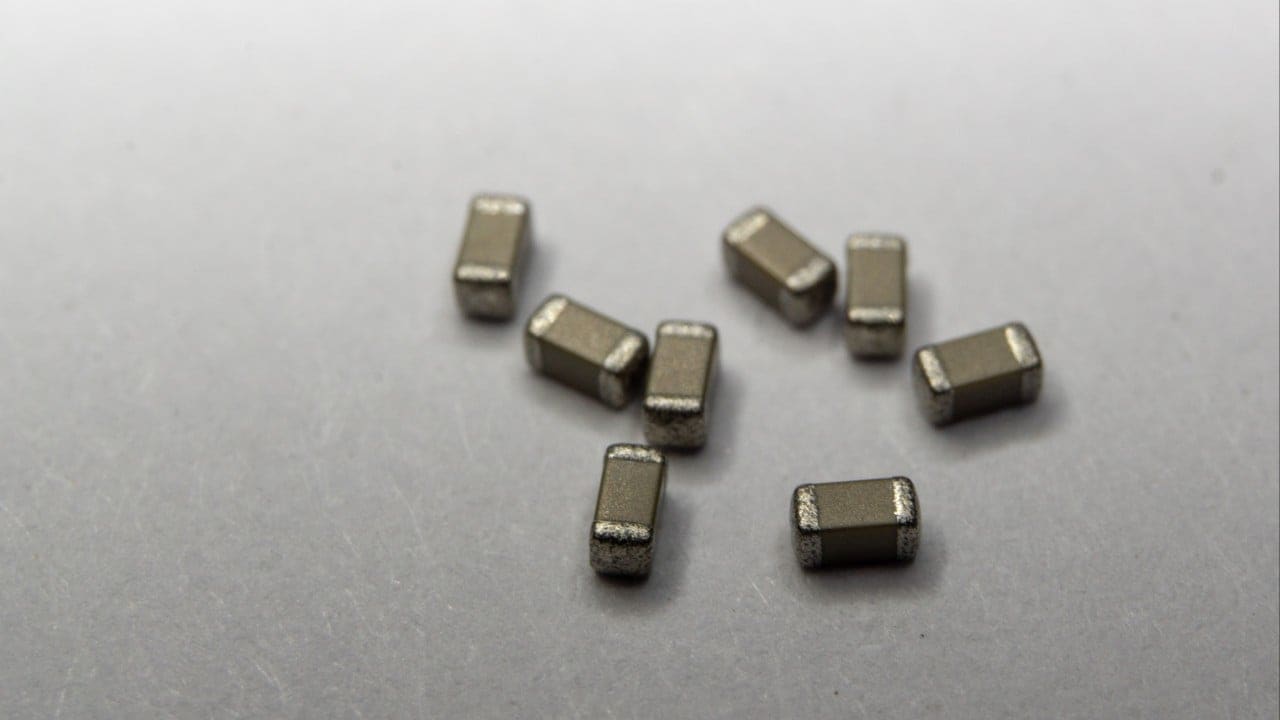
While graphics processing units and custom silicon capture headlines in the race to build artificial intelligence infrastructure, a less glamorous component category is quietly experiencing its own boom. Multilayer ceramic capacitors, the tiny passive devices that regulate voltage and filter noise in every circuit board, have become a bottleneck and profit center as server manufacturers scramble to meet AI workload demand.
At DailyTechWire, we've tracked the ripple effects of generative AI investment through Asian supply chains for eighteen months, and the latest earnings from Chinese MLCC manufacturers underscore how deeply the infrastructure wave has penetrated electronics fundamentals. These components, often called "the rice of the electronics industry" for their ubiquity and essential role, are now moving markets in ways that would have seemed implausible during the mobile-phone boom of the 2010s.
Sharp First-Half Gains
Chaozhou Three-Circle Company and Guangdong Fenghua Advanced Technology, two of the mainland's largest producers, reported substantial revenue and profit increases for the first half of 2026. CCTC's Shenzhen-listed shares climbed nearly 1 percent in morning trading on Friday, while Fenghua Advanced gained roughly 3 percent, reflecting investor confidence that the demand trajectory will extend into the second half and beyond.
The earnings reports arrive at a moment when AI server specifications continue to evolve. Each new generation of inference and training platforms incorporates more power-delivery stages, higher-frequency switching regulators, and denser board layouts, all of which multiply the number of MLCCs required per unit. A single high-end AI accelerator card can demand several hundred capacitors across multiple voltage domains, compared to a few dozen in a conventional server motherboard.
Capacity Constraints and Pricing Power
For years, MLCC markets oscillated between oversupply and shortage, driven by smartphone production cycles and automotive electrification. The AI infrastructure wave has introduced a different dynamic: sustained, high-volume orders with tighter tolerance and reliability specifications. Hyperscale data-center operators and cloud-service providers are locking in multiyear supply agreements, a departure from the spot-market procurement that characterized earlier electronics booms.
Chinese manufacturers have invested heavily in expanding production lines for high-capacitance, high-voltage MLCCs suited to server power delivery. CCTC has brought online new automated assembly facilities in Guangdong province over the past year, targeting the premium segment where Japanese and South Korean suppliers have historically dominated. Fenghua Advanced has similarly upgraded its dielectric-layer deposition processes to achieve the thin-film precision required for high-density capacitor arrays.
Pricing power has returned to the sector. After several years of margin compression, MLCC producers are now able to pass through raw-material cost increases and capture a premium for guaranteed supply. Barium titanate, the primary dielectric ceramic, has seen input-cost volatility, but the tight supply-demand balance has allowed manufacturers to maintain or even expand gross margins.
Regional Competition and Export Dynamics
The gains by mainland producers come against a backdrop of intensifying regional competition. Taiwan and South Korea remain formidable players, with established relationships among server original design manufacturers and tier-one cloud customers. Japanese firms, though facing capacity constraints of their own, continue to set benchmarks for reliability in mission-critical applications.
Chinese MLCC makers have leveraged proximity to the Pearl River Delta electronics manufacturing cluster and, increasingly, to domestic AI chip designers ramping their own server platforms. Huawei's Ascend accelerator ecosystem, for example, relies on local component suppliers to ensure supply-chain resilience amid export restrictions on advanced semiconductors. That dynamic has created a parallel demand channel less visible in global trade statistics but meaningful for revenue growth.
Export markets, however, remain important. Southeast Asian electronics manufacturing hubs, particularly Vietnam and Thailand, have become significant customers as multinational server brands diversify assembly away from China. Chinese MLCC producers have opened sales offices and technical-support centers in Ho Chi Minh City and Bangkok to service those relationships.
Forward-Looking Constraints
The optimism reflected in Friday's share-price movements carries caveats. MLCC production is capital-intensive, and the lead time to add meaningful capacity runs twelve to eighteen months. If AI infrastructure investment slows or if server architectures shift toward more integrated power delivery, the current supply tightness could reverse quickly.
Raw-material sourcing presents another variable. Barium and rare-earth oxides used in high-performance dielectrics are subject to export quotas and geopolitical friction. Any disruption in feedstock supply would ripple through production schedules and margin profiles.
Technical evolution also looms. Semiconductor companies are experimenting with on-package and in-package capacitors, integrating passive components directly into advanced packaging substrates. If that approach scales beyond niche applications, it could displace a portion of discrete MLCC demand, particularly in the highest-density server designs.
What the Earnings Signal
For now, the first-half results from CCTC and Fenghua Advanced confirm that AI infrastructure investment is translating into tangible revenue across multiple tiers of the supply chain. The MLCC sector's performance offers a useful barometer: it sits far enough downstream that orders reflect real deployment schedules, not speculative inventory builds, yet close enough to final assembly that lead times remain tight.
The question for the second half of 2026 and into 2027 is whether the current pace of server procurement can be sustained. Hyperscale capital expenditure has been robust, but several large cloud providers have signaled they will moderate spending growth as they digest earlier AI hardware investments. If that moderation materializes, MLCC demand could plateau even as new production capacity comes online, compressing margins once again.
Chinese manufacturers, for their part, are betting that the trajectory remains upward. Capacity expansions announced in recent quarters assume multi-year demand visibility, and the willingness to make those investments suggests confidence that AI workloads will continue to require ever more silicon and, by extension, ever more of the humble components that keep those silicon arrays stable.