TSMC's Image Sensor Alliance With Sony Signals Strategic Shift
The Taiwanese chipmaker's rare partnership move comes as smartphone growth stalls and regional competition intensifies in physical AI hardware
A Departure From TSMC's Playbook
Taiwan Semiconductor Manufacturing Co. rarely shares production lines with anyone. The foundry giant built its empire on a simple model: manufacture chips for customers, maintain strict separation between clients, and avoid joint ventures that dilute control. Yet the company's decision to partner with Sony Group on image sensor production represents a break from that orthodoxy.
The collaboration, announced for a facility in Kumamoto, Japan, targets next-generation image sensors with a combined investment of $6.3 billion. For TSMC, the move reflects something deeper than opportunistic expansion. At DailyTechWire, we've tracked the foundry's geographic and product diversification efforts across the past two years, and this partnership stands out for what it signals about the company's reading of both market dynamics and competitive threats.
Smartphone Saturation Meets Physical AI Demand
The image sensor market finds itself at an inflection point. Smartphone sales, which absorbed the bulk of Sony's sensor output for years, have plateaued across major markets. Unit shipments in China, Southeast Asia, and even India show single-digit growth or outright contraction depending on the quarter. That reality pressures both Sony's sensor business and TSMC's mobile chip revenue.
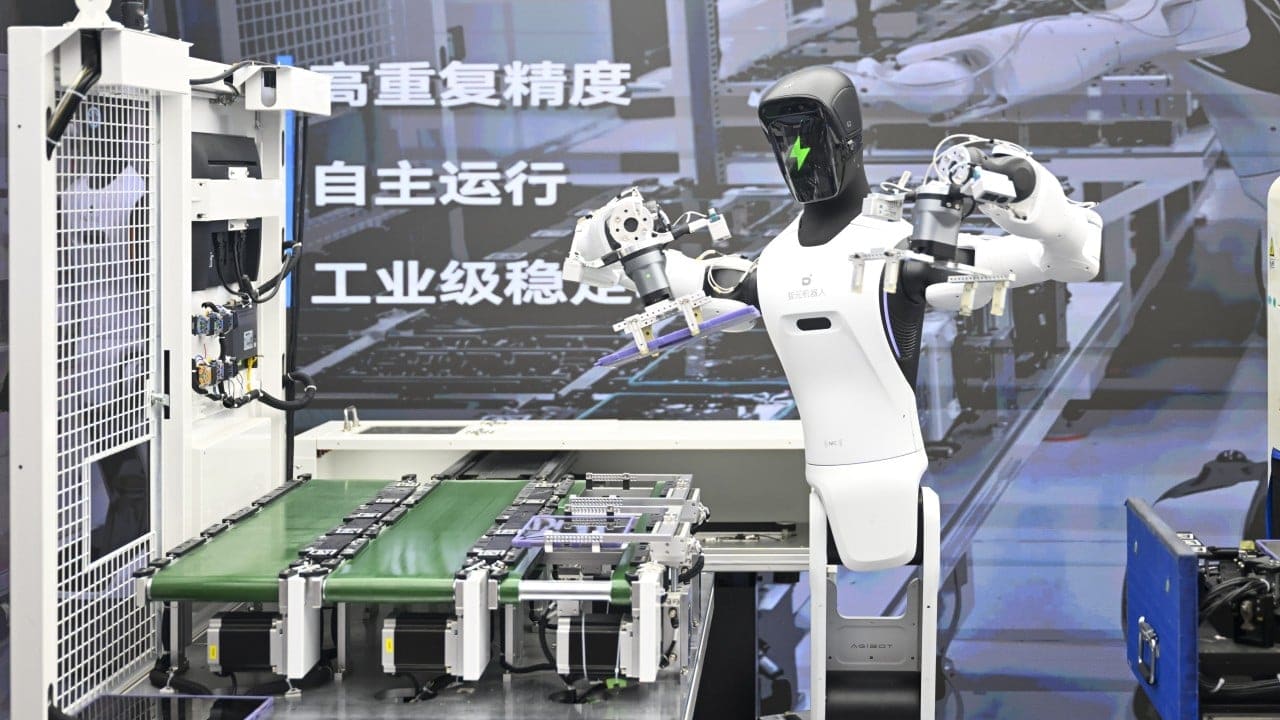
Yet a new demand vector is emerging. Physical AI applications, autonomous vehicles, robotics, industrial vision systems, and edge surveillance devices all require advanced image sensors with higher resolution, better low-light performance, and on-chip processing capabilities. These sensors differ fundamentally from smartphone components. They need specialized fabrication processes, tighter integration with logic circuits, and often operate under harsher environmental conditions.
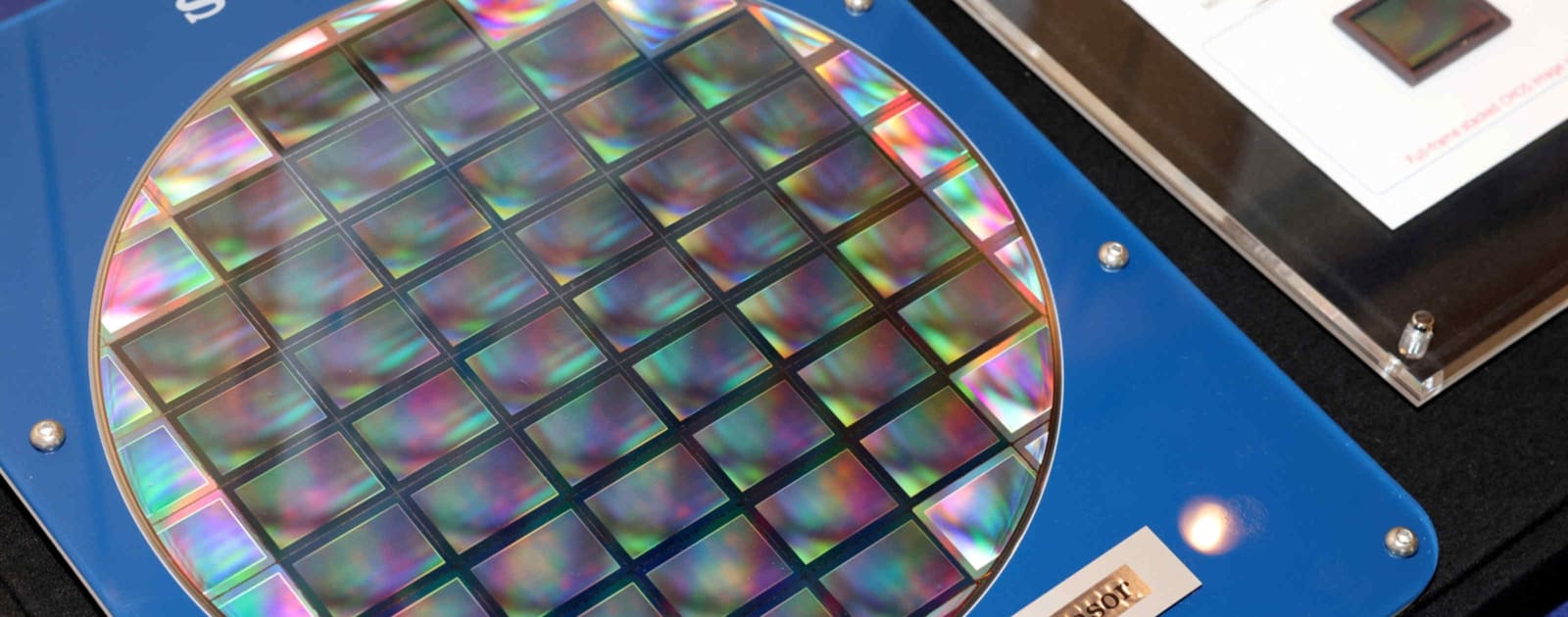
Sony holds the dominant position in image sensors globally, but the company's manufacturing capacity and process technology have limits. TSMC brings advanced process nodes and high-volume production expertise. The partnership allows Sony to scale production of sensors that incorporate complex on-chip logic, something increasingly necessary as AI inference moves closer to the sensor itself.
Samsung and Chinese Foundries Close the Gap
The partnership also reflects competitive anxiety. Samsung Electronics has ramped up its image sensor investments, leveraging its integrated manufacturing capabilities to produce sensors with embedded AI processing. The Korean conglomerate can bundle sensor production with its foundry and memory businesses, offering customers vertically integrated solutions that TSMC and Sony cannot match individually.
Chinese competitors present a different challenge. Semiconductor Manufacturing International Corp. and smaller specialized fabs have made progress in mature-node sensor fabrication. While they lag in cutting-edge processes, many physical AI applications don't require the most advanced nodes. A surveillance camera or agricultural robot can function with sensors built on 28nm or 40nm processes, nodes where Chinese fabs now compete on price.
Export controls imposed by the U.S. and its allies limit Chinese access to extreme ultraviolet lithography equipment and advanced chip designs, but image sensors for industrial use often fall outside those restrictions. That leaves a wide market segment where Chinese manufacturers can undercut pricing, particularly in domestic and Belt and Road markets.
Geography as Strategy
Locating the joint facility in Kumamoto carries strategic weight beyond production economics. Japan has committed billions in subsidies to rebuild its semiconductor ecosystem, and the government views the TSMC-Sony partnership as a cornerstone of that effort. For TSMC, the Japan facility diversifies geographic risk away from Taiwan, a concern that has intensified as geopolitical tensions around the Taiwan Strait persist.
The Kumamoto site also places production closer to key automotive customers. Japanese automakers, among the most demanding consumers of advanced sensors for autonomous driving systems, prefer supply chains with regional redundancy. A Japan-based facility shortens logistics, simplifies compliance with local content requirements, and signals commitment to the market.
Sony gains access to TSMC's process technology and production capacity without building new fabs from scratch, a capital-intensive proposition that would strain the company's balance sheet. The partnership structure allows Sony to focus on sensor design and system integration while relying on TSMC for manufacturing scale.
What the Partnership Reveals About Industry Structure
This collaboration suggests that the boundaries between design, manufacturing, and system integration are blurring in certain segments of the chip industry. The foundry model, which cleanly separated design and fabrication, worked well for general-purpose logic chips. But as chips become more application-specific and tightly integrated with sensors, optics, and AI accelerators, pure-play foundries face pressure to deepen partnerships with component makers.
TSMC's willingness to pursue a joint venture, rather than simply taking Sony as a foundry customer, indicates the company sees strategic value in co-development and shared investment risk. It also acknowledges that winning in physical AI hardware requires more than process node leadership. It demands expertise in sensor physics, optical systems, and edge AI architectures, domains where Sony holds patents and institutional knowledge.
The partnership may preview a broader shift in how leading-edge chip manufacturing is organized. As Moore's Law economics become more punishing and application-specific requirements grow more complex, collaborative models that pool capital and expertise may become more common, even among companies that historically guarded their independence.
Risks and Execution Challenges
Joint ventures in semiconductor manufacturing carry execution risk. Aligning corporate cultures, decision-making processes, and technology roadmaps between a Taiwanese foundry and a Japanese electronics conglomerate will test both organizations. TSMC's engineering culture emphasizes speed and iteration; Sony's hardware divisions lean toward perfectionism and long development cycles. Bridging that gap will require deliberate management.
The $6.3 billion investment also comes at a moment of uncertainty about AI hardware demand sustainability. If the current wave of physical AI deployments fails to meet market expectations, or if autonomous vehicle timelines slip further, demand for advanced image sensors could soften, leaving the partnership with underutilized capacity.
Chinese competition remains a wildcard. If Chinese foundries continue improving their sensor fabrication capabilities, and if export controls fail to constrain their access to critical equipment, the cost advantage they offer could erode the TSMC-Sony partnership's market position in mid-tier applications.
Still, the collaboration positions both companies to capture revenue in a segment where growth potential, while uncertain in magnitude, is directionally clear. Physical AI applications will require more sensors, and those sensors will need more on-chip intelligence. Whether that demand justifies a $6.3 billion bet will become evident over the next three to five years, as the Kumamoto facility ramps production and customers commit to long-term supply agreements.