Silicon Battery Maker Secures Pentagon Backing as Defense Scrambles for Non-Chinese Supply
Sila's $1.4 billion defense loan signals Washington's urgency to build battery material capacity outside Beijing's orbit, with military applications driving demand for energy-dense alternatives.
A Strategic Bet on Domestic Battery Chemistry
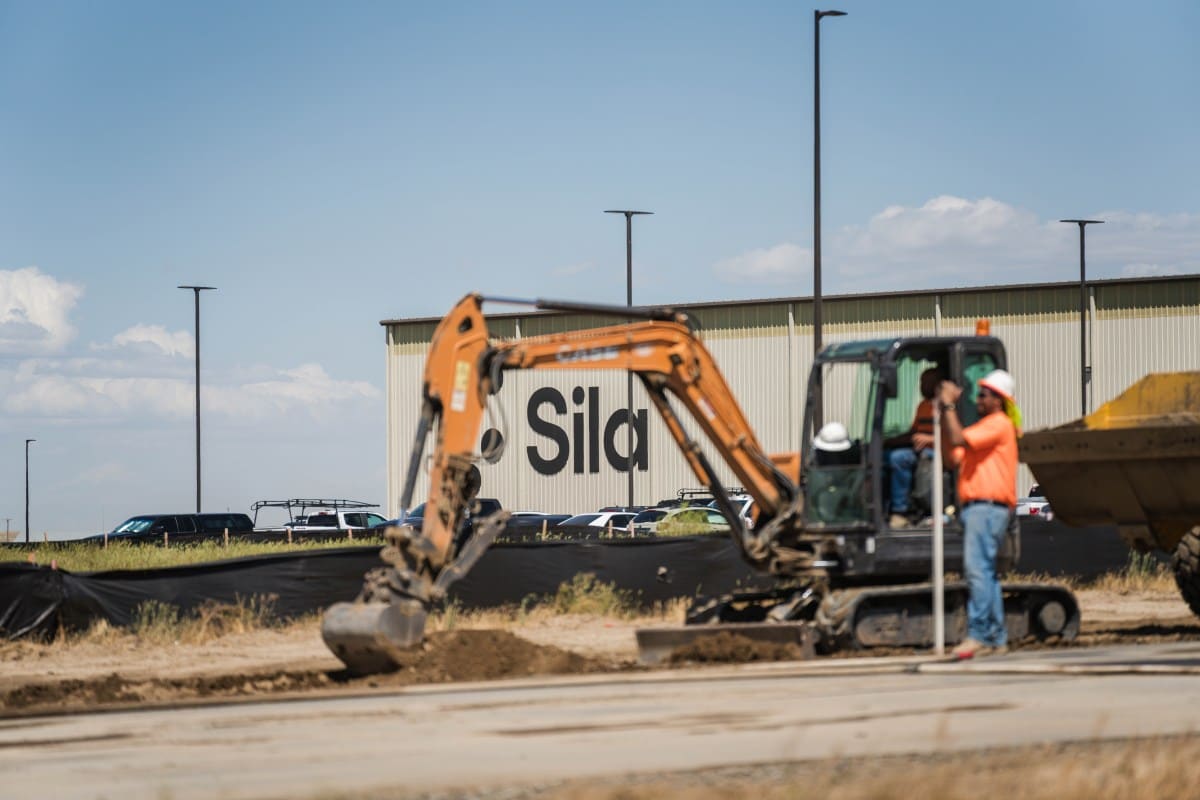
Sila Nanotechnologies closed a $1.4 billion loan from the U.S. Department of Defense last Friday, earmarked to expand production of silicon-carbon anode material at its Moses Lake, Washington facility. The deal underscores a broader Pentagon effort to de-risk battery supply chains that remain tightly controlled by Chinese producers, particularly for graphite anodes that power most lithium-ion cells today.
At DailyTechWire, we've tracked a steady drumbeat of policy maneuvers and capital deployment aimed at onshoring critical minerals and advanced materials. Sila's loan sits at the intersection of two forces: Washington's export-control regime tightening access to Chinese battery inputs, and defense contractors hungry for lighter, longer-lasting power sources as drone warfare and electrified mobility reshape battlefield requirements.
Why Silicon Anodes Matter
Traditional lithium-ion batteries rely on graphite anodes. China controls roughly 70 percent of global refined graphite capacity, leaving U.S. automotive and defense buyers exposed to tariff risk and geopolitical friction. Silicon anodes promise 20 to 40 percent higher energy density than graphite, translating into either extended runtime for existing form factors or meaningfully smaller, lighter packs.
For military applications, weight and endurance are non-negotiable. Reconnaissance drones, portable communications gear, and next-generation ground vehicles all benefit from cells that pack more watt-hours per kilogram. Sila's material substitutes silicon-carbon composites for pure graphite, sidestepping the supply-chain bottleneck while delivering the performance bump defense engineers want.
The Moses Lake plant came online in September and currently produces enough anode material to support roughly 2 gigawatt-hours of cell capacity each year. Sila is working to quintuple that output, targeting annual production sufficient for more than 100,000 electric vehicles. The Pentagon loan will help finance that buildout, alongside a $300 million private round Sila closed in July led by Atreides Management and Sutter Hill Ventures. To date, the startup has raised over $1.5 billion in venture funding, according to PitchBook.
Defense Contractors and the Battery Rush
Sila already supplies Mercedes and Panasonic under commercial agreements. The defense loan opens a path to contracts with prime contractors, many of whom have seen order books swell as conflicts in Iran and Ukraine stretch into their third and fourth years. Battery-electric and hybrid-electric platforms are moving from prototype to procurement, and program offices are writing specifications that favor domestically sourced, energy-dense chemistries.
The Department of Defense announced three additional loans alongside Sila's package. Sunrise Energy Metals, an Australian miner, received $400 million to extract scandium, a rare-earth element used in lightweight alloys for aerospace and defense. Niron Magnetics, based in Minnesota, secured $150 million to manufacture magnets that eliminate rare-earth dependence, targeting applications in smartphones, missile guidance systems, and electric motors. Strategic Bauxite took an $85 million equity investment to expand aluminum-ore mining.
Taken together, the quartet of deals reflects a coordinated push to rebuild industrial capacity in minerals and materials that Washington deems strategically sensitive. The loans flow through the Defense Production Act Title III program, which Congress has funded more generously since 2022 as semiconductor and battery supply-chain vulnerabilities became undeniable.
Scaling Challenges and Market Realities
Expanding silicon anode production is not a simple matter of pouring concrete and installing reactors. Silicon particles swell and contract during charge-discharge cycles, causing mechanical stress that can fracture electrodes and shorten cell life. Sila's approach embeds silicon in a porous carbon scaffold, which accommodates volume changes while maintaining electrical conductivity. Manufacturing that composite at gigawatt-hour scale requires tight process control and quality assurance, especially when defense customers demand multi-decade service life and harsh-environment performance.
Sila's fivefold expansion timeline will test the startup's ability to transfer lab-validated processes to high-volume lines. Yields, particle-size consistency, and contamination control become critical as production ramps. Any slip in quality can cascade into cell-level failures, and defense contracts typically include stringent testing protocols that can delay qualification by months or years.
On the demand side, the calculus is shifting. Automotive OEMs have historically prioritized cost per kilowatt-hour, making graphite anodes hard to displace despite silicon's performance edge. Defense procurement, by contrast, places higher weight on energy density, supply security, and domestic sourcing, even at a premium price. That willingness to pay creates runway for Sila and peers like Group14 and Amprius to scale before cost parity with graphite becomes essential.
Geopolitics and the Battery Value Chain
China's dominance in battery materials extends beyond graphite. Beijing controls substantial shares of lithium refining, cathode precursor synthesis, and cell assembly. U.S. policy responses have layered tariffs, Inflation Reduction Act tax credits conditioned on domestic content, and now direct loans to manufacturers. The goal is to stand up parallel value chains in allied geographies, reducing the risk that a single country can throttle supply during a crisis.
Sila's Moses Lake location offers logistical and political advantages. Washington state has access to hydropower, which lowers the carbon intensity of energy-intensive material synthesis. Proximity to Pacific Northwest ports simplifies raw-material imports and finished-product exports to Asian cell manufacturers. Politically, domestic production satisfies Buy American provisions and insulates Sila from the tariff uncertainty that has plagued Chinese graphite imports since 2024.
The Pentagon's willingness to deploy $1.4 billion in concessional debt signals confidence that silicon anodes will move from niche to mainstream in defense and, eventually, commercial markets. It also reflects a broader strategic judgment: that battery technology is as critical to 21st-century military capability as jet engines and semiconductors were in the 20th.
What Comes Next
Sila's expanded Moses Lake capacity is expected online in phases over the next three years. The startup will need to demonstrate consistent yields and pass defense qualification testing to convert the loan into revenue. Meanwhile, automotive customers are watching closely. If Sila can deliver silicon-carbon anodes at scale without major quality hiccups, other OEMs may accelerate their own silicon roadmaps, particularly for premium and performance segments where energy density commands a price premium.
The Pentagon's package of four loans also sets a precedent. More Title III awards are likely as the Defense Department works through a pipeline of critical-material projects. Rare earths, advanced ceramics, and specialty alloys are all candidates for similar backing. For startups in the materials and manufacturing space, the message is clear: if your technology solves a supply-chain chokepoint and you can demonstrate U.S.-based production, Washington is open for business.
At DailyTechWire, we see the Sila deal as part of a multi-year reconfiguration of how batteries and their upstream inputs are financed and built. The next 24 months will reveal whether the industrial base can absorb this wave of capital and deliver the capacity, quality, and cost performance that both defense and commercial buyers demand.