AgiBot Claims 44% of Global Humanoid Market in H1
Shanghai startup shipped 8,400 units in six months, edging past Unitree as both companies prepare IPO filings in a race to define physical AI infrastructure
A Shanghai Startup Takes the Lead
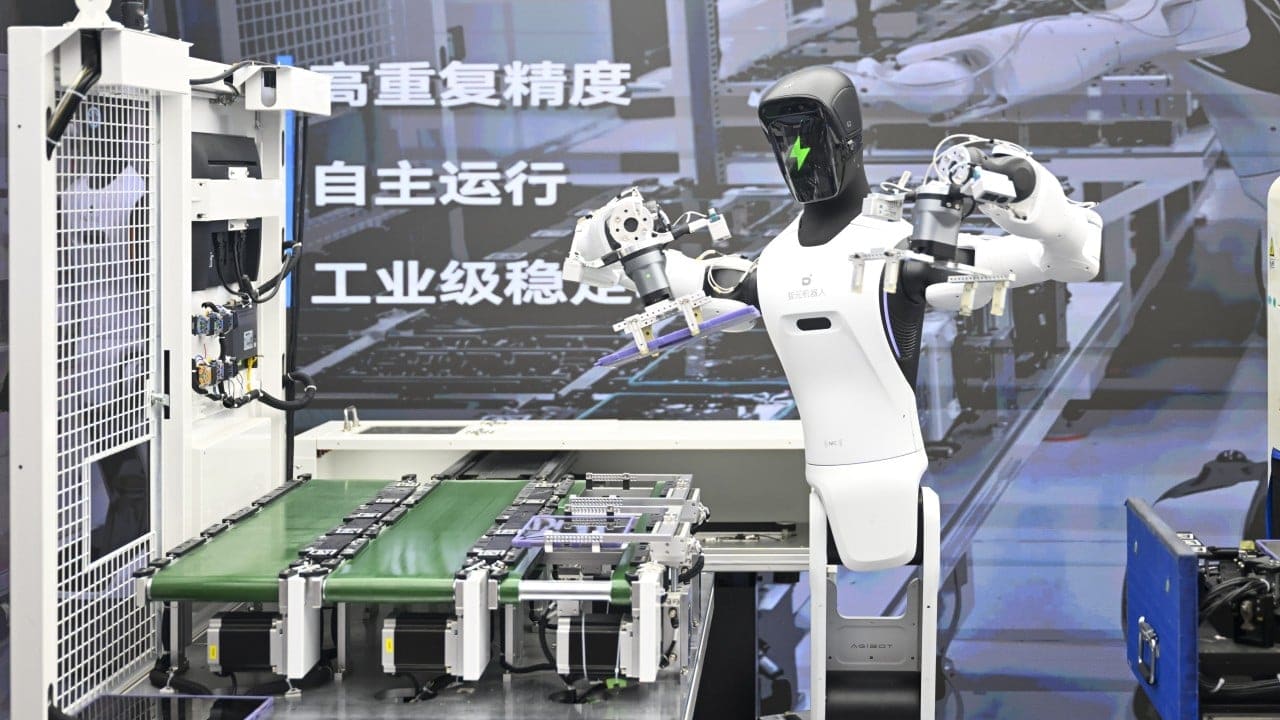
Shanghai-based AgiBot captured 44 per cent of the global humanoid robot market in the first half of 2026, according to Smart Analytics Global (SAG), shipping approximately 8,400 units between January and June. The figure places the startup ahead of Hangzhou rival Unitree Robotics in a sector that has seen deployment volumes triple year-on-year as manufacturing and logistics customers adopt bipedal platforms for tasks previously handled by wheeled AMRs or fixed arms.
At DailyTechWire, we've tracked the shift from demonstration units to revenue-generating deployments across the Yangtze Delta corridor over the past eighteen months. AgiBot's H1 numbers suggest the company has secured multi-hundred-unit contracts with automotive and electronics assembly partners, a threshold that separates pilot projects from genuine production-line integration. Unitree, which held the top position through 2025, has pivoted toward consumer and service applications, a strategic bet that may have ceded near-term volume leadership but positions the company differently for margin expansion.
The IPO Context
Both AgiBot and Unitree have filed preliminary prospectuses with domestic exchanges, targeting listings before year-end. The timing is deliberate: investors are pricing physical AI infrastructure at multiples last seen during the cloud robotics wave of 2019, but this cycle is underpinned by transformer-based control models that can generalize across task families rather than requiring hand-coded motion primitives for each new operation.
AgiBot's prospectus draft, circulated among institutional investors in July, highlights gross margins in the low-30s for its industrial models, comparable to collaborative-arm vendors like Universal Robots a decade ago. Unitree's consumer-oriented X1 series, priced below $20,000 per unit, carries slimmer margins but opens addressable markets in hospitality, elder care, and retail that remain largely untapped by industrial-focused peers.
What the Market Share Numbers Reveal
The SAG research firm's data, published over the weekend, show that the top two vendors together accounted for more than two-thirds of global humanoid shipments in H1. The remainder is split among a dozen startups in Shenzhen, Seoul, and the Bay Area, none of which exceeded 5 per cent share individually. This concentration mirrors the early trajectory of the industrial-arm market in the 2000s, when ABB, KUKA, and Fanuc established dominant positions before Chinese entrants scaled in the 2010s.
AgiBot's volume advantage stems from partnerships inked in late 2025 with two of China's largest contract manufacturers, both of which are piloting humanoid deployments in final-assembly cells that require frequent tool changes and variable part handling. Unitree, by contrast, has focused on direct sales to end customers and a developer program that seeds units with research labs and system integrators. The latter approach builds ecosystem stickiness but defers large purchase orders.
Technical and Economic Drivers
Humanoid form factors offer specific advantages in environments designed for human workers: standard door widths, stair access, and the ability to operate tools and fixtures without bespoke end-effectors. These benefits have historically been offset by higher unit cost and control complexity, but advances in imitation learning and vision-language-action models have compressed deployment timelines from quarters to weeks.
AgiBot's flagship model, the World series, employs a modular actuation architecture that allows customers to swap joint modules in the field rather than returning units for service. This design choice reduces total cost of ownership and has proven critical in winning repeat orders from logistics operators running multi-shift operations. Unitree's X1, meanwhile, prioritizes lightweight construction and lower sticker price, a trade-off that appeals to customers testing humanoid viability before committing capital budgets.
Regional Dynamics and Export Considerations
China-based vendors currently dominate global shipment volumes, but regulatory and supply-chain factors complicate export pathways. AgiBot has established a Singapore subsidiary to serve Southeast Asian customers and is negotiating partnership terms with a European integrator to address manufacturing demand in the Czech Republic and Poland. Unitree's consumer focus insulates it somewhat from export-control scrutiny, though components sourced from restricted suppliers remain a balance-sheet risk flagged in its IPO documentation.
The IPO filings arrive as Beijing's Ministry of Industry and Information Technology rolls out incentive programs for humanoid adoption in priority sectors, including subsidies covering up to 30 per cent of hardware cost for pilot deployments in semiconductor fabs and new-energy vehicle plants. These policies have accelerated purchase decisions that might otherwise have waited for second-generation hardware, front-loading revenue for vendors but also raising expectations for rapid capability improvement.
Margin Pressure and the Path Forward
Market leadership by shipment volume does not guarantee profitability or long-term defensibility. Both AgiBot and Unitree face margin compression as component costs remain elevated and customers demand service-level agreements that require field-support infrastructure. The companies are also competing for the same talent pool of robotics engineers and ML researchers, driving up compensation costs in Shanghai and Hangzhou.
Investors will scrutinize cash-burn rates and customer-concentration risk when the IPO roadshows begin. AgiBot's reliance on a small number of large industrial accounts makes it vulnerable to order delays or cancellations, while Unitree's fragmented customer base offers diversification but requires higher sales and marketing spend per unit sold.
The H1 market-share data offer a snapshot of a sector in rapid flux. Whether AgiBot can maintain its lead through the second half depends on execution velocity, the pace of follow-on orders from existing customers, and the ability to expand beyond China without triggering regulatory obstacles. For Unitree, the consumer and service markets represent a longer-term opportunity that may reward patience if adoption curves steepen as expected in 2027 and beyond.
Both companies are betting that humanoid robots will transition from novelty to infrastructure over the next three to five years. The IPO proceeds will fund that transition, but the market-share rankings in 2026 tell only part of the story. Gross margins, customer retention, and the durability of technical differentiation will matter more than first-half shipment tallies when the sector matures.