Thrive Holdings Raises $2 Billion to Embed AI Into Legacy Businesses
The OpenAI-linked firm now manages over 70 companies across accounting and IT, with a new vertical targeting regulatory bottlenecks in physical infrastructure.
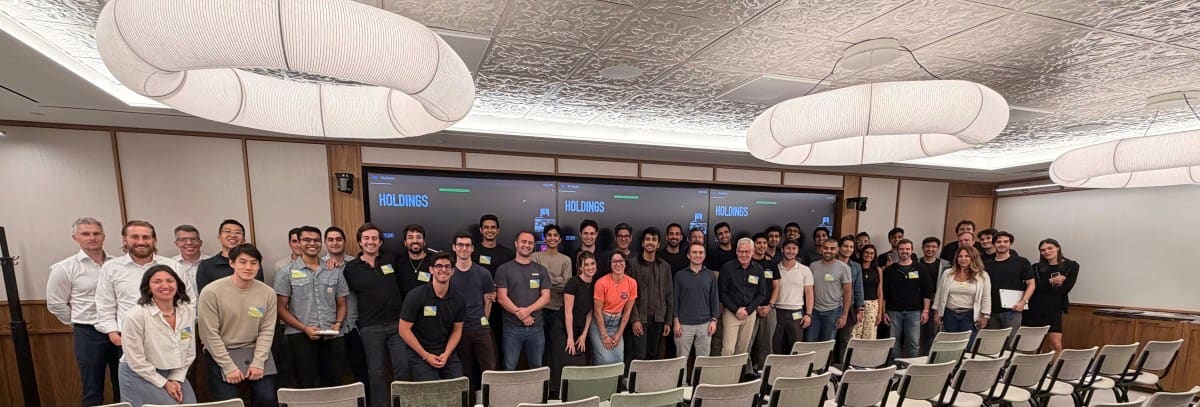
A New Model for AI Deployment
Thrive Holdings has secured $2 billion in fresh capital at a $12 billion valuation, according to the company. SoftBank, D1 Capital Partners, and Altimeter Capital led the round. The firm operates at the intersection of private equity and artificial intelligence, acquiring conventional businesses and systematically integrating machine-learning tools into their day-to-day operations.
Unlike venture-backed startups building AI products from scratch, Thrive takes a different route: it buys established firms in fragmented, operationally complex sectors and retrofits them with automation and intelligence. The model has gained traction quickly. Thrive now oversees more than 70 businesses across two main platforms, Current (accounting) and Shield (information technology), and is preparing to launch a third focused on regulatory services for physical infrastructure.
OpenAI's Direct Involvement
Thrive's close relationship with OpenAI sets it apart. The firm spun out of Thrive Capital, a major OpenAI investor, and in December 2025 OpenAI took an ownership stake in Thrive Holdings. Under that arrangement, OpenAI has dispatched its own engineers to work alongside Thrive portfolio companies, accelerating the adoption of generative models and custom agents.
This hands-on approach mirrors a broader trend. Both OpenAI and Anthropic have partnered with large private equity firms to create dedicated deployment ventures: The Deployment Company and Ode with Anthropic. These billion-dollar entities build teams of specialized engineers who embed directly into enterprises, tailoring AI workflows to specific industries. At DailyTechWire, we've tracked this shift as foundation-model companies move beyond API licensing toward full-service implementation, a recognition that enterprise adoption often stalls on integration complexity rather than model capability.
Proven Gains in Accounting and IT
Thrive's Current platform, which encompasses more than 50 accounting firms and over 2,000 professionals, has deployed self-improving tax agents branded as TaxAI. According to Thrive, these agents processed over 7,000 tax returns at 98 percent accuracy and reduced tax preparation time at participating firms by more than 30 percent.
Shield, the IT arm, manages around 20 companies and has achieved a 36-times improvement in help desk resolution speed, data from Thrive shows. The platform has doubled the number of custom AI agents deployed in just the past month, signaling rapid iteration and scaling within its existing verticals.
These metrics matter because they offer concrete evidence that AI can deliver measurable productivity gains in industries often dismissed as slow to adopt new technology. Accounting and IT support are labor-intensive, detail-oriented fields where even modest time savings compound across thousands of engagements.
A Third Vertical: Regulatory Services for Infrastructure
Part of the new capital will fund Thrive's expansion into regulatory services for the built environment, work that includes permitting, certification, inspection documentation, and compliance tracking for physical assets. Anuj Mehndiratta, a founding member of Thrive Holdings, framed the opportunity around infrastructure bottlenecks.
"The U.S. needs to build and modernize more critical infrastructure, but projects are often constrained by local, technical, and regulatory complexity," Mehndiratta said. "This applies across data centers, manufacturing, healthcare, power, water, transportation, and other physical infrastructure."
Kareem Zaki, another founding member, emphasized that AI will not replace field inspections, local judgment, or professional sign-off. Instead, the technology targets manual workflows such as research, reporting, permit preparation, and compliance tracking. The goal is to compress regulatory timelines without compromising safety standards, enabling faster, lower-cost project delivery.
This vertical aligns with Thrive's broader thesis: target large, fragmented, mission-critical sectors where operational complexity creates inefficiency. Regulatory approval processes for infrastructure projects often stretch across multiple jurisdictions, each with distinct rules and documentation requirements. Automating even a fraction of that administrative burden could unlock billions in deferred capital expenditure.
Why Investors Are Betting on the Rollup Strategy
The $2 billion raise reflects investor confidence in Thrive's rollup model, which combines acquisition, consolidation, and technology integration under a single umbrella. Traditional private equity firms have long pursued rollups in sectors like dental practices, veterinary clinics, and home services. Thrive applies the same playbook but with AI as the operational lever.
Several factors make this approach attractive. First, acquired businesses bring existing revenue and customer relationships, reducing the time to commercial traction. Second, AI tools can be deployed across multiple portfolio companies simultaneously, creating network effects and shared learning. Third, the model allows Thrive to capture value at both the platform level, through centralized AI development, and at the portfolio level, through improved margins and service delivery.
The timing is also favorable. Foundation models have matured to the point where fine-tuning and task-specific agents can handle structured workflows with high reliability. At the same time, labor shortages and rising wages in professional services create strong economic incentives for automation.
Risks and Open Questions
Despite early traction, the model faces risks. Integration is labor-intensive and bespoke, requiring deep domain expertise in each vertical. Thrive's success depends on its ability to recruit and retain professionals who understand both the target industry and the technical constraints of AI systems. Scaling that talent pool is non-trivial.
There is also the question of defensibility. If Thrive's playbook proves successful, larger private equity firms with deeper pockets and established deal pipelines could replicate the strategy. Software vendors serving the same industries might also bundle AI features into existing platforms, reducing the need for external implementation partners.
Regulatory uncertainty adds another layer of complexity. As Thrive moves into permitting and compliance for physical infrastructure, it will need to navigate a patchwork of local, state, and federal regulations. Any errors in AI-generated documentation could expose portfolio companies to liability, eroding trust and slowing adoption.
The Broader Deployment Race
Thrive's fundraise is part of a broader race among AI labs and their financial backers to capture enterprise value downstream of model development. OpenAI, Anthropic, and others have recognized that selling API access alone leaves significant revenue on the table. Enterprises need help with data preparation, workflow design, change management, and ongoing model tuning.
Deployment-focused ventures like Thrive Holdings, The Deployment Company, and Ode with Anthropic are testing different structures to meet that demand. Some operate as standalone entities with equity stakes from AI labs. Others function as joint ventures or strategic partnerships. All share a common bet: that the next phase of AI value creation will happen not in research labs but in the messy, complex work of embedding intelligence into legacy systems.
For Thrive, the $2 billion round provides capital to expand geographically, enter new verticals, and deepen its technology stack. The firm's close ties to OpenAI give it preferential access to models, research, and engineering talent. But the real test will be whether it can maintain quality and unit economics as it scales from 70 businesses to hundreds, and from two verticals to three and beyond.
At DailyTechWire, we see Thrive's model as a leading indicator of how enterprise AI adoption will unfold over the next several years: not through off-the-shelf software but through patient, capital-intensive integration work that blends domain expertise, operational discipline, and machine intelligence. The question is whether that model can sustain the growth expectations embedded in a $12 billion valuation.