Yulu's $93 Million Raise Signals Shift in India's Delivery Infrastructure
As quick-commerce redraws urban logistics, the Bengaluru startup moves from bike-sharing to becoming the subscription backbone for 750,000 daily deliveries
From Commuter Bikes to Delivery Backbone
When Yulu launched in 2017, the vision was straightforward: station-based electric bikes for Bengaluru commuters tired of traffic. Seven years later, the company has become something closer to infrastructure. More than 50,000 electric two-wheelers now circulate through twelve Indian cities, not primarily carrying office workers, but delivery riders ferrying groceries, meals, and parcels under brutal time pressure. The startup logged 1.6 million zero-emission miles last week alone, handling over 750,000 deliveries a day.
That shift from consumer convenience to logistics utility is what attracted GEF Capital Partners to lead a $93 million Series C. The round comprised $63 million in equity and $30 million in debt financing. Around $5.5 million of the equity portion went to buying out seed investors whose fund lifecycles were closing, according to co-founder and CEO Amit Gupta. People familiar with the deal place Yulu's post-money valuation near $170 million. Existing backers Bajaj Auto and Magna International waived their pre-emptive rights, clearing the path for GEF to secure the stake it wanted.
At DailyTechWire, we've tracked a handful of mobility pivots across Asia over the past three years. Yulu's trajectory stands out because the business model flipped not by executive decree but by pandemic-era demand. When COVID-19 lockdowns hit in 2020, food and grocery delivery exploded. Gig workers needed wheels, fast, and buying a vehicle upfront was out of reach for most. Yulu's weekly subscription plan, which had been a side offering, suddenly became the core revenue stream. Today, roughly 95 percent of income flows from those subscriptions; the original station-based rentals in Bengaluru contribute the remaining five percent. An earlier plan to sell bikes directly to consumers has been shelved.
The Gig Economy's Infrastructure Layer
Gupta describes Yulu as "the AWS of mobility," a phrase that sounds like Silicon Valley boilerplate but maps neatly onto the business architecture. Yulu does not contract with the quick-commerce platforms, e-commerce giants, or food aggregators themselves. Instead, it rents bikes to individual delivery workers, who then fulfill orders for Amazon, Flipkart, Swiggy, Zepto, and others. No third-party logistics provider sits in the middle; the rider pays Yulu directly, keeps the delivery fee, and the platform never touches the bike.
This disintermediation matters in a market where margins are already razor-thin. A typical gig worker in Bengaluru or Mumbai might earn between 15,000 and 25,000 rupees a month from deliveries. Buying an electric scooter outright costs upward of 80,000 rupees, a prohibitive sum for most. Yulu's weekly rental model, priced to allow riders to break even within the first few days of work, removes the capital barrier. It also shifts maintenance risk and battery management to Yulu, which operates its own swap and service network.
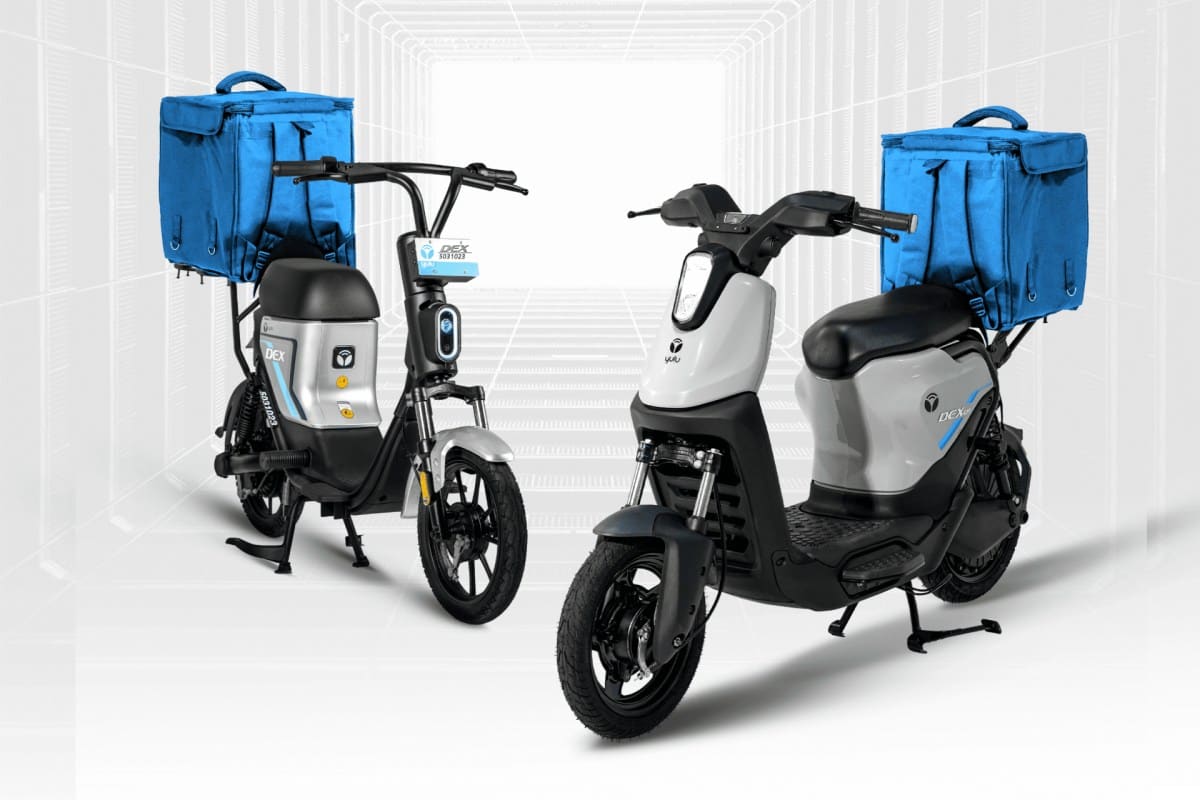
The new funding will expand the fleet from 50,000 to 200,000 bikes over the next two years. About a third of that expansion will consist of a new model called Yulu Express, a full-sized, higher-speed electric scooter designed for longer e-commerce runs, express parcel services, and emerging bike-taxi use cases. Yulu's current fleet, built by Bajaj Auto, tops out at speeds too low for intercity or highway segments. The Express model, manufactured by an unnamed Indian partner, addresses that gap. Roughly 500 units are already on the road in Bengaluru, with trials underway in three additional cities.
Unit Economics and the Path to Profitability
Gupta says Yulu achieved positive EBITDA in the last financial year and expects to turn profitable before interest and taxes within the next twelve months. Revenue grew sevenfold between fiscal 2023 and fiscal 2026, though he declined to share absolute figures. The startup also projects that this Series C will be its final equity raise before an eventual public listing. Future fleet expansion, Gupta says, will be financed primarily through debt and lease arrangements, a structure common among asset-heavy businesses once unit economics stabilize.
That confidence reflects a broader maturation in India's micro-mobility sector. Early players burned capital chasing consumer adoption with subsidized rides and broad geographic footprints. Yulu's pivot to B2B2C, where the end user is a worker rather than a leisure rider, tightens the value loop. Delivery workers use the bikes intensively, often logging two shifts a day, which drives utilization well above what casual commuter rentals could achieve. High utilization, in turn, allows Yulu to recover asset costs faster and negotiate better terms with lenders.
The debt component of this round signals investor appetite for such structures. At $30 million, it represents nearly a third of the total raise and will likely be deployed against specific fleet tranches with predictable cash flow. This mirrors financing patterns we've seen in Southeast Asian logistics startups, where vehicle fleets are increasingly treated as collateralizable assets once revenue per unit stabilizes.
Geographic Expansion and the Franchise Model
Yulu currently operates in twelve cities. It runs its own operations in Bengaluru, Mumbai, Delhi-NCR, and Hyderabad, while relying on franchisees in eight other markets. The franchise model reduces capital intensity and accelerates geographic reach, though it also introduces variability in service quality and unit economics. Gupta says the company aims to reach roughly twenty cities within the next year, with Chennai and Pune high on the list.
Franchise economics in mobility are tricky. The franchisee typically shoulders the cost of fleet procurement, station setup, and local marketing, while Yulu provides the technology platform, brand, and operational playbook. Revenue is split according to negotiated terms. This works well in tier-two cities where Yulu lacks on-ground presence and local partners can navigate municipal relationships more effectively. It works less well if franchisees lack the working capital to maintain bikes or expand capacity during demand surges.
The Express rollout will test that balance. Higher-speed scooters require different insurance, licensing, and maintenance protocols. If Yulu centralizes those functions, it erodes the franchisee's margin. If it pushes them onto partners, service consistency may suffer. The three-city trial Gupta mentioned will likely surface which approach scales.
What the Market Is Really Pricing
Investors are not betting on Yulu's technology; the bikes themselves are commodity hardware built by third-party manufacturers. What GEF and earlier backers are pricing is network density and operational discipline. A fleet of 200,000 bikes distributed across twenty cities creates a moat not through IP but through presence. A delivery worker in Pune who needs a bike tomorrow will choose the provider with a station two kilometers away, not ten. That last-mile proximity, combined with reliable battery swaps and responsive maintenance, is what turns a rental service into infrastructure.
India's quick-commerce sector is still in land-grab mode. Zepto, Swiggy Instamart, and Blinkit are burning capital to compress delivery windows from thirty minutes to ten. Those timelines are only feasible if riders have access to vehicles that work, all the time. Yulu's bet is that as the sector consolidates, the platforms will tolerate, even encourage, a dominant micro-mobility layer because it removes a variable they would otherwise have to manage themselves.
That bet carries risk. If one of the major platforms decides to verticalize and build its own fleet, Yulu's margin compresses overnight. If a well-capitalized competitor enters with lower weekly rates, utilization drops. And if regulatory changes around gig-worker classification force platforms to treat riders as employees, the entire rental model may need rethinking. For now, though, the incentives align. Platforms want flexible capacity, workers want low upfront cost, and Yulu sits in between, monetizing the friction.
The Broader Implications for Urban Mobility
Yulu's trajectory offers a preview of how electrification and gig labor are reshaping urban transport in markets where car ownership remains aspirational for most. The startup is not displacing private vehicles; it is enabling a class of workers who would otherwise rely on aging petrol scooters or public transit. The environmental benefit is real but secondary to the economic calculus. Riders choose Yulu because it is cheaper to operate per kilometer than a petrol bike, not because they are chasing carbon credits.
This dynamic is playing out across Southeast and South Asia, where electric two-wheelers are penetrating delivery and ride-hailing segments faster than consumer markets. Governments are noticing. India's FAME II subsidy scheme, which offers incentives for electric vehicle adoption, has disproportionately benefited commercial fleets. Yulu's expansion will likely draw additional policy support, particularly if it can demonstrate job creation and emissions reduction at city scale.
The company's claim of 1.6 million zero-emission miles per week translates to roughly 83 million miles annually at current fleet size. Scaling to 200,000 bikes would quadruple that figure, assuming utilization holds. Whether those numbers move the needle on urban air quality depends on what those bikes are replacing. If they substitute for petrol scooters, the impact is meaningful. If they simply add capacity to a delivery market that would have grown anyway, the net benefit is smaller.
Gupta's framing of this round as the last equity raise before an IPO suggests confidence that the model has reached escape velocity. Public markets in India have been receptive to asset-heavy businesses with clear unit economics, particularly in logistics and mobility. Yulu's challenge will be proving that it can maintain utilization and margin discipline as it quadruples fleet size, navigates franchise complexity, and competes for the same pool of gig workers that every platform is trying to activate. For now, the capital is there, the demand is there, and the infrastructure gap remains wide open.