A Boston Startup Wants to Turn Your Water Heater Into a Grid Battery
Reservoir has raised $8 million to deploy heat pump water heaters that predict household demand, slash energy bills, and stabilize electricity networks at scale.
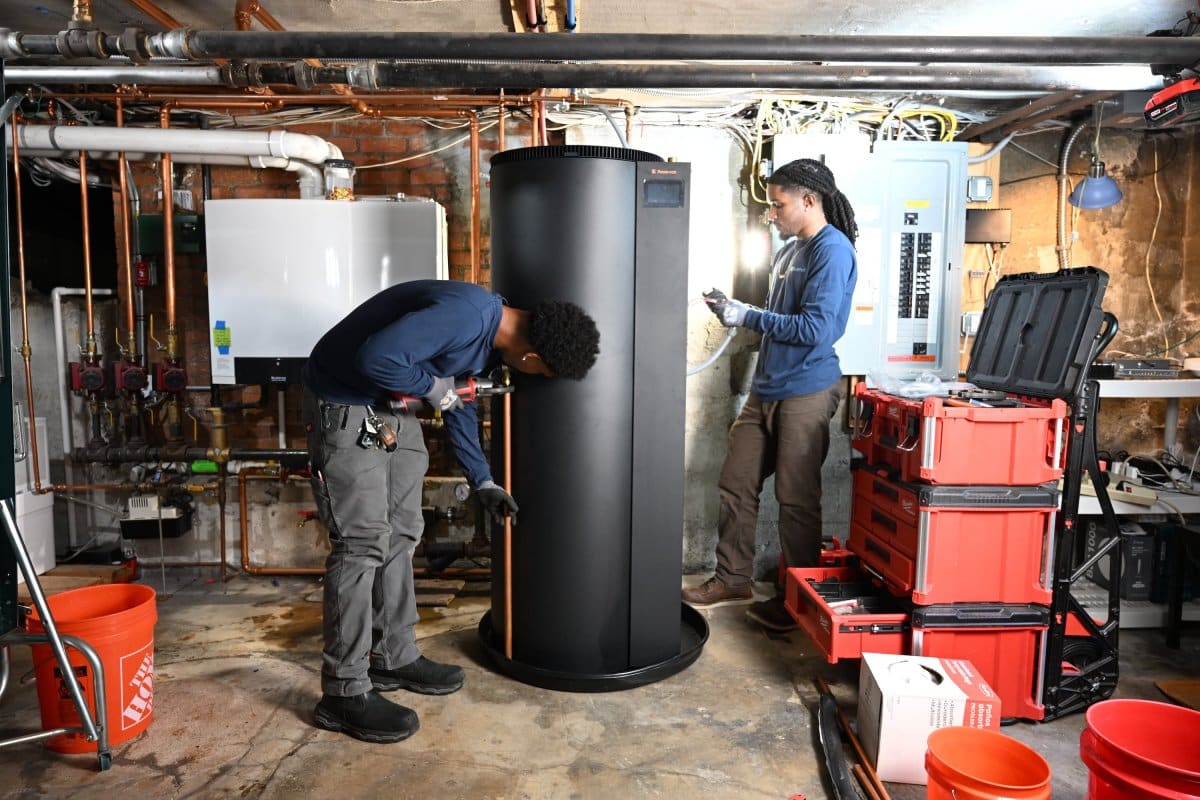
The Forgotten Appliance That Could Balance the Grid
Water heaters sit in basements and utility closets, ignored until they fail. Yet they account for roughly 18% of household energy consumption and rank among the leading causes of residential water damage. Luke Winston-Almanzar, formerly chief business officer at 3D printing company Formlabs, saw an opportunity in that neglect. After realizing his water heater consumed more energy than his electric vehicle, he co-founded Reservoir with Gabriel Parisi-Amon and Jake Felser to build something better.
The company announced an $8 million seed round led by Asymmetric Capital Partners, with backing from Founder Collective and MCJ. Reservoir has installed around 100 units in the Boston area and aims to reach 1,000 deployments by the end of next year. At that scale, the fleet would represent approximately one megawatt of flexible capacity, enough to influence neighborhood-level grid dynamics.
Predicting Showers, Smoothing Demand
Conventional water heaters operate on a simple thermostat loop, reheating the tank whenever temperature drops. Reservoir's units spend their first month in a home learning usage patterns, then train a predictive model to anticipate when occupants will need hot water. The system heats the tank during off-peak hours when electricity is cheap and abundant, rather than responding reactively.
The heat pump core delivers efficiency gains that matter at scale. Reservoir claims its technology is nearly four times more efficient than a traditional electric resistance heater and five times more efficient than a natural gas unit. When multiplied across hundreds or thousands of homes, those improvements translate into measurable load reduction during peak hours.
Winston-Almanzar said the startup has demonstrated grid relief at the neighborhood level. The next step is aggregating the fleet to participate in utility demand response programs, which compensate large users for curtailing consumption during stress events. Revenue from those programs could subsidize hardware costs, making the units more accessible.
Beyond Efficiency: Features That Sell
Energy storage appeals to grid operators, but homeowners replace water heaters in emergencies, often accepting whatever their plumber stocks on the truck. Reservoir designed around that reality. The company added an ultrasonic flow sensor that monitors plumbing throughout the home, sending leak alerts through a smartphone app. That feature alone can prevent costly water damage.
The Max variant includes a recirculation valve for instant hot water and a mixing valve that guards against frozen pipes during cold snaps. A 50-gallon Max tank can deliver up to 150 gallons of hot water in "party mode," accessible via touchscreen or app. These conveniences aim to make the product desirable on its own merits, independent of sustainability credentials.
Vertical Integration to Control the Experience
Reservoir launched its own plumbing operation to simplify pricing and accelerate deployment. Winston-Almanzar drew on his Formlabs experience, where direct customer relationships proved essential when distributors resisted new technology. By handling installation in-house, Reservoir avoids the friction that has hampered heat pump water heater adoption.
The Core model costs $5,000 installed; the Max version runs $6,500. Massachusetts residents qualify for a $1,050 rebate, bringing the Core down to $3,950. That price compares favorably with incumbent heat pump models, which typically cost around $3,500 for hardware plus $1,000 for installation. Traditional electric resistance tanks start lower, near $1,700 for an 80-gallon unit, but Winston-Almanzar estimates a Reservoir unit saves Boston households up to $1,000 annually in energy costs. With a 10-year warranty, payback occurs well within the product's lifespan.
Why Heat Pump Water Heaters Have Stalled
Heat pump water heaters have existed for years but remain a niche product. Upfront cost, limited plumber familiarity, and lack of compelling features beyond efficiency have slowed adoption. Reservoir is wagering that predictive intelligence, leak detection, and instant hot water can overcome those barriers. If the company succeeds in the Boston market, the model could scale to other regions where utilities face capacity constraints.
At DailyTechWire, we've tracked distributed energy resources across Asia and North America, and the pattern is consistent. Hardware that asks consumers to sacrifice convenience for sustainability rarely gains traction. Reservoir's approach, embedding grid services inside a product people might actually want, mirrors strategies we've seen succeed in smart thermostats and vehicle-to-grid pilots.
The Path to a Megawatt Fleet
Reaching 1,000 installations by late next year would mark a proof point. A megawatt-scale fleet could participate in wholesale markets or ancillary services, depending on regulatory frameworks in Massachusetts. The economics of aggregated demand response have improved as volatile renewable generation increases the value of flexible load.
Reservoir still faces execution risk. Scaling a hardware startup with an integrated services layer is capital-intensive. The company must train plumbers, manage supply chains, and maintain software infrastructure while competing against entrenched manufacturers. The $8 million seed round provides runway, but subsequent funding will depend on unit economics and customer retention.
If Reservoir can demonstrate that intelligent water heaters reduce bills, prevent leaks, and stabilize grids without compromising comfort, it may finally unlock the heat pump water heater category. The appliance no one thinks about could become infrastructure that everyone relies on.