When Tech Leaders Mistake Comic Books for Political Philosophy
Harvard historian Jill Lepore argues that Silicon Valley's push to replace democratic functions with algorithmic governance rests on a shallow reading of science fiction and a fundamental misunderstanding of citizenship.

The Usurpation No One Voted For
Private corporations now write constitutions, establish supreme courts, and float the idea of AI presidents. According to Jill Lepore, a Harvard historian and Pulitzer Prize winner, these are symptoms of what she terms the "artificial state," a gradual replacement of democratic governance by algorithmic rule that citizens never consented to.
In her forthcoming book "The Rise and Fall of the Artificial State," Lepore traces how Silicon Valley's most prominent figures have built a political project on borrowed ideas from pulp science fiction, comic books, and a 1984 Super Bowl commercial. The result, she argues, is not innovation but regression: a return to concentrated power dressed up as progress.
The distinction matters. Lepore is quick to clarify that her critique targets not technology itself but the corporate assumption of state functions. She is married to a computer scientist and describes herself as enthusiastic about intellectual revolutions underway in computing. What alarms her is the purposeful usurpation of democratic roles by private entities over the past two decades, often justified by appeals to efficiency or inevitability.
From Efficiency to Ideology
The shift began innocently enough. Early efforts to bring new technologies into government operations were motivated by speed, cost savings, and streamlined processes. Lepore sees those initial moves as well-intentioned, even if they carried unintended consequences.
The transformation became deliberate around the turn of the millennium. A cohort of libertarian futurists in the 1990s began explicitly advocating for the erosion of the nation-state, viewing the internet and subsequent innovations as tools to accelerate that dissolution. What started as accidental drift became purposeful strategy.
Today, prominent tech entrepreneurs openly discuss moving beyond the era of the nation-state. When Anthropic hires a moral philosopher to draft a constitution, when Facebook establishes a Supreme Court-like Oversight Board, or when Sam Altman endorses the idea of an AI president in a podcast interview, these are not thought experiments. They are assertions of authority that mirror governmental structures without democratic accountability.
Lepore describes these moves as a "cartoon version" of political philosophy, one that takes itself with alarming seriousness despite its shallow intellectual foundations. The companies wielding this power, she notes, are led by individuals without sophisticated political training, yet they shape civic life for billions.
The Macintosh Ad and Its Descendants
If there is an origin story for the belief that better computers make better democracies, Lepore locates it in January 1984. Apple's Super Bowl advertisement for the Macintosh positioned mainframe computers, represented by gray IBM machines, as emblems of totalitarianism. The personal computer, sleek and accessible, would be the tool of liberation.
It was effective marketing. Lepore doubts anyone at Apple genuinely believed a desktop machine would enhance citizenship or civil society function. It was a useful device, not a political instrument. Yet that advertising conceit has metastasized over four decades into a foundational myth for Silicon Valley.
The logic follows a familiar pattern: if personal computers freed individuals from corporate mainframes, then social media can free citizens from traditional media gatekeepers, and AI can free humanity from the limitations of human judgment. Each technological layer is sold as democratizing, even as the companies building these systems accumulate power that rivals or exceeds that of elected governments.
The Twitter Parable
Twitter's evolution illustrates how platforms drift from tools into quasi-governmental entities. The service launched without grandiose claims about rescuing civilization. Early users treated it as a lightweight social experiment, a place to share mundane updates.
Politicians changed that calculus. Elected officials discovered Twitter amplified their messages, connected them to younger demographics, and allowed constant engagement with audiences. As political use intensified, Twitter began describing itself as a digital town hall, a revival of New England civic traditions.
Lepore calls this characterization "bananas." In 2012, when Twitter published its Politics and Elections Handbook to guide candidates, only one in five Americans had accounts. Most of those accounts were dormant. Over 90 percent of political tweets came from fewer than 10 percent of active users.
Far from representing the electorate, Twitter reflected the most extreme, hyper-partisan segment of the population. Politicians using the platform to gauge public sentiment were receiving distorted information. The town hall metaphor collapsed under scrutiny, yet it shaped how both the company and policymakers understood the platform's role.
Lepore sees this as emblematic of the artificial state's broader pattern: corporate tools assume civic functions through gradual adoption rather than deliberate design, then solidify into infrastructure that is difficult to challenge or replace.
Misreading Science Fiction
The second half of Lepore's book examines what she calls the parable of the artificial state in science fiction. Stories from the 1850s onward have explored a recurring arc: machines grow sophisticated, assume human functions including governance, and eventually rule or destroy their creators. The tradition includes everything from early industrial-era anxieties to "The Terminator" and "Battlestar Galactica."
These narratives were often cautionary, warnings about the consequences of ceding too much authority to automated systems. Silicon Valley, Lepore argues, has read them as blueprints.
She singles out Elon Musk as an example of this misreading. The science fiction Musk references, she notes, actually contradicts his stated political beliefs. Yet he and others in his cohort treat dystopian fiction as aspirational, extracting technological aesthetics while ignoring the underlying critique.
This shallow engagement with ideas extends beyond fiction. Lepore describes many tech leaders as "bad readers," individuals who encounter complex philosophical or literary concepts and extract only the surface-level imagery. The result is a political vision built on misunderstood metaphors rather than rigorous thought.
Roads Not Taken
As a political and literary historian, Lepore emphasizes that the current trajectory was not inevitable. The 1996 Telecommunications Act, which shaped the internet's commercial structure, reflected a specific political moment influenced heavily by Newt Gingrich and the Contract with America. Alternative frameworks were debated at the time but not adopted.
The same is true for earlier technological junctures. Each decision point offered multiple paths, and the ones chosen often reflected contingent political circumstances rather than technological determinism. Understanding those alternatives, Lepore argues, reveals that the artificial state is a choice, not an inevitability.
That historical perspective challenges the rhetoric common among AI executives today, who present their technologies as forces of unstoppable progress. When leaders claim that opposing their products means opposing the future itself, they are invoking a 19th-century intellectual framework that equates technological change with the only meaningful form of progress.
Lepore traces this belief to the early decades of industrialism, when thinkers began treating technological advancement as synonymous with human advancement. It is a relatively recent notion in the span of human history, and not one that withstands scrutiny. Progress in governance, rights, and civic participation has often occurred independently of technological change, and sometimes in opposition to it.
The Data Center Backlash
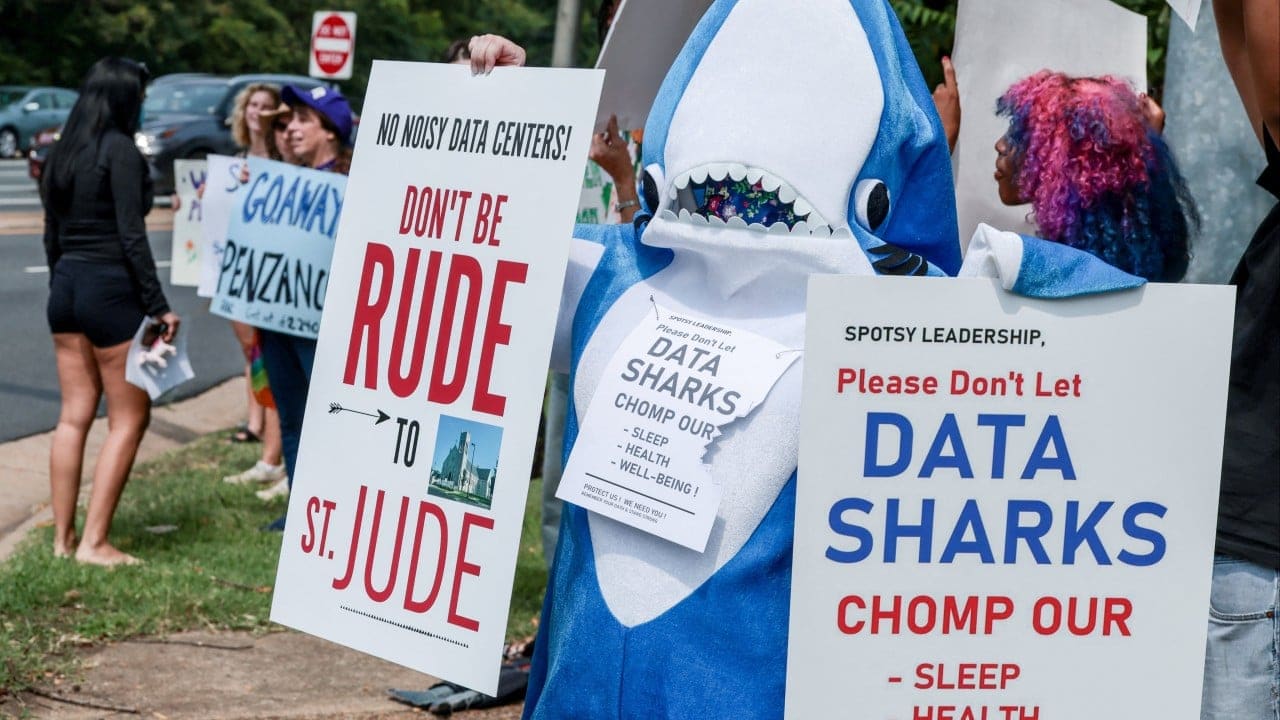
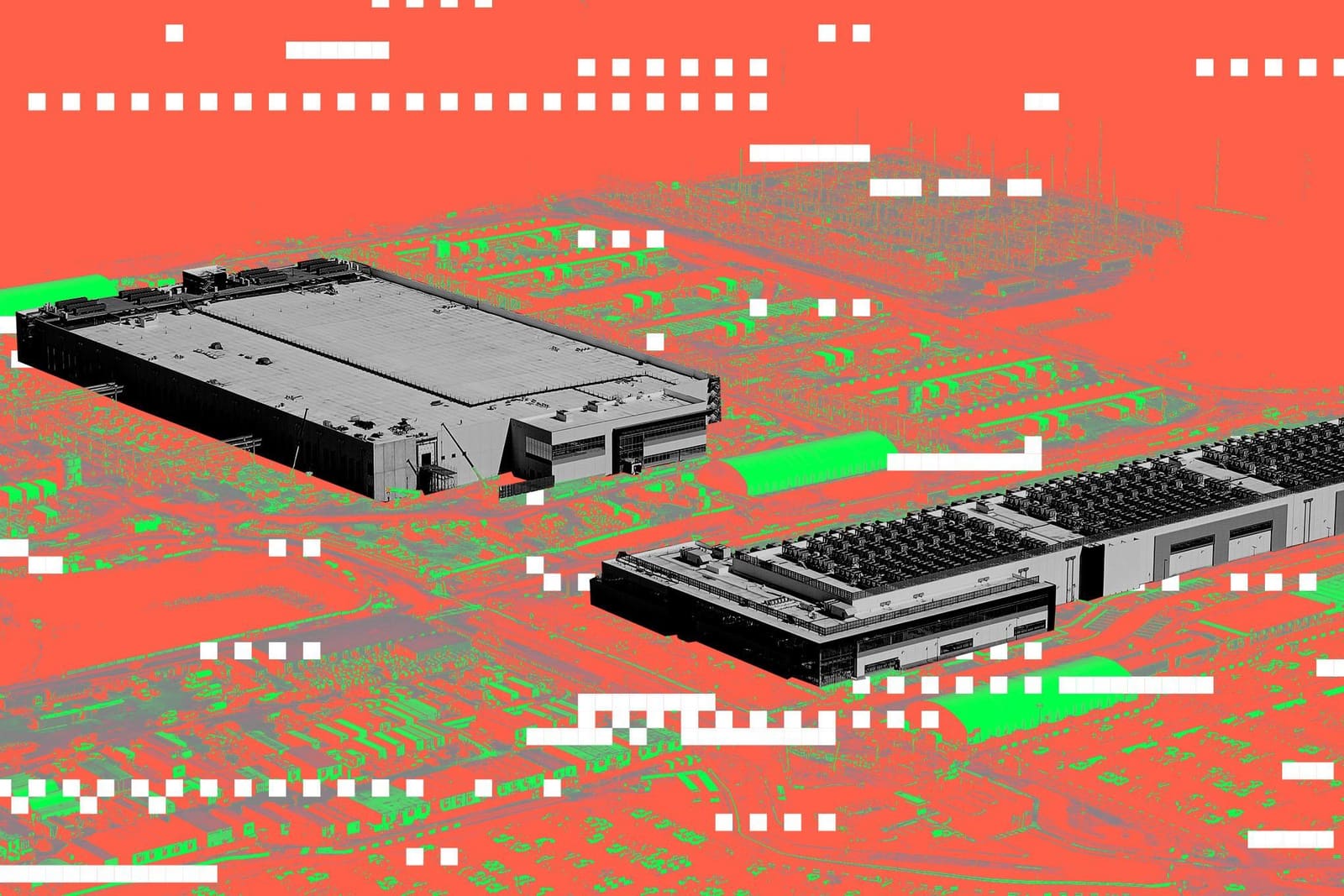
Contemporary resistance to the artificial state is emerging in unexpected places. Lepore points to the current backlash against data centers, where local communities are pushing back against the infrastructure demands of AI companies. These conflicts represent a collision between the resource requirements of algorithmic governance and the tangible limits of physical geography and community consent.
The backlash reflects a broader tension. As tech companies assume more state-like functions, they encounter state-like constraints: public opposition, regulatory scrutiny, and the messy reality of governing diverse populations with competing interests. The artificial state, for all its claims to efficiency, struggles with the fundamental challenges that have always defined governance.
Inevitable Failure
Lepore's book promises not just an account of the artificial state's rise but also its fall. She argues that this model cannot survive, a claim she supports by tracing the theme through centuries of science fiction. The parable recurs because it captures a structural truth: systems that concentrate power in unaccountable algorithms or corporations eventually collapse under their own contradictions.
Whether that collapse arrives through public resistance, regulatory intervention, or the internal failures of overextended companies remains to be seen. What Lepore offers is not a prediction of timing but a challenge to the narrative of inevitability. The artificial state is neither progress nor destiny. It is a political choice, one that can be examined, contested, and reversed.
For readers in Asia, where tech platforms and government often maintain closer relationships than in the United States, Lepore's framework offers a useful lens. The dynamics she describes are not uniquely American. They are playing out wherever private companies build infrastructure for civic life, wherever algorithms mediate access to information and services, and wherever the language of innovation is used to sidestep democratic deliberation.
The question is not whether technology will continue to advance. It will. The question is who decides how it is deployed, for whose benefit, and under what structures of accountability. Those are political questions, not technological ones, and they demand political answers.