Amazon's Texas Data Center Will Run on 33 Million Tons of CO₂ a Year
The planned Pecos County facility will host the nation's largest climate-polluting power plant as hyperscalers chase AI capacity at the expense of climate pledges.
The Scale of the Emissions
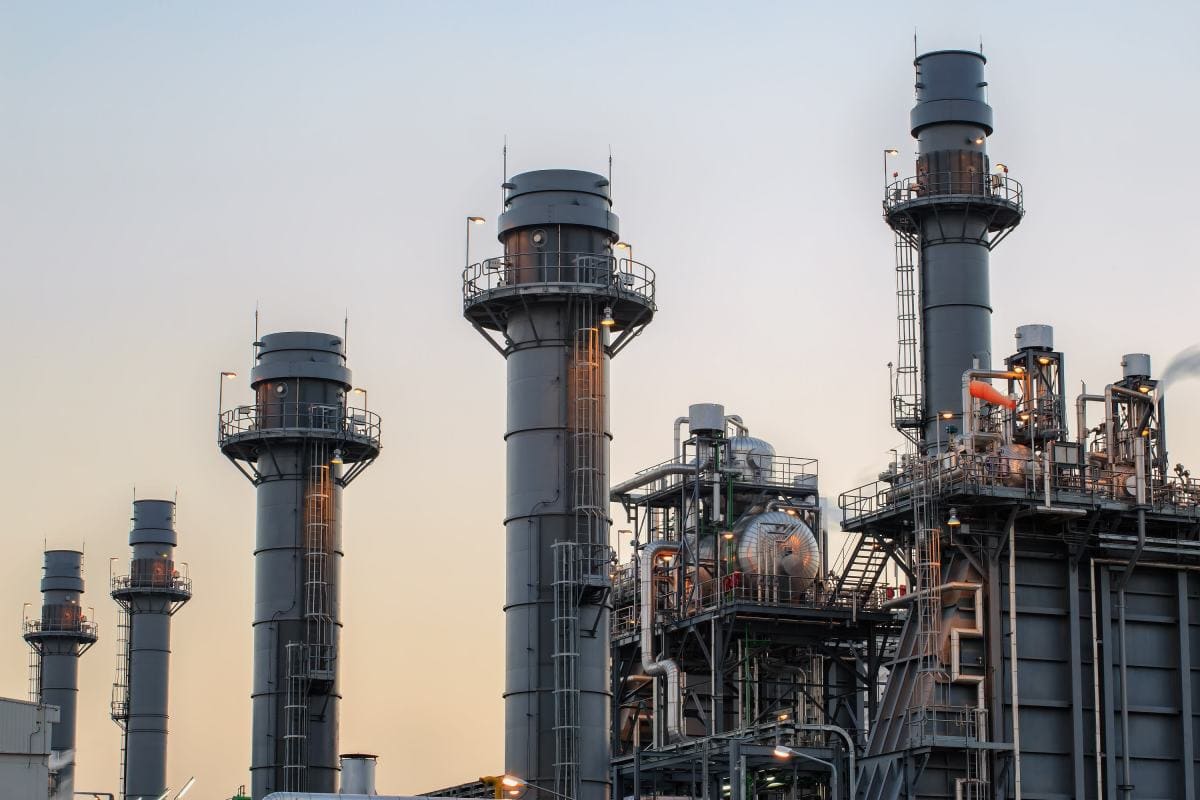
Amazon is moving forward with a data center project in Pecos County, Texas that will fundamentally reshape the emissions landscape of American tech infrastructure. The facility will be powered by an on-site natural gas plant permitted to release 33 million tons of carbon dioxide annually, a figure that would make it the single largest source of climate pollution in the United States.
To put that number in perspective, it exceeds the annual emissions of any existing power plant in the country. The project represents a stark departure from the renewable energy commitments that have defined the public narrative around cloud infrastructure for the past five years. At DailyTechWire, we've tracked the growing tension between AI compute demands and corporate climate goals across the region, but this facility marks an inflection point where capacity concerns have clearly overtaken sustainability considerations in hyperscaler planning.
The Political Calculation
Amazon confirmed the data center will rely on new on-site generation designed to avoid raising electricity costs for Texas families. That phrasing is deliberate. Data centers have become politically toxic in multiple U.S. states over the past eighteen months, with local opposition centering on grid strain, water consumption, and electricity price impacts on residential ratepayers.
By building dedicated generation capacity, Amazon insulates itself from the political backlash that has stalled or killed data center projects in Virginia, Ohio, and Georgia. The trade-off is a facility that locks in fossil fuel dependency for the next two to three decades, the typical operational lifespan of a gas-fired plant. Texas, with its deregulated grid and appetite for industrial investment, offers a regulatory environment where this kind of infrastructure can move forward without the environmental review hurdles common in other states.
The Emissions Trajectory
Amazon reported a 16 percent increase in carbon emissions last year, driven largely by AI workloads. The company committed in 2019 to reach net-zero carbon by 2040 through the Climate Pledge, a framework it co-founded with aspirations of industry leadership on decarbonization.
The Pecos County project suggests that timeline is no longer operative in any meaningful sense. In a statement, an Amazon spokesperson acknowledged that "the world looks different now than when we co-founded the climate pledge," while maintaining that the company's commitment remains unchanged. That rhetorical tension reflects the broader bind facing hyperscalers: AI inference and training workloads require power availability and latency performance that intermittent renewables cannot yet deliver at scale, but fossil baseload generation undermines the climate narratives these companies have built their ESG positioning around.
The 33 million ton annual figure for the Texas plant would represent roughly 15 percent of Amazon's total reported emissions from last year, though that baseline is likely to rise significantly as the company continues to expand AI infrastructure.
The Broader Industry Pattern
Amazon is not alone in backing natural gas infrastructure to support data center expansion. SpaceX's Terafab project is similarly relying on gas plants rather than solar despite the Tesla connection. Microsoft has explored nuclear and gas hybrid solutions in multiple regions. The pattern is consistent: when AI workloads demand firm, dispatchable power, hyperscalers are choosing fossil generation over renewable intermittency.
This shift is happening without much public debate or regulatory friction. The U.S. lacks a coherent federal framework for data center emissions or energy sourcing requirements. State-level climate policies vary widely, and Texas in particular offers minimal constraints. The result is a patchwork where corporate climate pledges function as the primary governance mechanism, and those pledges are now being rewritten in real time under the pressure of AI capacity demands.
The Commitment vs. Reality Gap
The Amazon spokesperson's framing is revealing: the world has changed, but the commitment has not. In practice, the commitment is now a long-term aspiration detached from near-term infrastructure decisions. The company is still investing in renewable energy projects and purchasing carbon offsets, but those mechanisms operate in parallel with, not as a constraint on, fossil infrastructure expansion.
The Pecos County facility will likely operate for 25 to 30 years, emitting nearly a billion tons of CO₂ over its lifetime if it runs at permitted capacity. That volume cannot be offset or neutralized through renewable energy credits in any credible accounting framework. It represents a permanent addition to Amazon's carbon ledger and a signal that the company's 2040 net-zero target is either being pushed back or redefined in ways that have not yet been made public.
What This Means for the Industry
The Texas project is a test case. If Amazon can build and operate a facility of this scale without significant political or investor backlash, it sets a precedent for other hyperscalers facing similar capacity constraints. The next wave of AI infrastructure, particularly around frontier model training and large-scale inference clusters, will require power availability that existing grids cannot always provide. On-site fossil generation becomes the path of least resistance.
The alternative, waiting for grid-scale battery storage and transmission upgrades to make renewables viable for 24/7 data center loads, imposes delays that hyperscalers are unwilling to accept in the current AI race. The result is a decoupling of climate rhetoric from infrastructure reality, where sustainability commitments become aspirational branding rather than operational constraints. For an industry that has positioned itself as a driver of decarbonization through efficiency and renewable procurement, that shift carries reputational and regulatory risk that has not yet fully materialized.