Washington Pays $1.2 Billion to Cancel Wind Leases, Steers Funds to LNG
The latest offshore wind cancellation brings the administration's tab to $4 billion as it redirects capital toward natural gas infrastructure and peaker plants.
The Deal Structure
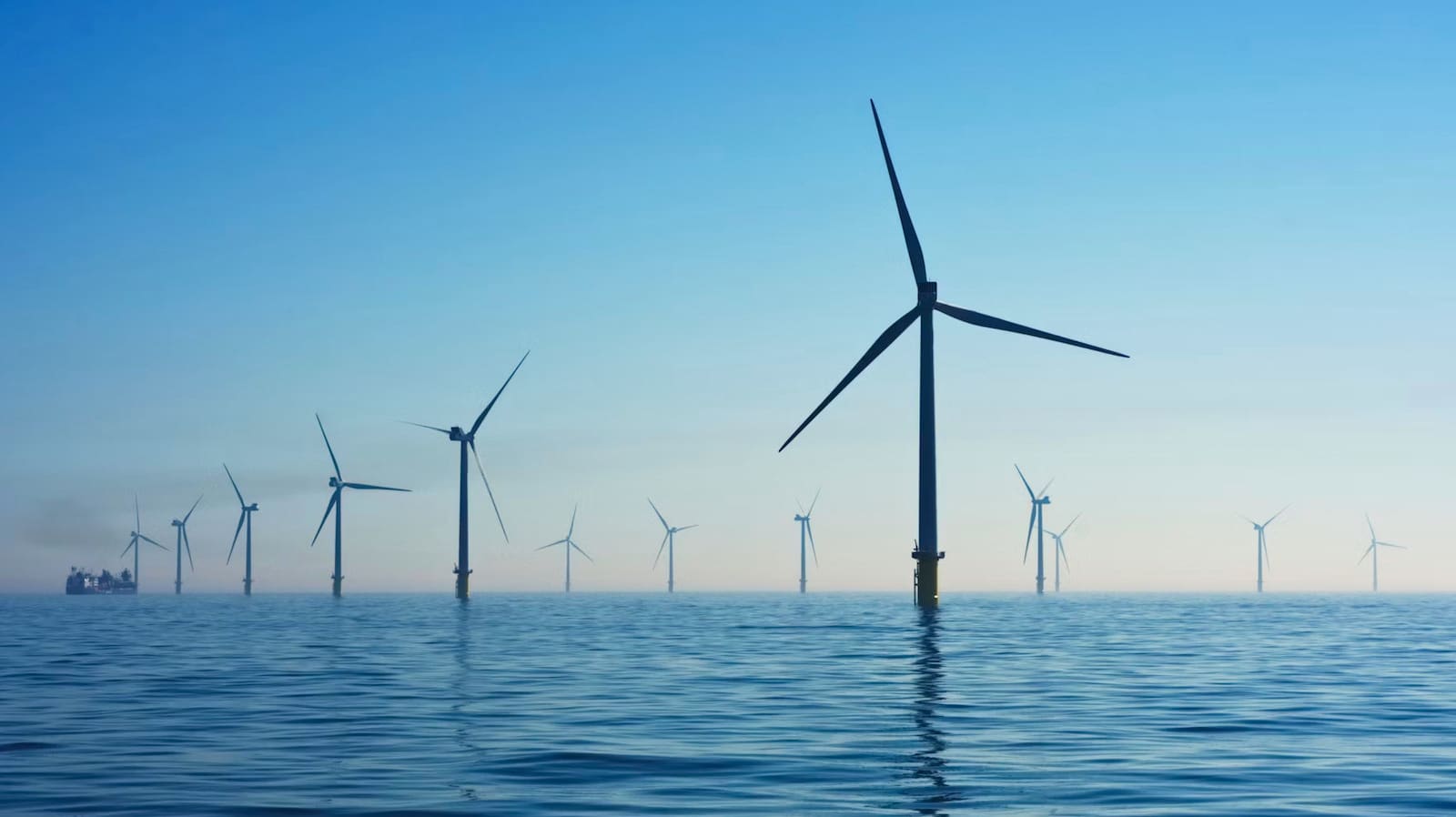
The Interior Department finalized a settlement with RWE, the German energy company, to terminate offshore wind leases across three states. The agreement covers projects off the coasts of New York, California, and Louisiana. Under the terms, RWE receives $1.22 billion in settlement funds drawn from Interior's budget, which sources from federal tax revenue.
The settlement includes two investment requirements. RWE committed $900 million to acquire a 16 percent equity position in a liquefied natural gas export facility in Louisiana operated by Woodside Energy, an Australian firm. The company separately pledged $300 million to develop 15 natural gas peaker plants across multiple states.
RWE originally acquired the New York lease during the previous administration for approximately $1.1 billion, with the California and Louisiana leases totaling around $163 million. After accounting for inflation adjustments, the settlement represents a modest return on the company's initial lease expenditures.
The Pattern Emerges
This marks the fifth transaction in which the current administration has paid energy companies to abandon renewable projects. The cumulative cost of these settlements now reaches approximately $4 billion in taxpayer funds. Each deal has followed a similar template: Interior negotiates a buyout of existing renewable leases while steering the recipient companies toward fossil fuel infrastructure investments.
Interior Secretary Doug Burgum characterized the arrangement as beneficial, stating the administration values RWE's "voluntary investment in projects that strengthen our nation's energy security." RWE, for its part, said the settlement allows it to "direct resources toward energy projects that can be advanced with certainty."
The phrasing is telling. Certainty, in this context, refers to regulatory predictability. The administration has made clear through both policy and spending that offshore wind faces an uncertain permitting environment, while natural gas projects enjoy streamlined approval pathways.
Follow the Capital
The Louisiana LNG project at the center of the RWE deal is instructive. Woodside Energy has publicly aligned itself with administration priorities. The company's Chief Operating Officer, Daniel Kalms, recently adopted the administration's preferred terminology for the Gulf of Mexico, referring to it as the "Gulf of America" in public remarks. Kalms has also praised the administration's approach, noting that it "understands the role that affordable energy plays in national prosperity."
This kind of rhetorical alignment rarely happens by accident. In Washington, as in most capitals, language signals loyalty. And loyalty, particularly in energy policy, can translate into regulatory favor.
The peaker plant component of the RWE agreement deserves scrutiny as well. Natural gas peaker plants provide backup generation during periods of high electricity demand. They are, by design, inefficient, running only intermittently and typically at higher marginal costs than baseload generation. Their proliferation raises questions about grid economics, particularly in regions where battery storage and demand response could serve the same function at lower long-term cost.
Environmental Compliance Questions
LNG export facilities carry their own operational challenges. A study released late last year by the Environmental Integrity Project examined every fully operational LNG terminal in the United States. The findings were unambiguous: every facility had violated federal pollution limits. Violations included unauthorized discharge of hazardous substances into adjacent waterways.
These compliance failures are not incidental. LNG terminals operate at scale, processing enormous volumes of gas through liquefaction trains that run continuously. The infrastructure is complex, the margins for error are thin, and the regulatory oversight has historically been inconsistent.
The administration has simultaneously increased funding for coal-based energy projects, allocating roughly $1.1 billion toward coal infrastructure. Critics have argued that these expenditures disproportionately benefit a narrow set of industry stakeholders rather than advancing broader energy security objectives.
The Policy Logic
The administration's opposition to offshore wind is well-documented and long-standing. The president has repeatedly criticized wind turbines, often using outdated terminology and making claims about health and environmental impacts that lack scientific support. These statements include assertions that turbines cause cancer, harm marine life, and are inherently unreliable.
At DailyTechWire, we've tracked energy policy shifts across multiple administrations, and the current approach stands out for its explicit preference for incumbents. Offshore wind represents a nascent industry in the United States, with significant upfront capital requirements and long development timelines. The technology has matured considerably in Europe and Asia, where governments provided stable policy frameworks that allowed investors to deploy capital with confidence.
The United States had been moving in that direction. Lease auctions under the previous administration attracted billions in bids from European energy majors and domestic utilities. Those companies anticipated a decades-long buildout of offshore capacity, with the potential to supply coastal load centers that currently rely on a mix of gas, nuclear, and imported power.
The current policy reversal introduces uncertainty that extends beyond the five canceled projects. Developers with active leases now face questions about permitting timelines, interconnection queue priorities, and the durability of federal commitments. Capital is patient, but it is not infinitely patient. If offshore wind remains politically contested in the United States, investors will deploy their resources in markets with clearer rules.
The Fiscal Angle
Congressional critics have focused on the fiscal implications. Representative Mike Levin noted that the administration has now spent $4 billion "paying companies to cancel offshore wind projects that would have lowered your electric bill." The framing is pointed: rather than subsidizing new generation, the government is paying to prevent it.
The counterfactual is difficult to model precisely. Offshore wind has higher upfront costs than gas-fired generation, but lower operating costs and no fuel price risk. Over a 25-year project life, the levelized cost comparison depends on assumptions about gas prices, carbon policy, and financing costs. What is clear is that the canceled projects would have added gigawatts of zero-marginal-cost generation to grids in high-cost regions.
New York, California, and Louisiana all face distinct electricity challenges. New York and California have aggressive decarbonization targets and constrained transmission into urban centers. Louisiana sits at the heart of petrochemical infrastructure but also faces recurring grid reliability issues during hurricane season. Offshore wind, located close to coastal demand and less vulnerable to land-based weather events, offered a hedge against those risks.
What Happens Next
The immediate effect of the RWE settlement is straightforward: three offshore wind lease areas return to federal control, and $1.22 billion moves from the Treasury to a private company. The longer-term effect is harder to quantify. Other lease holders will watch this outcome closely. If RWE can negotiate a settlement that covers its sunk costs and redirects capital toward preferred projects, why proceed with expensive offshore development?
The administration has also signaled through these transactions that it will use Interior's budget as a policy tool. The department has broad discretion over lease management, and settlements of this nature do not require congressional approval. That gives the executive branch significant latitude to reshape the energy landscape through transactional dealmaking rather than legislation.
For RWE, the outcome is pragmatic. The company exits projects that faced uncertain timelines and redeploys capital into assets with clearer regulatory pathways. Whether those assets deliver comparable returns over the long term depends on gas prices, export demand, and the trajectory of global energy markets.
For the offshore wind industry in the United States, the signal is less ambiguous. The policy environment has shifted, and the window that opened during the previous administration has, for now, closed. Developers with capital to deploy will look to Europe, Asia, and other markets where governments have committed to multi-decade offshore buildouts. The United States, despite its vast coastal resources and proximity to major load centers, will remain a secondary market until the political calculus changes again.