SpaceSail Closes Billion-Dollar Round to Build China's Answer to Starlink
Shanghai Spacecom Satellite Technology's Series B marks the largest funding event in China's satellite internet sector, underscoring Beijing's determination to field a competitive LEO constellation.
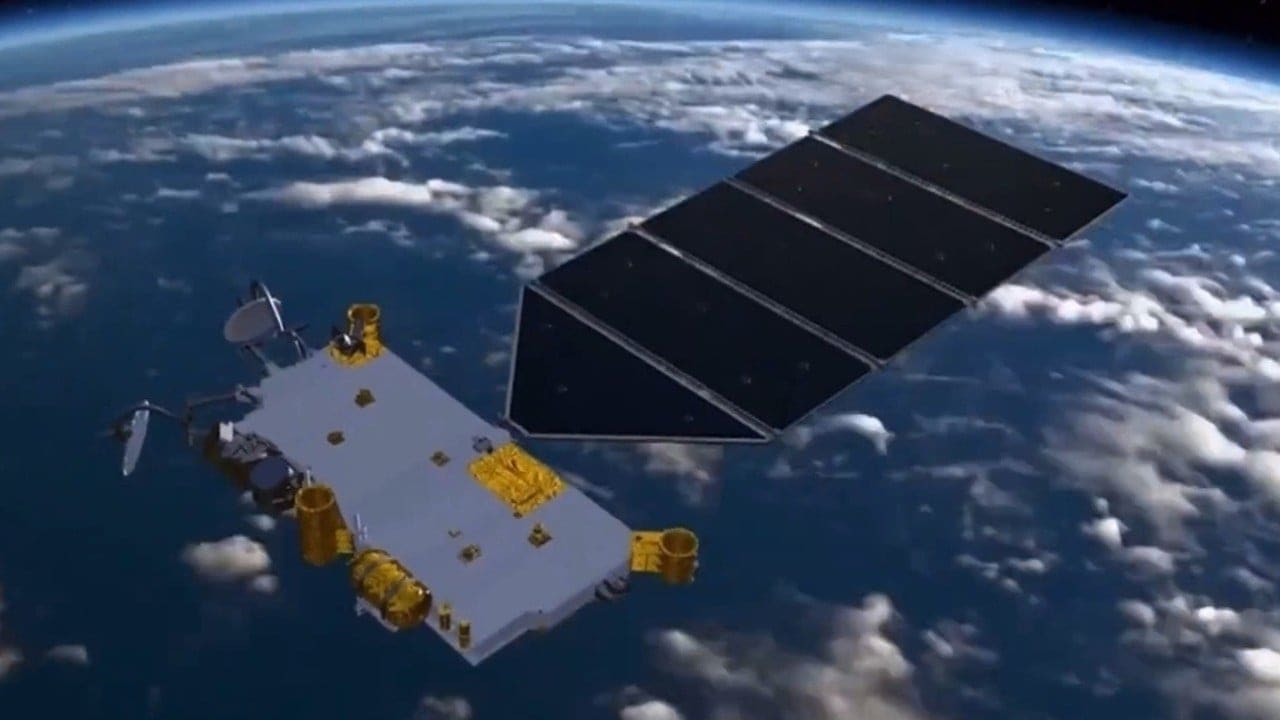
A Record Raise for LEO Ambitions
Shanghai Spacecom Satellite Technology, the operator behind China's Qianfan constellation and known commercially as SpaceSail, closed a Series B financing round worth approximately 7 billion yuan (roughly US$1 billion) this week. The capital injection represents the largest single fundraise in the country's nascent satellite internet industry and arrives at a moment when Beijing is channeling policy support and investment into low-Earth-orbit infrastructure.
At DailyTechWire, we've tracked the acceleration of state-linked and private capital flowing into LEO projects across Asia over the past eighteen months. SpaceSail's raise sits at the intersection of industrial policy, dual-use technology imperatives, and the commercial race to provide broadband from space. Where Western constellations have enjoyed a multi-year head start, Chinese operators are now moving with remarkable speed to close the gap.
Qianfan's Scale and Timeline
The Qianfan constellation, also referred to as the "Thousand Sails" network, aims to deploy thousands of satellites in low-Earth orbit to deliver broadband connectivity across China and eventually to markets along Belt and Road corridors. While SpaceSail has not disclosed a final satellite count, industry observers expect the architecture to rival or exceed the scale of other mega-constellations currently under construction.
The fresh capital will fund satellite manufacturing, launch campaigns, and ground infrastructure. SpaceSail has already begun initial deployments, with early test satellites launched aboard Long March rockets over the past year. The Series B proceeds are expected to accelerate the cadence to dozens of satellites per quarter by late 2025, a pace that reflects both maturing domestic launch capacity and streamlined production techniques borrowed from electric-vehicle supply chains.
Policy Winds and Sovereign Connectivity
China's push into LEO broadband is driven by more than commercial opportunity. Policymakers in Beijing view satellite internet as critical infrastructure for remote regions, maritime operations, and military communications. The State Council and relevant ministries have issued guidelines encouraging private participation in space infrastructure, provided operators align with national security and data-sovereignty requirements.
SpaceSail benefits from this alignment. The company maintains close ties to state-owned aerospace entities and operates under regulatory frameworks that prioritize indigenous technology and supply-chain resilience. In practice, this means SpaceSail sources components from domestic suppliers wherever possible, a constraint that also insulates the constellation from export-control risks that have complicated other high-tech programs.
The strategic calculus extends beyond terrestrial borders. As maritime trade routes and overseas projects multiply, Chinese logistics firms, shipping lines, and construction operators are seeking reliable, sovereign connectivity that does not depend on foreign providers. Qianfan is positioned to serve that demand, offering an alternative to Western constellations in regions where geopolitical considerations shape procurement decisions.
Manufacturing at EV Speed
One of the more striking aspects of SpaceSail's trajectory is the speed at which it intends to manufacture satellites. The company has adopted production methods pioneered by China's electric-vehicle sector, including modular assembly lines, automated testing rigs, and just-in-time component delivery. This approach contrasts with the artisanal, high-touch processes that characterized earlier generations of satellite manufacturing.
Industry specialists point out that LEO satellites are inherently simpler and shorter-lived than geostationary platforms, making them amenable to volume production. SpaceSail's manufacturing partner operates a facility in the Pudong New Area of Shanghai, where throughput targets call for completing one satellite every few hours once the line reaches full scale. Whether those targets prove realistic will depend on supply-chain stability and the ability to debug design iterations quickly.
The capital-intensity of such a ramp is considerable, and the Series B round provides the runway SpaceSail needs to reach economies of scale before revenue from service contracts begins to flow. Early customers are expected to include state-owned enterprises in energy, transportation, and telecommunications, offering a relatively stable initial revenue base.
Competitive Dynamics and the Starlink Shadow
SpaceSail's ambitions inevitably invite comparison to Starlink, which has deployed more than five thousand satellites and serves over two million subscribers globally. Starlink's operational lead is substantial, but it also faces regulatory and geopolitical headwinds in markets where governments are wary of dependence on a U.S.-based provider.
Qianfan's competitive proposition rests on three pillars: sovereign data handling, pricing tailored to Belt and Road markets, and integration with China's broader digital-infrastructure exports. Where Starlink excels in technical maturity and global coverage, SpaceSail is betting that state backing, domestic demand, and partnerships with Chinese infrastructure projects will carve out a defensible market position.
At the same time, the economics of LEO constellations remain unproven at scale. Launch costs, satellite longevity, spectrum coordination, and ground-station density all influence unit economics, and no operator has yet demonstrated sustained profitability. SpaceSail's backers are wagering that the strategic value of the network justifies the capital outlay, even if commercial returns take years to materialize.
Investor Composition and State Involvement
The Series B round drew participation from a mix of state-owned investment vehicles, provincial development funds, and private venture firms. While SpaceSail has not published a full cap table, filings indicate that Shanghai municipal entities hold significant stakes, reflecting the city's ambition to position itself as a hub for commercial space activity.
This blend of state and private capital is characteristic of China's approach to strategic industries. Government entities provide patient capital and policy support, while private investors contribute operational discipline and sector expertise. The model has proven effective in electric vehicles and renewable energy; its application to satellite internet is still being tested.
For venture investors, the calculus hinges on SpaceSail's ability to secure long-term service contracts and eventually expand beyond the domestic market. The company's valuation in the Series B round has not been disclosed, but industry estimates place it in the mid-single-digit billions, implying significant growth expectations embedded in the round.
What Comes Next
SpaceSail's immediate priorities are clear: ramp satellite production, execute a dense launch schedule, and begin commercial trials with anchor customers. The company is also working to secure additional spectrum allocations and coordinate orbital slots with international regulators, a process that will shape the constellation's ultimate coverage footprint.
Longer term, the success of Qianfan will depend on whether Chinese policymakers can translate infrastructure investment into sustainable business models, and whether SpaceSail can navigate the operational complexities that have challenged every LEO operator to date. The billion-dollar raise provides the resources to tackle those challenges, but capital alone does not guarantee orbit.
For the broader satellite internet sector, SpaceSail's progress is a reminder that the LEO race is no longer a Western monopoly. As manufacturing costs fall and launch cadences rise, multiple constellations will compete for spectrum, customers, and orbital real estate. The outcome will be shaped as much by regulatory frameworks and geopolitical alignment as by technology or economics, a reality that makes the next few years critical for operators on both sides of the Pacific.