Lidar Suppliers See Steady Orders as Chinese Carmakers Double Down on Intelligence
Component makers like Hesai report year-on-year growth even as China's broader automotive market stalls, signaling a structural shift toward sensor-heavy vehicle platforms
The Intelligence Layer Decouples from Volume
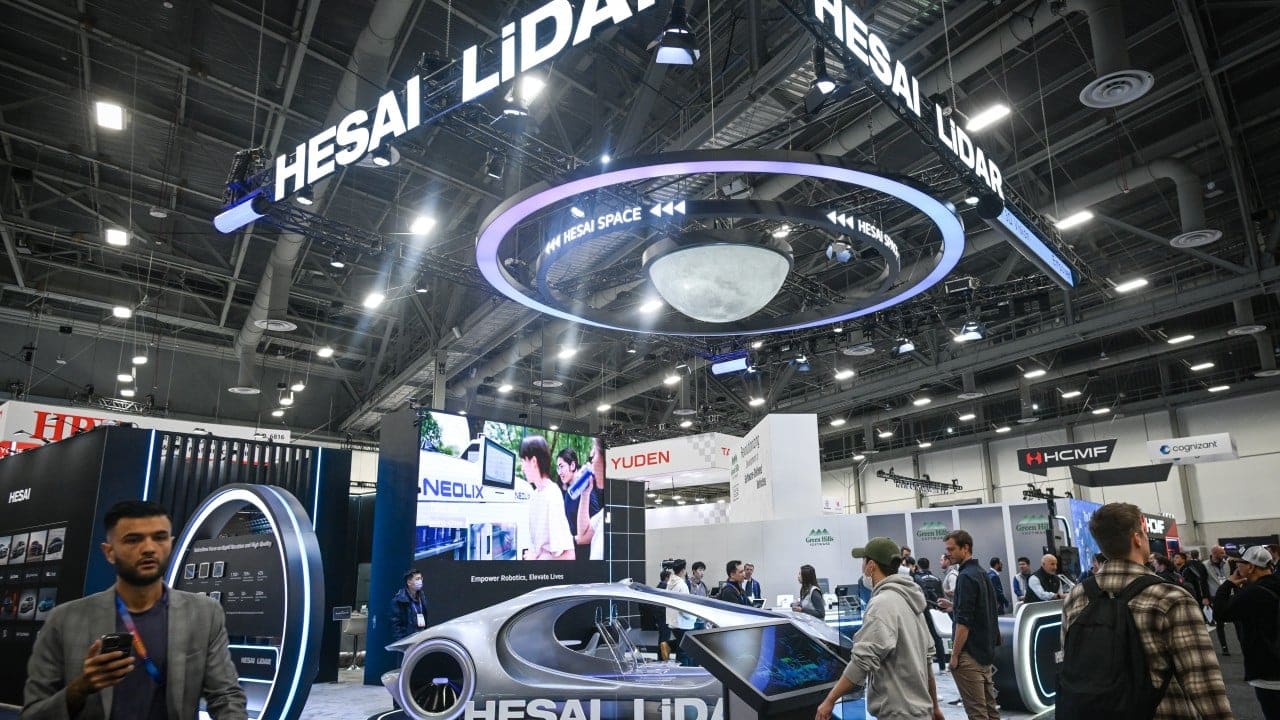
While China's passenger-vehicle sales have plateaued after years of breakneck expansion, one tier of the supply chain is still seeing momentum: sensors. Hesai Group's chief financial officer, Andrew Fan, confirmed that the company's lidar orders this year exceeded the same period in 2025, driven by a growing share of newly launched models that ship with advanced perception hardware. At DailyTechWire, we've tracked this pattern across multiple component categories: camera modules, radar units, and now lidar are all moving from premium options to mainstream fitment.
The divergence is structural. Even as total deliveries flatten, automakers are racing to differentiate on software and autonomy features. That arms race translates directly into bill-of-materials expansion. A mid-tier sedan launched in 2024 might have carried one or two forward-facing cameras; a 2026 refresh of the same nameplate often includes a roof-mounted lidar, side-facing radar, and a dozen vision sensors. The content-per-vehicle metric is climbing faster than the vehicle count itself.
Why Lidar Penetration Is Accelerating Now
Three forces converge. First, unit prices for automotive-grade lidar have fallen roughly 40 percent over two years, according to Hesai's own disclosures, bringing the technology within reach of mass-market platforms. Second, regulatory momentum in China around assisted-driving certification has nudged brands to over-provision hardware so they can unlock features via over-the-air updates later. Third, competitive pressure: if one brand advertises lidar-equipped highway autonomy, rivals feel compelled to match or exceed that specification within a product cycle.
The result is a kind of sensor inflation. Lidar was once confined to flagship electric sedans priced above 300,000 yuan; today it appears on SUVs and crossovers in the 200,000-yuan band. Hesai ships sensors to more than a dozen Chinese original-equipment manufacturers, and the mix has broadened from pure-play EV startups to legacy state-owned groups rolling out their smart sub-brands.
Insulation from Macro Headwinds
China's automotive market grew less than 2 percent by unit volume in the first half of 2026, constrained by economic uncertainty and a price war that has compressed margins across the value chain. Yet suppliers positioned in the intelligence stack report a different reality. Their revenue correlates less with total vehicles sold and more with the adoption curve of specific feature sets.
Hesai's order book reflects that insulation. Even if a carmaker's overall production schedule softens, the share of that production carrying lidar continues to rise. The math works in the supplier's favor: a 5 percent decline in total builds can be offset by a 10 percent increase in attach rate. Fan's commentary suggests Hesai is experiencing the net-positive side of that equation, at least through mid-2026.
This dynamic also explains why venture investors and public-market analysts have remained constructive on perception-hardware plays despite the broader auto slowdown. The narrative has shifted from "exposure to China EV growth" to "exposure to智能化 (intelligentization) regardless of volume." It is a narrower thesis, but one with more defensible unit economics as sensor bills climb.
The Road to Margin Pressure
Still, the tailwind comes with caveats. Lidar unit prices are falling, which means revenue growth requires either volume expansion or a shift toward higher-specification products. Hesai has pursued both: it introduced a solid-state variant with longer range and narrower beam divergence, targeting highway speeds above 120 kilometers per hour, and it has scaled production to drive down cost per unit.
But margin compression is a known risk. Chinese automakers are notoriously aggressive in annual price-down negotiations, and as lidar penetration approaches 30 or 40 percent of new models, suppliers lose the scarcity premium that early adopters tolerated. The question for Hesai and peers is whether they can hold gross margins above 40 percent once lidar becomes a commodity checkbox rather than a differentiator.
Another pressure point: the emergence of 4D imaging radar as a partial substitute. Several Chinese brands have begun shipping vehicles with high-resolution radar in place of lidar, citing lower cost and better performance in adverse weather. If that architecture proves viable for Level 2+ systems, it could cap lidar's addressable market at the high end, leaving mid-tier models to radar-camera fusion.
What This Means for the Tier-One Landscape
Hesai's resilience offers a template for other component suppliers navigating the current environment. The winners are those who can decouple their fortunes from headline vehicle-sales figures and instead ride feature-penetration curves. Battery-management-system makers, domain-controller providers, and high-definition-map licensors are all playing variations of the same game: sell more expensive, software-defined parts into a flat or shrinking pie of sheet metal.
For Western observers, the lesson is that China's auto market is bifurcating. Aggregate volume may stagnate, but the intelligence layer is still in a land-grab phase. That creates pockets of growth even as the broader industry consolidates. Hesai's order momentum is one data point; we expect to see similar patterns when other sensor and compute suppliers report over the coming quarters.
The open question is how long this divergence persists. If Chinese consumers prove unwilling to pay a premium for autonomy features that remain geofenced and liability-limited, automakers will dial back sensor specs and the content wave will crest. But for now, the bet on intelligence is holding, and suppliers positioned at that intersection are banking growth even as the rest of the value chain grinds through a cyclical trough.