South Korea Plans Underwater Data Center to Solve Land Crunch
A pilot project off Ulsan's coast represents Seoul's answer to AI infrastructure demands in a geography-constrained nation
A Test Case for Submerged Infrastructure
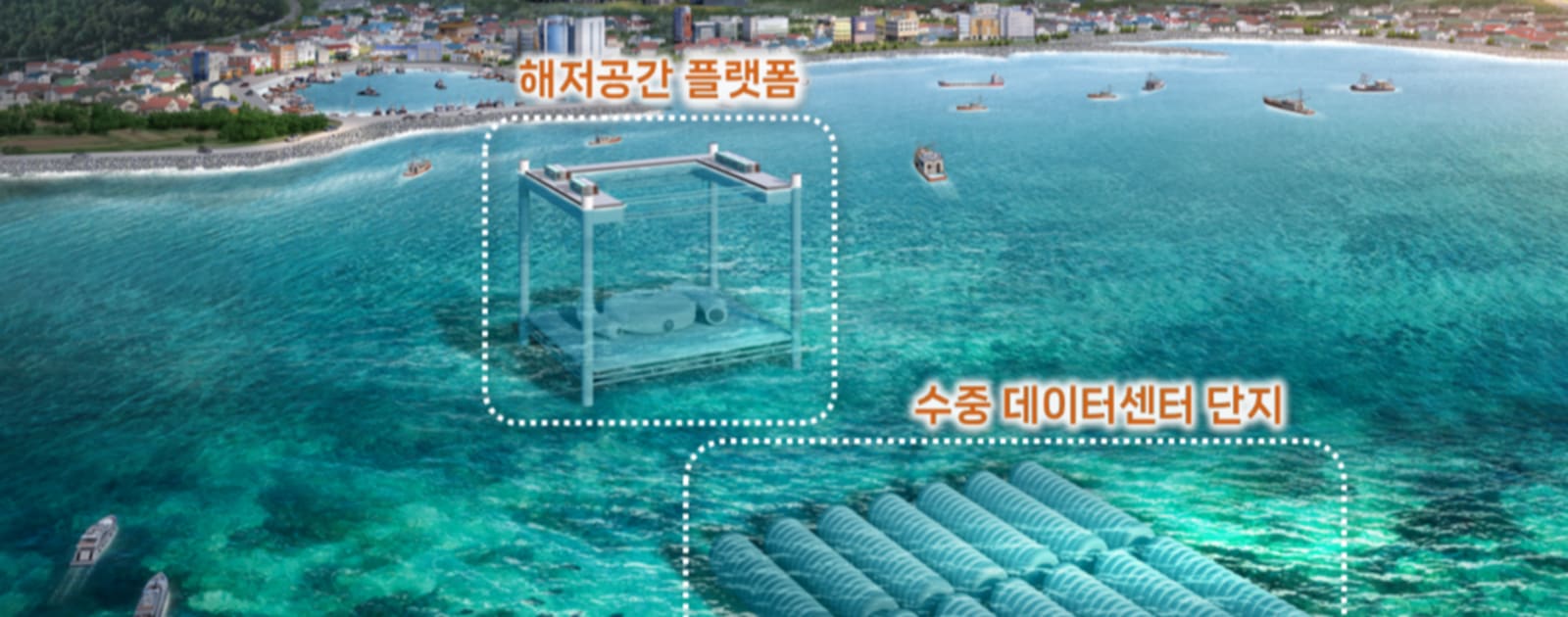
The Korea Institute of Ocean Science and Technology has unveiled designs for a data center that will sit on the seabed off Ulsan, the country's industrial southeast coast. The pilot marks Seoul's effort to sidestep a constraint that has shadowed its tech ambitions for years: there simply is not enough affordable, accessible land to house the racks and cooling systems that modern AI demands.
At DailyTechWire, we have tracked similar experiments in Europe and the United States, where Microsoft famously sank a shipping-container-sized prototype in Scottish waters before retrieving it in 2020. South Korea's initiative, however, arrives at a moment when the stakes are higher. Inference workloads for large language models, real-time recommendation engines, and edge computing for autonomous systems all require low-latency proximity to users, which in densely populated markets like Seoul means data centers must either sprawl into expensive urban peripheries or find entirely new real estate.
Why the Ocean Floor Appeals to Planners
Submerged facilities offer three engineering advantages. First, seawater provides near-limitless cooling capacity, eliminating the chillers and evaporative towers that consume significant energy in terrestrial sites. Second, the stable temperature and pressure of deeper water reduce thermal cycling stress on servers, potentially extending hardware lifespan. Third, placing compute infrastructure offshore frees up urban and peri-urban land for housing, manufacturing, or green space, a consideration that resonates in a country where buildable terrain is at a premium.
The Ulsan pilot will test whether these theoretical benefits translate into operational reliability. Saltwater corrosion, biofouling, and the logistics of maintenance and fiber-optic connectivity remain open questions. If a component fails at depth, technicians cannot simply walk into a server room; they must either deploy remotely operated vehicles or lift entire modules to the surface. The Korea Institute of Ocean Science and Technology has not disclosed the target depth or the timeline for deployment, but industry observers expect the first phase to focus on proving mechanical integrity and thermal performance rather than running production workloads.
Regional Context and the AI Capacity Race
South Korea's move reflects broader pressures across Asia. Hyperscalers and national cloud providers in Singapore, Tokyo, and Hong Kong have all confronted land shortages, high electricity costs, and community opposition to new facilities. Singapore imposed a temporary moratorium on data center construction in 2019, later lifting it with strict energy-efficiency requirements. Japan has encouraged operators to build in rural prefectures with surplus renewable power, while Hong Kong has seen proposals for floating data centers anchored in the harbor.
Seoul's approach differs in degree of government coordination. The ocean-science institute is a public research body, and the underwater project appears to enjoy backing from ministries responsible for both digital infrastructure and maritime affairs. That level of state involvement suggests the pilot could scale quickly if early results prove favorable, a pattern South Korea has demonstrated in previous technology rollouts, from 5G networks to semiconductor fabs.
Technical Hurdles and the Maintenance Question
Cooling may be straightforward underwater, but power delivery and network connectivity are not. Subsea cables will need to carry both electricity and fiber, and any interruption requires specialized vessels and divers or robots. Terrestrial data centers benefit from redundant grid connections and on-site diesel generators; an underwater facility must either rely on a single umbilical or deploy its own submerged power storage, adding cost and complexity.
Latency is another consideration. Fiber-optic cable running from shore to seabed and back introduces minimal delay, typically measured in microseconds per kilometer, but the added length compared to an urban site could matter for latency-sensitive applications like algorithmic trading or real-time video processing. For training runs or batch inference, the penalty is negligible; for edge use cases, it may push certain workloads back onto land.
The Korea Institute of Ocean Science and Technology will also need to address environmental and regulatory concerns. Marine ecosystems around data center modules could be affected by waste heat, electromagnetic fields, or construction activity. Fishing communities and environmental groups will scrutinize the project, and any incident, such as a coolant leak or cable strike, could set back the broader concept.
Implications for Asia's Infrastructure Landscape
If the Ulsan pilot succeeds, other land-constrained markets will take note. Taiwan, with its advanced semiconductor industry and limited space, could explore similar designs. India's coastal tech hubs, from Chennai to Visakhapatnam, might consider ocean-floor facilities to support the country's expanding cloud and AI sectors. Even China, despite vast interior land, has shown interest in offshore data infrastructure as part of its maritime technology strategy.
The economics will determine adoption. Subsea construction is expensive, and the cost per rack must compete with alternatives like vertical data centers in urban cores or modular facilities in remote regions linked by high-capacity fiber. Operators will weigh capital expenditure, operational risk, and the strategic value of proximity to users. For South Korea, the calculation also includes energy security; the country imports most of its fossil fuels, so any design that reduces cooling load and total power consumption aligns with broader climate and energy goals.
What Comes Next
The Korea Institute of Ocean Science and Technology has released concept imagery but has not announced a construction start date or named commercial partners. The timeline will likely depend on feasibility studies, environmental reviews, and negotiations with local authorities and fishing cooperatives. If the institute moves forward, the first deployment could arrive within two to three years, a pace consistent with other national infrastructure initiatives in South Korea.
For now, the project remains a signal of intent: Seoul is willing to test unconventional solutions to keep pace with AI infrastructure demands. Whether underwater data centers become a standard component of regional architecture or remain a niche experiment will depend on performance data from Ulsan and the willingness of hyperscalers and local operators to adopt a model that trades operational simplicity for spatial efficiency. The ocean floor is no longer just a route for subsea cables; it may soon host the servers that power the applications running above.