Big Tech's Natural Gas Gamble May Backfire as Prices Head Toward Triple-Digit Surge
Amazon, Google, Meta, and Microsoft are building gigawatt-scale gas plants to power AI data centers just as supply dynamics shift and export demand tightens the U.S. market.
The Power Play Nobody Saw Coming
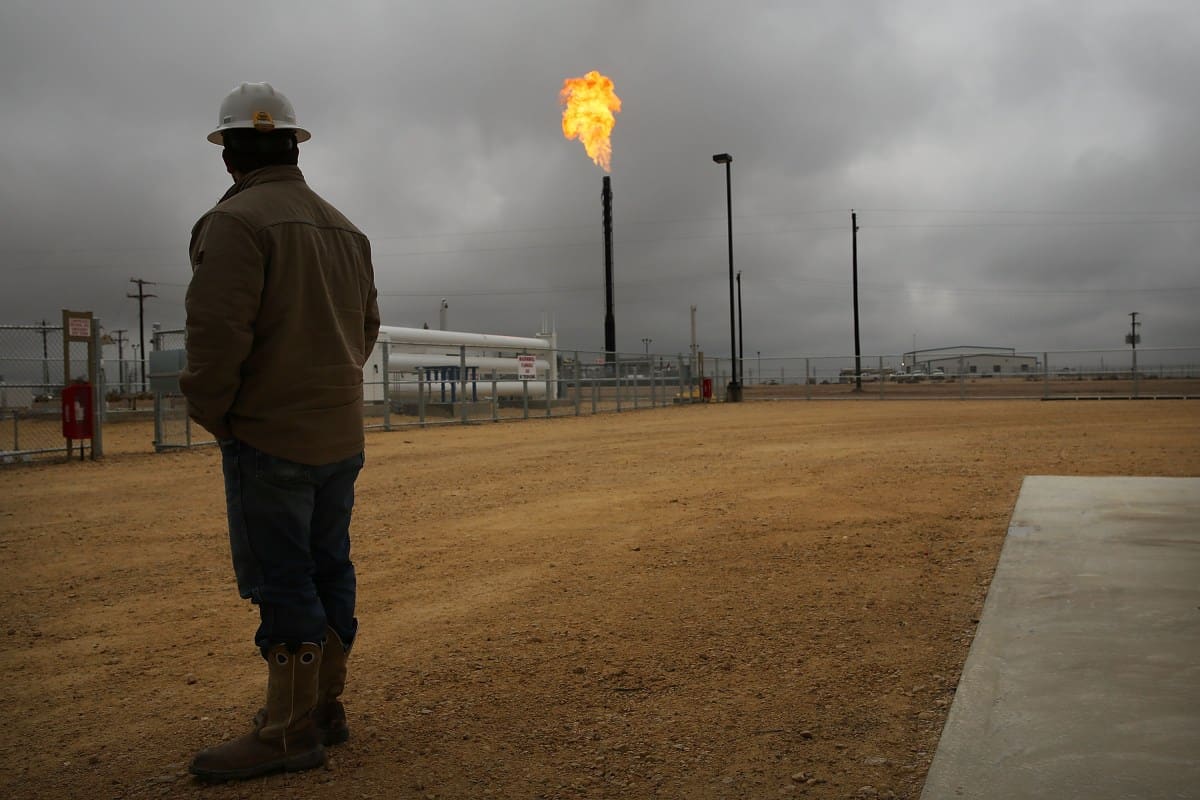
For a decade, hyperscalers chased renewable energy credits and signed power purchase agreements with wind and solar farms. Then generative AI arrived, and the script flipped. This year alone, Meta committed to a 7.5-gigawatt gas plant in Louisiana, while Amazon plans a 7.6-gigawatt facility in Texas. Microsoft and Google followed with gigawatt-scale gas builds, also in Texas. These are not incremental capacity additions. They represent a wholesale pivot into fossil infrastructure by companies that once competed on sustainability metrics.
At DailyTechWire, we've tracked infrastructure buildouts across Asia and North America long enough to recognize when capital allocation signals a strategic bet rather than a tactical hedge. What makes this wave unusual is the speed and the scale, and the fact that hyperscalers are taking on direct commodity price risk in a market they historically avoided.
A Forecast That Changes the Math
Energy research firm Noreva now projects natural gas prices could climb above $10 per million British Thermal Units at certain U.S. delivery hubs within the next few years. Today, the benchmark Henry Hub in Louisiana trades just under $3 per million BTU, with regional prices ranging between $2 and $4.50. A tripling of input costs would fundamentally alter the economics of "bring your own power" data centers, where fuel represents roughly half the cost of electricity generation.
The firm's analysis rests on three converging forces: slowing supply growth as new wells become more expensive to drill, rising exports of liquefied natural gas that connect domestic prices to global markets, and the sudden demand surge from AI infrastructure. Peter Gardett, Noreva's CEO, argues that the energy market has grown complacent after years of stable, low prices driven by shale abundance. That equilibrium is ending.
West Texas and the Export Shift
Much of the hyperscaler interest in Texas stems from a regional quirk. Oil-focused drilling in the Permian Basin produces natural gas as a byproduct, and for years that gas had limited offtake. Sparse pipeline infrastructure meant producers sold it at steep discounts to local buyers. Cheap energy attracted data center developers, and the cycle reinforced itself.
But pipeline capacity out of West Texas has expanded, and much of that gas now flows toward export terminals on the Gulf Coast. As the region integrates into national and international markets, local price anomalies will narrow. What was once an isolated, discounted supply pool is becoming part of a globally traded commodity. When a hyperscaler in West Texas burns gas to train a foundation model, it competes with an LNG cargo bound for South Korea or Germany.
Price Differentials and Regional Volatility
Noreva expects price differentials between hubs to widen as infrastructure bottlenecks persist. A data center next to abundant supply might enjoy sub-$5 gas, while a facility a few hundred miles away faces double-digit prices if pipeline constraints bind. These spreads are not theoretical. They happened during winter demand spikes in previous years, and the addition of large, always-on data center loads will amplify volatility.
Even if hyperscalers can afford higher fuel costs in the short term, sustained price increases will cascade. Token generation costs rise. Margin pressure mounts. Investors start asking why cloud providers are exposed to commodity risk that traditionally sat with utilities. On earnings calls, CFOs will need to explain how natural gas futures correlate with operating income, a conversation that was unimaginable five years ago.
The Backlash Beyond the Balance Sheet
Consumer sentiment is already souring. Polling data indicates that 80% of U.S. consumers worry about data centers driving up electricity bills. If natural gas prices spike in regions where hyperscalers operate large facilities, residential and commercial customers on the same distribution network could see heating and power costs climb in tandem. The narrative that Big Tech is inflating household energy expenses would gain empirical support, and regulatory scrutiny would follow.
Local opposition to data center projects has intensified across Virginia, Ohio, and parts of the Midwest. Adding fuel price inflation to the mix gives opponents a tangible economic argument. Permitting delays, stricter environmental reviews, and community benefit agreements could all become more common, slowing the pace at which hyperscalers can deploy new capacity.
Why Hyperscalers Took the Bet
Futures markets currently show little concern. Contracts for delivery over the next 18 months reflect stable pricing, and the forward curve remains relatively flat. For procurement teams tasked with securing gigawatts of baseload power on short timelines, natural gas looked like the only viable option. Nuclear projects take a decade or more, and renewables paired with storage still struggle to provide the 24/7 reliability that AI training clusters demand.
From that vantage, locking in gas capacity made sense. The mistake may lie in underestimating how quickly market fundamentals can shift. Energy companies are adding supply, but at a slower pace and higher cost than in the shale boom years. Meanwhile, export terminal expansions and AI data center demand are pulling in opposite directions, tightening the market faster than many forecasts anticipated.
What Happens if the Forecast Holds
If Noreva's projection materializes, hyperscalers face a choice: absorb higher fuel costs and compress margins, or shift load back onto regional grids and push electricity prices higher for everyone else. Neither outcome is appealing. The first erodes the unit economics of AI services, potentially forcing price increases for enterprise customers or slower model deployment. The second triggers political and regulatory backlash, especially in states where utilities are already struggling with capacity.
There is a third path, which involves accelerating investment in alternatives. Small modular reactors, advanced geothermal, and long-duration storage are all in various stages of commercialization. But none can scale fast enough to replace the gigawatts of gas capacity already under construction. The window for pivoting away from fossil dependence is narrow, and it is closing.
An Unfamiliar Terrain
Hyperscalers built their businesses on software leverage, where marginal costs approach zero and infrastructure scales elastically. Energy markets operate under different rules. Supply is physical, constrained by geology and infrastructure. Prices swing on weather, geopolitics, and regulatory decisions made in capitals far from Silicon Valley or Seattle. The skills required to navigate commodity exposure, hedge price risk, and manage long-term fuel supply agreements are not core competencies for companies that grew up optimizing server utilization and network latency.
Yet here they are, commissioning power plants and signing fuel contracts that lock them into decades of fossil fuel dependence. The irony is sharp: the same companies that pledged carbon neutrality and funded renewable energy projects are now among the largest new buyers of natural gas in the United States. If prices do triple, the financial pain will be real. But the reputational cost, and the strategic constraints that come with deep fossil ties, may prove even harder to unwind.