Two Asian Chipmaking Giants Outpace Japan in Trade
South Korea and Taiwan each exported more than Japan for the first time in early 2026, riding the wave of semiconductor demand that has reshaped regional trade flows.
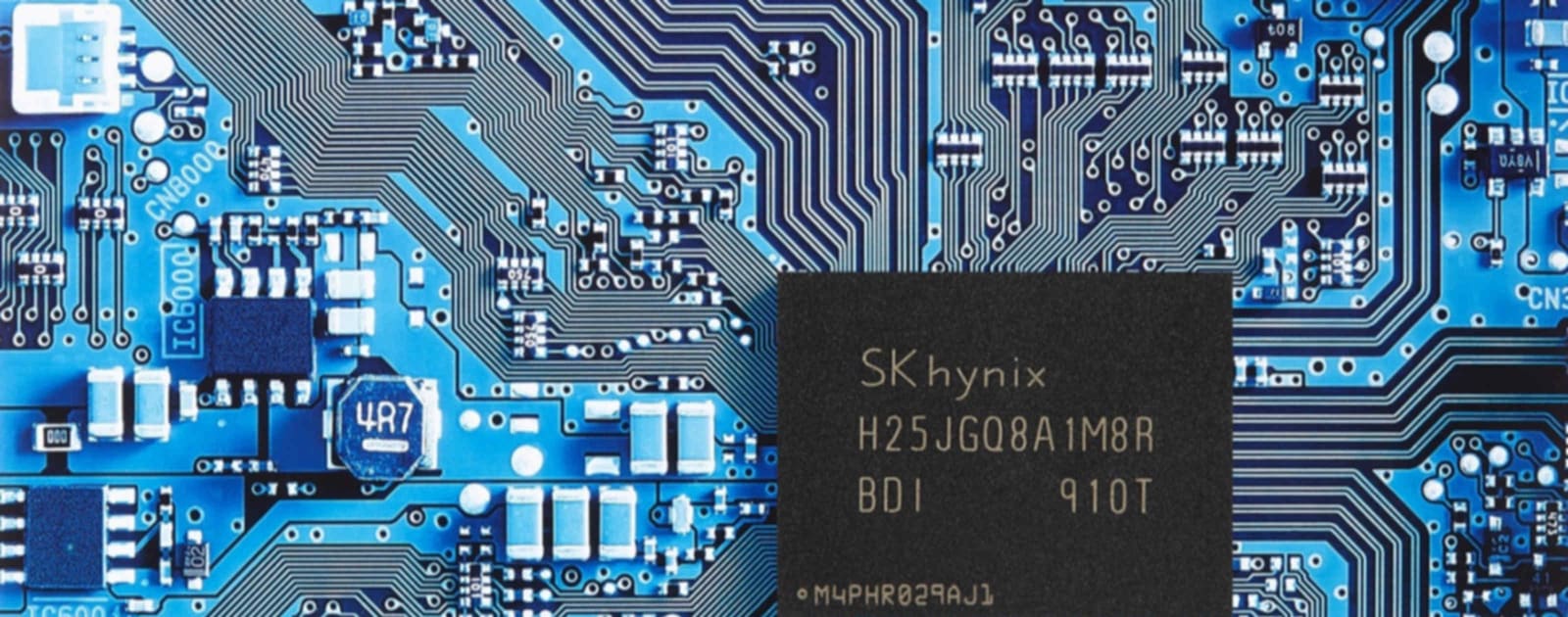
A Historic Shift in Asian Export Rankings
For the first time in modern trade history, both South Korea and Taiwan surpassed Japan in total export value during the first six months of 2026. The milestone reflects how deeply the artificial intelligence boom has reordered economic power in Northeast Asia, rewarding economies with concentrated strength in advanced semiconductor production.
At DailyTechWire, we've tracked the relentless buildout of AI compute capacity across hyperscalers and cloud providers for the past two years. What makes this moment notable is not just the velocity of chip demand, but how narrowly that demand has concentrated around a handful of suppliers capable of manufacturing high-bandwidth memory and cutting-edge logic at scale. South Korea and Taiwan sit at the center of that supply map; Japan, despite its materials and equipment prowess, does not.
The shift is structural, not cyclical. While Japan remains a critical node in the semiconductor supply chain through materials, lithography components, and production equipment, the value capture in this cycle has flowed overwhelmingly to those who fab and package the chips themselves. South Korea's SK Hynix and Samsung, alongside Taiwan's TSMC ecosystem, are among the few entities globally capable of delivering the performance and volume AI training and inference workloads now require.
Memory as the Bottleneck
High-bandwidth memory has emerged as the primary constraint in AI accelerator design. Training large language models and running inference at scale demand memory architectures that can feed GPUs and custom ASICs fast enough to avoid compute idle time. HBM3 and HBM3E have become the standard, and SK Hynix has captured the lion's share of that market, with Samsung working to close the gap.
This is not a diversified boom. The handful of companies that can manufacture advanced memory at yield are seeing order books stretch quarters into the future. SK Hynix reported record quarterly profit earlier this year, though shares slid when results missed analyst expectations inflated by the sector's momentum. The miss underscores how high the bar has risen: even exceptional growth can disappoint when the market prices in perfection.
Taiwan's export surge is similarly tied to a narrow set of capabilities. TSMC's ability to produce 3nm and prepare for 2nm process nodes has made it indispensable to every major AI chip designer outside of Intel and Samsung's foundry ambitions. The company announced plans to raise prices by up to 10 percent starting in 2027, a signal of confidence that demand will remain inelastic even as costs rise. Taiwan's GDP grew nearly 13 percent in the second quarter of 2026, a figure supercharged by semiconductor exports and deepening economic ties with the United States.
Japan's Position in the Value Chain
Japan has not been shut out of the AI infrastructure buildout. Its companies supply critical materials, including photoresists, silicon wafers, and specialty gases, as well as components for lithography and deposition equipment. Tokyo Electron, Screen Holdings, and others have seen strong order flows. But these inputs, while essential, represent a smaller share of total chip value than the fabrication and assembly stages where South Korea and Taiwan dominate.
Kioxia, Japan's leading memory maker, forecast a 31-fold profit surge as the memory market recovered from its 2023 trough. Yet even with that growth, the company's scale and product mix leave it less exposed to the HBM wave than its Korean rivals. Japan's semiconductor strategy has focused on rebuilding domestic fab capacity and securing supply chain resilience, exemplified by TSMC's Kumamoto facility, which resumed operations quickly after a recent earthquake. But resilience and value capture are not the same thing.
Regional Implications and the Power Question
The export rankings reflect a broader truth: the AI boom has been a windfall for economies with established positions in leading-edge semiconductors, and a reminder of how difficult it is to break into that club. China's CXMT, a memory startup, surged 465 percent on its trading debut, briefly surpassing Intel's market capitalization, a symbolic moment for Beijing's semiconductor ambitions. But the gap between market enthusiasm and production reality remains wide, particularly as export controls continue to limit access to advanced tooling.
The concentration of semiconductor manufacturing in Northeast Asia has also renewed attention on infrastructure constraints. Power availability is emerging as a binding constraint in several regions, as fab expansions and data center buildouts compete for grid capacity. South Korea and Taiwan both face questions about whether their electrical infrastructure can support the next phase of capacity additions without major new generation and transmission investments.
The United States has responded to the region's dominance with a mix of onshoring incentives and alliance-building. Samsung, SK, and Nvidia recently joined a $700 billion U.S.-Korea AI initiative aimed at deepening collaboration on chips, models, and applications. The scale of that figure reflects how seriously Seoul and Washington are taking the strategic dimension of AI competitiveness.
What This Means for the Chip Cycle
Export data is a lagging indicator, but the first-half 2026 figures suggest the AI infrastructure cycle still has momentum. Memory makers collectively generated $90 billion in cash flow, capital that is being plowed back into capacity expansions and next-generation R&D. TSMC, Samsung, and SK Hynix are all adding fab capacity, betting that the current demand environment will persist through the decade.
Yet the cycle is not without risks. "Chipflation," the rising cost of semiconductors driven by tight supply and escalating R&D expenses, is beginning to affect purchasing decisions in consumer electronics and automotive segments. If AI infrastructure spending plateaus or hyperscalers slow their capex growth, the memory and logic markets could face a sharp correction. The speed with which South Korea and Taiwan overtook Japan in exports is a reminder of how quickly fortunes can shift when demand concentrates in a single vertical.
For now, the trade data tells a clear story: the economies best positioned to supply the components that underpin generative AI and large-scale inference are reaping the rewards. Japan's semiconductor industry remains vital, but the current cycle belongs to those who can deliver the chips themselves, not just the tools and materials to make them.