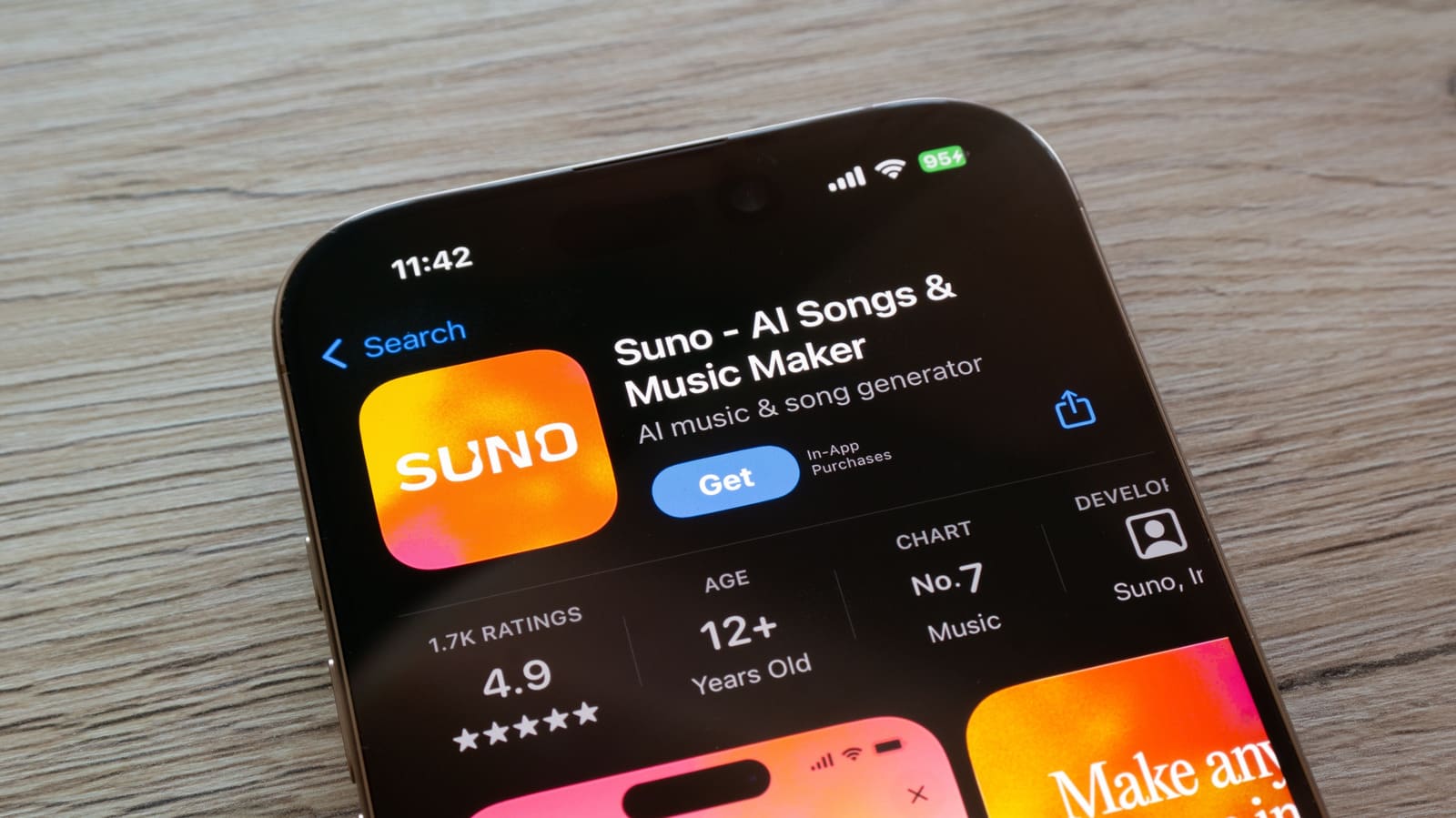
Suno Pivots to Watermarking as AI Music Floods Streaming Services
The prolific music generator says it will label all outputs, giving platforms the power to filter or block synthetic audio
The Volume Problem
Streaming platforms are drowning in machine-generated music. Spotify, Apple Music, and YouTube Music have all seen an influx of synthetic tracks over the past eighteen months, much of it indistinguishable from human-composed work at first listen. The sheer volume has become a curation problem: playlists contaminated with filler, recommendation engines confused by patterns that don't map to listener behavior, and royalty pools diluted by content that costs almost nothing to produce at scale.
Suno has been a significant contributor to that flood. The company's text-to-music models can generate full songs with vocals, instrumentation, and structure in minutes. Unlike earlier experimental tools, Suno's outputs are polished enough to pass casual scrutiny, which is precisely why they end up on commercial platforms. Now the company is attempting a course correction.
Watermarking Every Output
According to Suno, all audio generated by its models will soon carry embedded watermarks. CEO and co-founder Mikey Shulman framed the decision as alignment with what he called emerging industry standards for labeling AI content. The watermarks will be machine-readable, allowing platforms to tag tracks as synthetic or remove them entirely based on their own policies.
Shulman did not specify whether Suno will develop its watermarking technology in-house or license an existing solution. One candidate is Google's SynthID, which the search giant recently made available for licensing. Google has deployed SynthID across a staggering volume of content: the equivalent of 60,000 years of audio from its Gemini models, plus more than 100 billion images and videos. The technology embeds imperceptible patterns into media files that survive compression and minor edits, making it more durable than metadata tags that can be stripped.
Why Now
The timing reflects both external pressure and internal calculation. Streaming services have grown increasingly vocal about the need for transparency around synthetic media. Spotify has not publicly disclosed how much AI-generated music sits in its catalog, but anecdotal evidence from playlist curators and independent label managers suggests the percentage has climbed sharply. Some platforms have begun experimenting with filters, though enforcement remains inconsistent.
At DailyTechWire, we've tracked a parallel shift in how AI content companies position themselves. Early rhetoric emphasized disruption and democratization. The current phase is more defensive: companies like Suno, Stability AI, and others are retrofitting accountability features as regulators in the EU, US, and Asia consider mandatory disclosure rules. California's AB 3211, which took effect earlier this year, requires watermarking for synthetic media in certain commercial contexts. Similar legislation is under discussion in South Korea and Singapore.
Suno's move also comes amid ongoing litigation. The company, along with competitor Udio, faces lawsuits from major record labels alleging that its training data includes copyrighted recordings used without permission. Watermarking does not resolve copyright questions, but it does offer a symbolic gesture toward transparency, potentially useful in settlement negotiations or regulatory hearings.
What Watermarks Can and Cannot Do
Embedded watermarks are not a silver bullet. They can help platforms enforce labeling policies, but they do not prevent distribution. A track watermarked as AI-generated can still be uploaded, streamed, and monetized unless the platform chooses to act on that label. And watermarks are not foolproof: researchers have demonstrated methods to degrade or remove them through adversarial audio processing, though these techniques require technical sophistication beyond the average user.
There is also the question of retroactive coverage. Suno has been operational for over a year, and countless tracks generated before the watermarking rollout are already circulating. Unless the company requires users to re-generate and re-upload past work, the existing corpus will remain unmarked. Shulman's announcement did not address legacy content.
For platforms, watermarks offer a policy lever but not a policy itself. Spotify, for instance, could use watermarked data to create an AI music category, display labels to listeners, or exclude synthetic tracks from certain editorial playlists. But those are business decisions, not technical ones. The infrastructure Suno is building enables enforcement; it does not mandate it.
The Broader Ecosystem Shift
Suno is not alone in this pivot. OpenAI has discussed watermarking for its GPT-generated text, though implementation remains limited. Midjourney and Stability AI have experimented with metadata tagging for images, with mixed results. The common thread is a recognition that the initial phase of generative AI, characterized by rapid deployment and minimal guardrails, is giving way to a second phase where provenance and accountability matter to both users and regulators.
In Asia, where DailyTechWire focuses much of its coverage, the dynamics are slightly different. China's Cyberspace Administration already requires watermarking for synthetic media under rules that took effect in early 2023. South Korea's Ministry of Science and ICT has proposed similar guidelines. Japan has taken a lighter touch, favoring industry self-regulation, though that stance may shift as AI-generated content becomes more prevalent in its domestic music market.
The economic stakes are substantial. The global recorded music industry generated roughly $28 billion in revenue last year, with streaming accounting for the majority. If AI-generated tracks begin to capture a meaningful share of listening time, the revenue distribution shifts. Independent artists and smaller labels worry that synthetic music, produced at near-zero marginal cost, will crowd out human work in algorithmic recommendations and mood-based playlists.
Enforcement and Incentives
The success of Suno's watermarking effort depends on adoption by platforms and cooperation by users. If major streaming services decline to act on watermarked data, the labels become symbolic. If users find ways to strip watermarks or prefer competitors that do not embed them, Suno's compliance gesture loses its intended effect.
Incentive alignment is tricky. Platforms want to avoid regulatory penalties and maintain trust with listeners, which argues for transparency. But they also want a large and growing catalog, which synthetic music provides cheaply. Record labels want to protect their catalogs and revenue streams, but some are also exploring partnerships with AI music companies, hedging against a future where synthetic content is normalized.
Suno's watermarking plan is best understood as a bet that the industry is moving toward mandatory disclosure and that early adoption will position the company favorably in that environment. Whether that bet pays off depends on regulatory momentum, platform policies, and the willingness of listeners to care about the distinction between human and machine-made music. So far, the evidence on that last point is ambiguous.