Suno Embeds Audio Watermarks in Every AI-Generated Track
The music AI startup is racing to distinguish machine-made songs as legal pressure mounts and licensing deals reshape the industry.
Watermarking at the Source
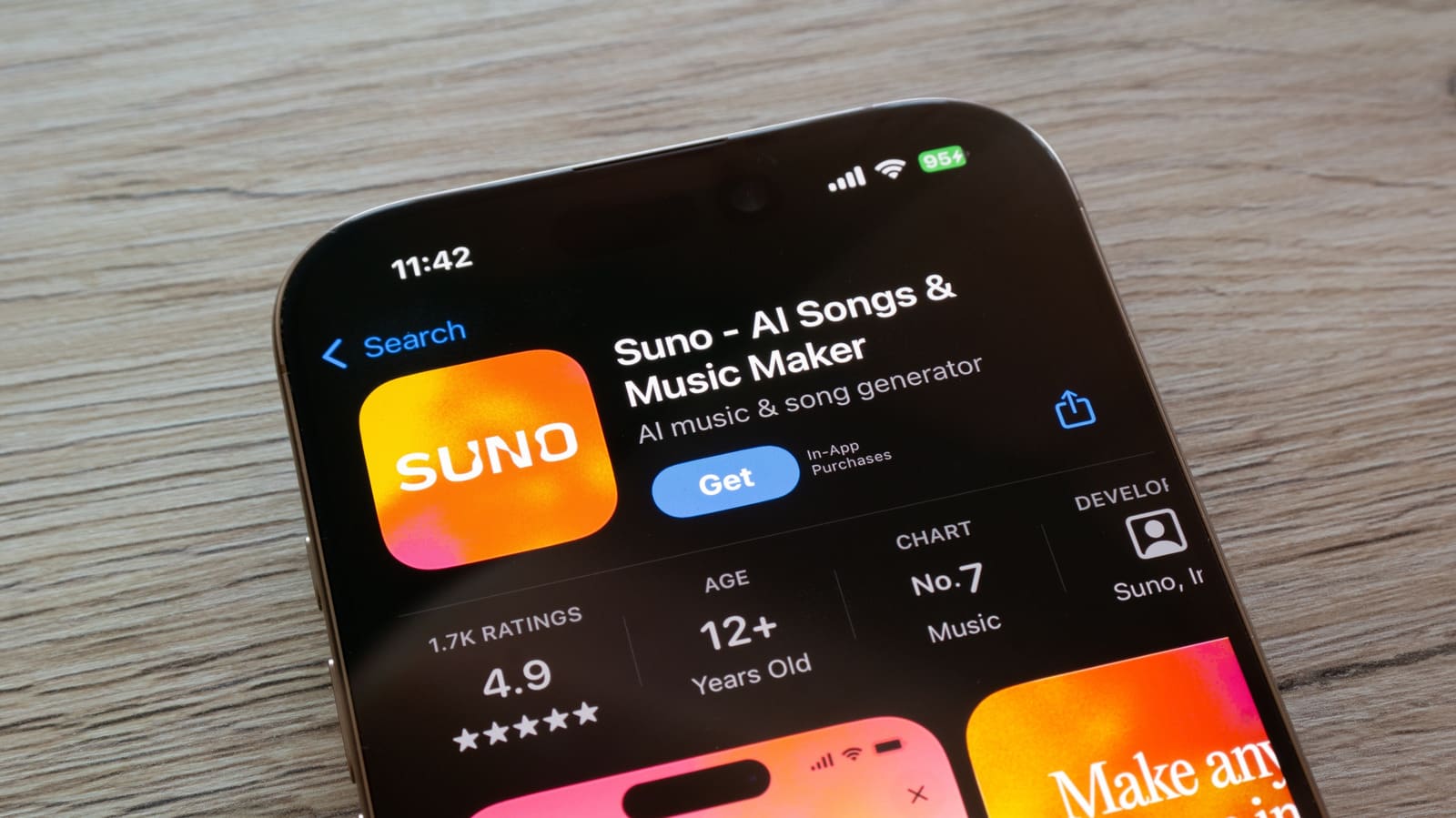
Suno has begun embedding audio watermarks into every track generated on its platform, a move that aims to make AI-created music identifiable long after it leaves the company's servers. According to Suno, the watermarking system combines audio fingerprinting with persistent metadata that survives editing, compression, and redistribution. The company describes the approach as resistant to common transformations that strip conventional tags, though it has not disclosed the underlying cryptographic or spectral techniques.
The decision follows months of escalating tension between generative audio companies and rights holders. At DailyTechWire, we've tracked similar transparency initiatives across image and video models, but music presents a harder problem: streaming platforms re-encode files dozens of times, and casual users routinely apply pitch shifts, tempo changes, and effects that would obliterate naive watermarks. Suno's claim that its markers persist through these workflows suggests either a robust spectral embedding or a partnership with detection infrastructure already deployed at scale.
Mikey Shulman, Suno's co-founder and chief executive, framed the rollout as part of a broader transparency toolkit. He emphasized that while the platform will label AI-generated content when it appears elsewhere, the ultimate choice to disclose origin should rest with creators and distribution channels. That stance walks a careful line: it offers traceability without mandating disclosure, a compromise likely shaped by ongoing negotiations with labels and platforms that want flexibility in how they surface provenance.
Download Caps and the Streaming Flood
Alongside watermarking, Suno is imposing new limits on how many tracks a single account can download in a given period. The company has not published exact thresholds, but the measure is explicitly designed to curb mass uploads of AI songs to Spotify, Apple Music, and regional streaming services. Over the past year, major labels have publicly complained that algorithmically generated tracks are diluting chart positions and siphoning royalty pools, with some estimating that tens of thousands of AI tracks enter distribution each week.
Sony Music, Universal Music Group, and Warner Music Group have all called for automated disqualification of AI-generated entries from official charts, arguing that the volume distorts listener behavior and inflates catalog sizes without corresponding creative investment. Suno's download throttle is a technical concession to that pressure: by making it harder to export libraries at scale, the company hopes to reduce the economic incentive for catalog spamming while preserving legitimate use by individual creators.
The move also reflects a broader industry reckoning. Distribution aggregators, which once welcomed any audio file that met basic technical specs, are now deploying their own fingerprinting systems to flag suspected AI content. Some have begun requiring uploaders to declare whether tracks were machine-generated, and a handful have quietly delisted accounts that showed patterns consistent with bulk generation. Suno's internal limits preempt those external checks, signaling that the company prefers to police its own output rather than let downstream partners do it inconsistently.
Legal Precedent in Munich
Earlier this week, a Munich court ruled that Suno trained its models on copyrighted recordings without authorization, siding with Gema, a German licensing agency that represents composers and publishers. The decision is narrower than the sweeping lawsuits filed in the United States, but it establishes a European precedent that training data provenance matters under regional copyright frameworks. Suno has indicated it may appeal, but the ruling adds weight to claims that generative audio companies ingested protected works at scale during model development.
The German case hinges on whether temporary copies made during training constitute reproduction under EU law. Gema argued that even if Suno's final model does not store literal audio, the process of learning harmonic and timbral patterns from protected recordings infringes the reproduction right. The court agreed, a stance that diverges from some US fair-use arguments that treat training as transformative. If the ruling stands, it could force Suno and competitors to obtain blanket licenses for European training corpora or geo-fence their services to exclude jurisdictions with similar legal interpretations.
In the United States, Suno faced parallel litigation from Sony, Universal, and Warner, which alleged that the company's training set included millions of commercial tracks scraped without permission. Last November, Warner reached a settlement that grants Suno a license to use the label's catalog and artist likenesses in exchange for undisclosed terms. The deal marked the first major licensing agreement between a legacy label and a generative music platform, and it likely includes revenue-sharing tied to subscription or usage metrics. Suno has stated that it does not index artist names in its training metadata and blocks prompts that reference specific performers or song titles, but the Warner agreement suggests the company is willing to pay for access when legal risk or strategic value justifies it.
Provenance Infrastructure
Suno is integrating technology from Audible Magic and Musixmatch to screen user-uploaded audio and lyrics for potential infringement. Audible Magic operates a fingerprinting database used by platforms including SoundCloud and Vimeo to detect copyrighted material before it goes live. Musixmatch maintains a global lyrics catalog and offers matching APIs that flag verbatim or near-verbatim reuse of protected text. By routing uploads through these services, Suno can intercept attempts to remix existing songs or paste copyrighted lyrics into generation prompts, reducing its liability and preserving relationships with rights holders.
The screening layer also addresses a subtler problem: users who feed Suno their own recordings as style references. If those references contain uncleared samples or interpolations, the resulting output inherits infringement risk. Real-time fingerprinting catches many such cases before generation completes, though it remains imperfect. Short melodic fragments and chord progressions often fall below the threshold of matchable similarity, and adversarial users can pitch-shift or time-stretch references to evade detection. Suno's partnerships signal a pragmatic bet that reducing obvious infringement by 80 or 90 percent is enough to satisfy labels and avoid platform bans, even if edge cases persist.
The watermarking and fingerprinting infrastructure also positions Suno to participate in emerging provenance standards. The Coalition for Content Provenance and Authenticity, a cross-industry group that includes Adobe, Microsoft, and the BBC, is developing metadata schemas that travel with media files and record each transformation in a tamper-evident chain. If Suno's watermarks can be read by CCPA-compatible tools, the company gains interoperability with newsrooms, stock libraries, and social platforms that want to surface AI origin automatically. That interoperability could become a competitive advantage as buyers and audiences begin to prefer content with verifiable lineage.
The Asia Angle
While Suno's headquarters and primary legal battles are US-based, the implications ripple across Asia's fast-growing music markets. South Korea's entertainment conglomerates, which invest heavily in vocal training, choreography, and parasocial fan engagement, view generative audio as both a production tool and an existential threat. Several K-pop agencies have experimented with AI vocal synthesis for demo tracks and multilingual localization, but they remain wary of models trained on their artists' voices without compensation. Suno's watermarking and licensing framework could serve as a template if Korean labels negotiate similar deals, particularly as domestic startups like Supertone and Typecast expand their own generative offerings.
In China, music streaming platforms operate under state oversight that mandates content labeling for algorithmic recommendations. Extending those rules to AI-generated tracks would be straightforward, and Suno's watermarking aligns with regulatory expectations around digital provenance. Tencent Music Entertainment and NetEase Cloud Music have both filed patents related to synthetic audio detection, suggesting they are preparing infrastructure to segregate or label AI content in their catalogs. If Suno enters the Chinese market, it would likely need to share watermark keys with platform operators and accept real-name registration for accounts, mirroring requirements already imposed on text and image generators.
India's independent music scene, which has grown rapidly on the back of affordable production software and direct-to-fan distribution, presents a different dynamic. Many bedroom producers lack access to session musicians or expensive sample libraries, and generative tools lower the barrier to polished output. Suno's download limits may frustrate creators who want to release multiple versions or remixes quickly, but the watermarking is less controversial in a market where provenance disclosure is not yet a widespread norm. Indian streaming services have been slower to adopt fingerprinting than their Western counterparts, in part because catalog sizes are smaller and piracy enforcement remains inconsistent. Suno's partnerships with Audible Magic and Musixmatch could help bring those platforms into the provenance ecosystem, especially if labels condition licensing on detection infrastructure.
What Comes Next
Suno's transparency measures are defensive, but they also lay groundwork for a world in which AI-generated music is ubiquitous and openly labeled. If watermarking becomes standard across generative platforms, downstream services can build filtering and recommendation logic that treats machine-made tracks as a distinct category, with separate charts, playlists, and monetization rules. That bifurcation could satisfy labels worried about chart dilution while preserving space for AI creators to reach audiences who actively seek synthetic music.
The harder question is whether watermarks will remain voluntary or become legally mandated. The European Union's AI Act requires high-risk systems to disclose when content is machine-generated, and music could fall under that umbrella if regulators decide it poses cultural or economic risk. In the United States, several states have introduced bills that would require labeling of synthetic media in political and commercial contexts, and music used in advertising might trigger those rules even if standalone tracks do not. Suno's early adoption of watermarking gives it a head start in compliance, but it also sets an expectation that competitors will face pressure to match.
For now, the company is navigating a patchwork of licensing deals, court rulings, and platform policies, each with different requirements and risk profiles. The Warner agreement suggests that sufficiently large players can negotiate their way into the generative ecosystem, but smaller labels and independent artists lack the leverage to demand similar terms. Suno's screening tools and download limits are partial substitutes for universal licensing, reducing harm without resolving the underlying question of whether training on copyrighted works is permissible. As more cases reach appellate courts and more jurisdictions weigh in, the legal landscape will either converge on a consensus or fragment into regional regimes that make global deployment complex. Either way, the infrastructure Suno is building today, watermarks and throttles and fingerprints, will shape how the next generation of audio platforms handles machine creativity.