Snap Positions $2,195 Spectacles as See-Through Computer, Not AI Glasses
Evan Spiegel draws a line between recording devices and computing overlays as Snap prepares to ship its most expensive wearable yet
The Framing Problem
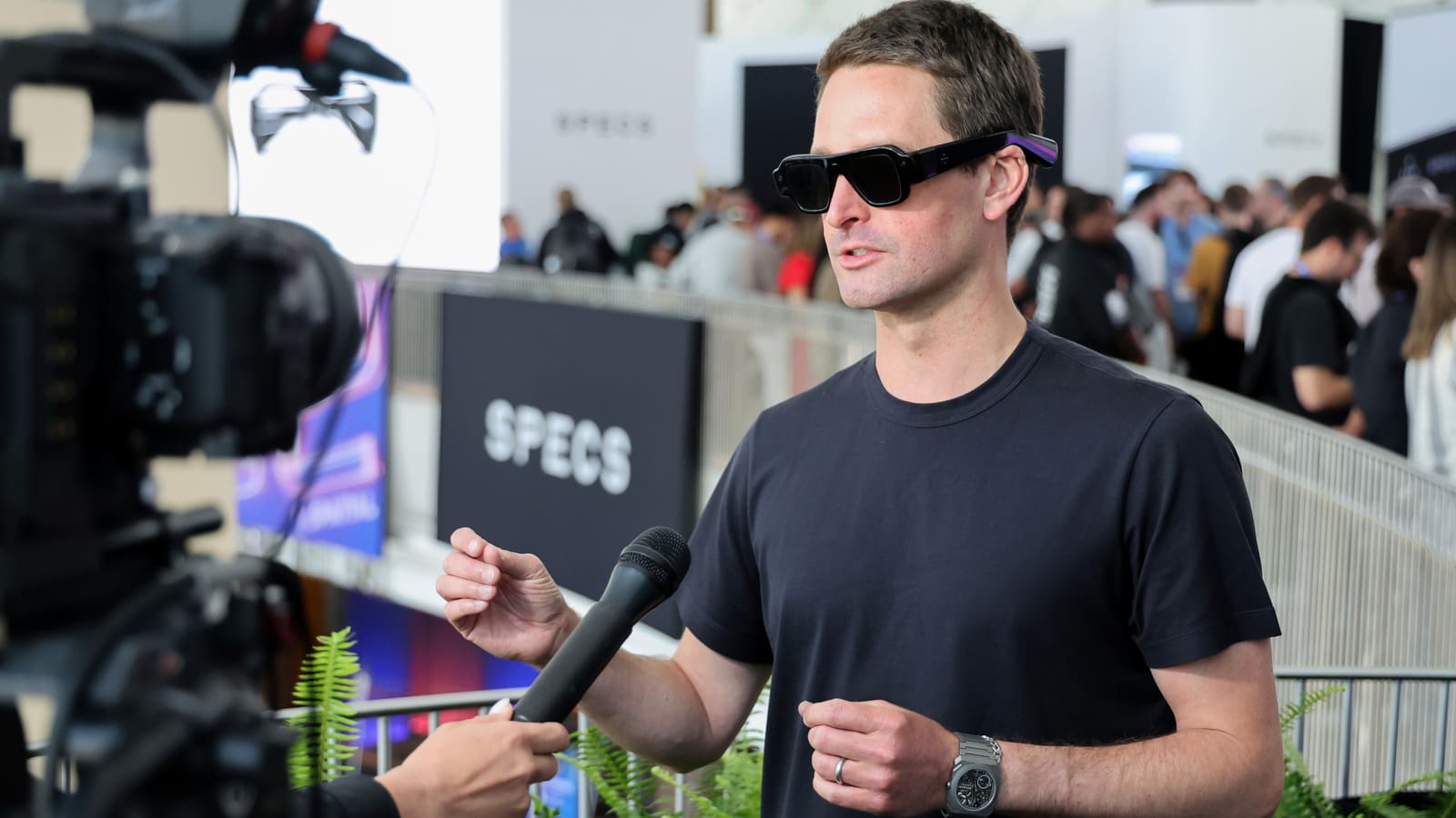
Evan Spiegel spent much of his appearance at the AWE conference in June 2026 steering conversations away from one particular phrase: AI glasses. The Snap chief executive, unveiling the company's latest Spectacles hardware, prefers a different taxonomy. "A new type of computer, a see-through computer," he told attendees, wearing the device throughout a conversation that followed his keynote presentation.
The semantic distinction matters more than it might appear. At DailyTechWire, we've tracked the widening gulf between wearable categories over the past eighteen months - devices marketed primarily as capture tools versus those positioned as ambient computing layers. Spiegel's insistence on the latter reflects both product strategy and an attempt to distance Snap from privacy controversies that have shadowed competitors, particularly Meta, whose Ray-Ban partnership has drawn scrutiny for undisclosed facial recognition experiments discovered by external researchers earlier this year.
Snap's positioning arrives at a peculiar moment. The company enters a far more crowded and contentious wearables landscape than it faced in 2016, when it first shipped camera-equipped Spectacles. Regulatory pressure on social platforms has intensified - UK Prime Minister Keir Starmer announced plans in mid-June to ban under-16s from services including Snapchat - and public wariness of surreptitious recording has hardened after repeated incidents of misuse.
Overlay, Not Capture
Spiegel's central argument rests on use case. Recording, he suggested, represents "an almost tangential" function for Spectacles. The primary purpose, he explained, is to "overlay computing on the world around you and bring computing into the world," a capability he frames as essential to making computing interfaces feel less alien and more contextual.
The distinction has practical implications. Snap maintains a curated developer ecosystem for Lenses - the AR effects that run on Spectacles - and enforces content policies through a moderation layer. Facial recognition, for instance, remains prohibited. "One of the benefits of having our own developer ecosystem and our own developer tools is that we're able to moderate the Lenses that are submitted and available on Snap to make sure that they comply with our guidelines," Spiegel said.
Whether users and bystanders will parse that difference remains an open question. Spiegel expressed hope that once people understand wearers are "using a computer, not surreptitiously recording videos," discomfort will ease. Yet the device retains capture capability, and the social signaling required to communicate intent in real time is still unsolved across the industry.
The hardware itself reflects Snap's effort to thread that needle. Observers at AWE noted that the 2026 Spectacles are noticeably more refined than the developer edition released in 2024. The frames are narrower and rounder when viewed head-on, though the temples remain thick and extend slightly past the wearer's head to accommodate onboard processing and optics. The lenses allow eye visibility in normal use - a deliberate transparency cue - but can dim fully to resemble dark sunglasses. Rainbow-like reflections from embedded waveguides are visible at certain angles, a telltale artifact of the display architecture.
Price and Positioning
At $2,195, Spectacles will be the most expensive consumer smartglasses available when they ship later in 2026. The figure exceeds Meta's Ray-Ban models, Google's enterprise Glass offerings, and even most virtual reality headsets. Only Apple's Vision Pro, priced at $3,499, sits higher in the spatial computing tier Spiegel clearly targets.
Spiegel acknowledged the barrier. Snap's long-term goal, he said, is to reduce cost and broaden access. "We want Specs to be as accessible as possible," he explained, framing the current pricing as a function of early-stage hardware economics. "As far as computers go, it's an incredibly powerful new computer, and we try to price in a way that makes it something that early adopters and developers and folks who are really passionate about this technology can afford."
The reasoning mirrors Apple's Vision Pro narrative: position the device as a premium computing platform, not a consumer accessory, and accept a narrow initial audience in exchange for ecosystem development time. Whether Snap can sustain that strategy depends on factors the company does not fully control - developer uptake, content velocity, and the willingness of enterprise or prosumer segments to absorb the cost.
Snap has some advantages. Its Lens Studio tooling is mature, and the company has spent years cultivating AR creators. But the installed base for Spectacles remains microscopic compared to Snapchat's mobile user count, and the feedback loop between platform and hardware has yet to demonstrate the kind of compounding growth that would justify continued investment at this scale.
The Teen Question
Regulation and safety concerns shadow the launch. The UK's proposed under-16 ban on social media, announced days before Spiegel's AWE appearance, underscores the political environment Snap now navigates. Although Spiegel anticipates Spectacles "will mostly be used by adults," the company has built parental controls into the companion app.
A toggle allows parents to restrict the catalog of Lenses accessible when a teenager uses the device. "They can have all the fun and play, and still provide comfort to parents that they're overseeing what their teens are doing," Spiegel said. The feature reflects Snap's broader effort to preempt criticism, though its effectiveness will depend on adoption rates and enforcement mechanisms that remain unspecified.
The control layer also raises questions about how Snap will handle age verification and account linking. If Spectacles require a Snapchat account to function - an assumption supported by Spiegel's mention of the Specs app - then the company inherits all the compliance complexity already present on its mobile platform, now extended into a wearable form factor with additional privacy surface area.
A Narrower Lane
Spiegel's reluctance to embrace the "AI glasses" label is partly defensive, partly strategic. The term has become shorthand for devices that emphasize voice assistants, real-time translation, and ambient recording - functions that, while present in some form on Spectacles, are not the headline offering. Snap's pitch centers instead on visual augmentation: persistent, contextual overlays that respond to the physical environment without requiring a phone intermediary.
That focus aligns with a broader industry bet on spatial computing as the next interface paradigm. Apple, Meta, Magic Leap, and a cohort of Chinese hardware makers are all exploring variations on the theme, each with different trade-offs in field of view, weight, battery life, and processing architecture. Snap's entry is notable less for technical novelty than for its attempt to carve out a distinct position - computing over capture, curation over open access, transparency over stealth.
Whether that position is defensible depends on execution. The form factor is still conspicuous. The price is prohibitive for all but a small slice of early adopters. The use cases, while conceptually compelling, remain abstract until developers ship Lenses that demonstrate clear, repeatable value. And the privacy questions, no matter how carefully Snap architects its policies, will persist as long as the device can record.
At DailyTechWire, we've observed that the wearables category is fragmenting faster than any single company can define it. Snap's see-through computer framing is an attempt to claim territory before the language solidifies. The success of that claim will be measured not in semantics, but in whether anyone outside Snap's existing creator base finds reason to wear one.