Six Gadgets That Show Where Hardware Innovation Stalls and Where It Sprints
From gaming handhelds pushing performance limits to smart glasses still hunting for their killer app, a fresh crop of devices reveals the uneven pace of consumer electronics progress.
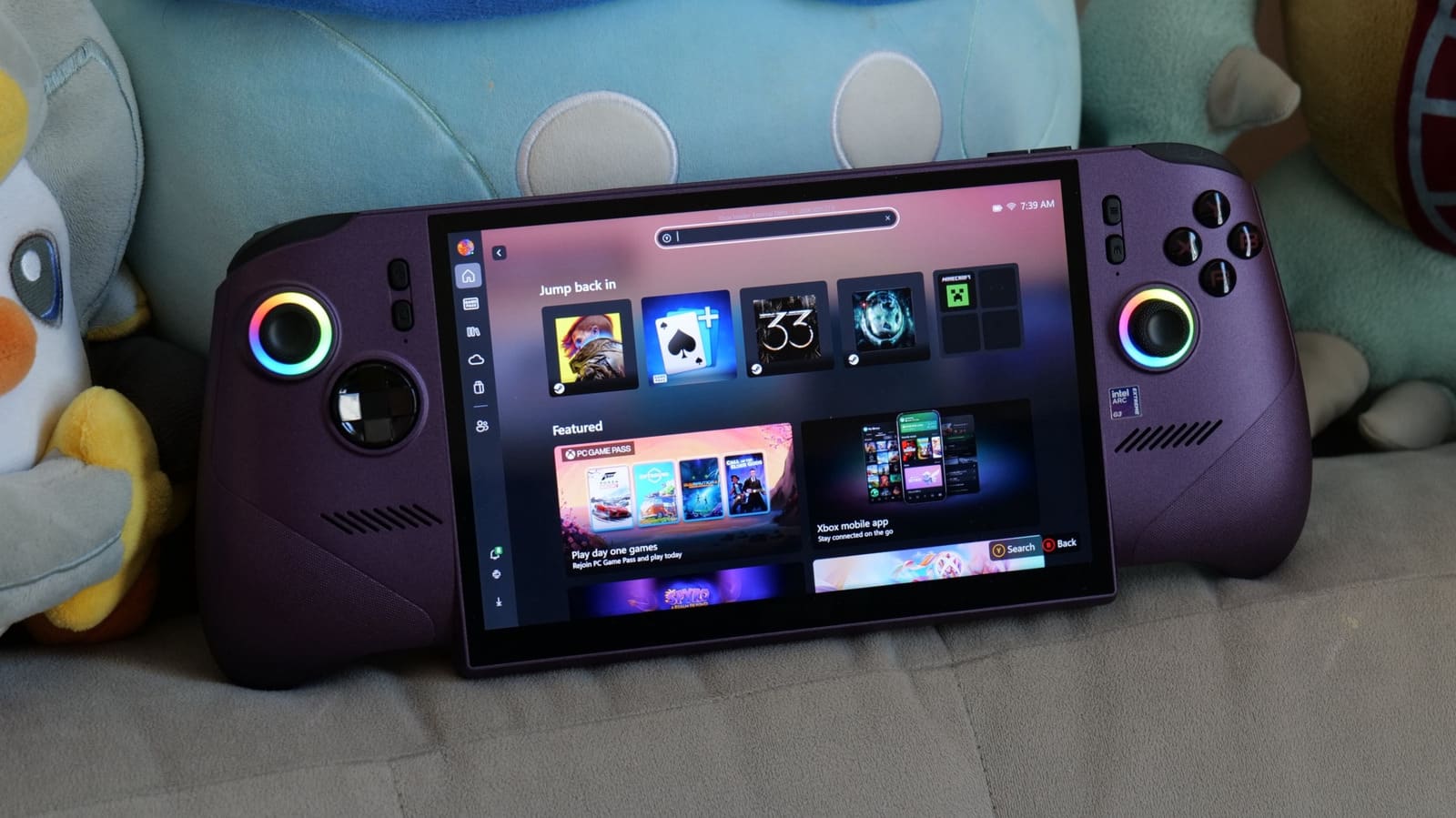
MSI Claw 8 EX AI+: Power Without Accessibility
The gaming handheld category continues to fragment into ever-narrower niches, and MSI's latest entry plants itself firmly in the enthusiast-only zone. The Claw 8 EX AI+ delivers what the company calls a new ceiling for mobile PC gaming performance, matching desktop-class frame rates in a portable form factor. Benchmark results show the device handling AAA titles at settings that would have required a dedicated GPU just two years ago.
Yet that capability comes at a cost that narrows its audience to a sliver of the already-small handheld market. The pricing positions it above competitors that offer 80 percent of the performance at half the outlay. For most users weighing portability against their Steam library, the value equation tilts toward cheaper alternatives or simply carrying a laptop. The Claw 8 EX AI+ proves that raw horsepower is no longer the bottleneck in handheld design; affordability is.
At DailyTechWire, we've watched the handheld arms race accelerate since the Steam Deck validated the category in 2022. Each generation shaves milliseconds off load times and bumps resolution, but the real constraint remains willingness to pay. MSI has built a device that answers a question few buyers are asking.
Sony A7R VI: The Resolution-Speed Compromise Finally Breaks
Sony has long forced photographers to choose: high-speed autofocus and burst shooting in the A9 line, or maximum resolution in the A7R series. The A7R VI collapses that binary. It pairs a 61-megapixel sensor with tracking algorithms borrowed from the company's sports-focused bodies, delivering both the pixel density landscape shooters demand and the responsiveness wildlife photographers need.
The practical result is a camera that can freeze a bird in flight at 10 frames per second, then let you crop into a quarter of the frame without visible degradation. That flexibility matters in real-world shooting, where subjects rarely cooperate with framing. Action photographers who previously carried two bodies, one for reach and one for resolution, now have a credible single-camera option.
Still, the A7R VI remains a specialist tool. Its file sizes demand fast storage and powerful editing workstations. The autofocus improvements are incremental rather than revolutionary, refining existing phase-detection technology rather than introducing new sensor architecture. Sony has optimized within known constraints, not rewritten them.
Ray-Ban Meta Optics: Prescription Lenses Arrive, Economics Lag
Meta and Ray-Ban have extended their smart glasses collaboration into prescription territory, addressing one of the most common complaints about earlier models: the awkwardness of wearing them over contacts or the impossibility of using them for people who don't. The Optics line integrates corrective lenses directly, improving comfort and eliminating the need for workarounds.
The execution is solid. The frames sit naturally, the optics are sharp, and the integration of camera and audio hardware doesn't create the top-heavy imbalance that plagued first-generation wearables. For users already invested in the Ray-Ban Meta ecosystem, the Optics variant is a clear upgrade.
But the price premium remains a barrier. Adding prescription lenses pushes the cost well above standard smart glasses, which themselves carry a markup over non-connected eyewear. The value proposition narrows to a specific user: someone who wears glasses daily, values hands-free capture and audio, and can absorb a four-figure expense for convenience. That's a small overlap in the Venn diagram.
The broader challenge for smart glasses remains unchanged. They solve problems most people don't have, or solve them only marginally better than pulling out a phone. Prescription lenses remove a friction point, but they don't create a must-have use case.
Insta360 Luna Ultra: Beating DJI to Market, Possibly to Irrelevance
Insta360 has launched a dual-lens gimbal camera with optical zoom before DJI, its larger and better-funded rival, could ship a competing product. The Luna Ultra features a detachable display, stabilization that smooths handheld footage into glide-cam quality, and enough resolution for 4K export. For vloggers and solo creators who need reliable stabilization without a crew, it checks the necessary boxes.
The device succeeds on its own merits, independent of what DJI eventually releases. The gimbal motor is quiet, the battery lasts through a typical day of shooting, and the interface is learnable without a manual. Insta360 has built a credible entry into a category it didn't previously compete in.
Yet the Luna Ultra's success or failure may hinge less on its design than on DJI's response. The Chinese drone giant commands distribution, brand recognition, and an installed base of accessories that Insta360 can't match. If DJI's eventual product offers even 90 percent of the Luna Ultra's capability at a lower price, Insta360's first-mover advantage evaporates.
The vlogging camera market is already crowded, with smartphones encroaching from below and mirrorless cameras offering more flexibility from above. Insta360 has carved out a niche, but the walls are closing in.
Google Home Speaker: Hardware Waiting on Software
Google's newest smart speaker is a placeholder, a piece of hardware launched into an unfinished software ecosystem. The company is midway through integrating its Gemini AI assistant into the Home platform, and the new speaker, simply called Google Home Speaker, is designed to take advantage of features that don't yet exist in stable form.
The hardware itself is competent. Audio quality is balanced, microphone pickup works reliably across a room, and the industrial design fits unobtrusively into most spaces. But the software that gives a smart speaker its purpose remains in flux. The Google Home app continues to frustrate users with slow response times and incomplete device support. Gemini integration is spotty, with voice commands sometimes routed to older Assistant logic.
For users already embedded in Google's ecosystem, the new speaker doesn't solve existing pain points. It simply adds another node to a network that still requires too much manual configuration. The promise is that future updates will unlock new capabilities, but buying hardware on the expectation of better software is a gamble that hasn't always paid off in Google's history.
The smart speaker category has matured to the point where hardware differentiation is minimal. The competition is in AI models, contextual understanding, and cross-device orchestration. Google has the technical foundation to win that competition, but it hasn't yet shipped the software to prove it.
XGIMI MemoMind One: When AI Becomes the Liability
The XGIMI MemoMind One smart glasses demonstrate an uncomfortable truth about AI integration: sometimes the assistant is worse than no assistant at all. The hardware is genuinely useful, providing a secondary display that extends screen real estate without requiring a full VR headset. For productivity tasks, reading notifications, or following navigation while walking, the glasses work well.
Then the AI activates. The device includes an assistant that attempts to anticipate user needs, surface contextual information, and capture moments worth remembering. In practice, it surfaces irrelevant suggestions, misinterprets context, and creates an unsettling sense of being surveilled by software that doesn't understand you but is trying very hard to.
The mismatch between capable hardware and intrusive software is particularly striking because it's self-inflicted. XGIMI could have shipped the glasses with basic notification mirroring and manual capture controls, letting the utility speak for itself. Instead, the company layered on AI features that feel half-baked, as if the product roadmap demanded AI integration regardless of whether it improved the user experience.
This pattern is repeating across consumer electronics. Companies are adding AI hooks not because they solve clear problems but because the technology exists and investors expect it. The result is products that work well despite their AI features, not because of them. The MemoMind One could be excellent with a software update that turns off everything trying to be clever.
The Pattern Across the Crop
These six devices, released within weeks of each other, reveal where hardware development is advancing and where it's stuck. Performance continues to climb: gaming handhelds match desktops, cameras capture more pixels at higher speeds, and stabilization algorithms smooth footage in real time. Manufacturing precision has reached the point where integrating prescription lenses into smart glasses is routine.
But the economic and software challenges remain unsolved. High-end devices price themselves out of mass adoption. AI integration often subtracts value rather than adding it. Ecosystems remain fragmented, with each manufacturer building walled gardens that don't interoperate. And the fundamental question, what problem does this device solve that existing tools don't, often goes unanswered.
The pace of iteration is faster than ever, but the direction is less clear. Hardware capabilities have outrun the use cases that would justify them. The next wave of innovation will need to address not what devices can do, but why anyone beyond early adopters should care.