Silicon Supply Chains Head Southeast as Tokuyama Splits Production Between Vietnam and Malaysia
The Japanese materials firm is diversifying polysilicon manufacturing away from domestic concentration, a move that signals broader industry rethinking of geographic risk in the AI era
A Calculated Geographic Bet
When Tokuyama announced plans to establish polysilicon manufacturing facilities in both Vietnam and Malaysia, the decision reflected something larger than simple capacity expansion. The Japanese silicon producer is executing a deliberate strategy to fragment its supply chain, moving away from the single-country production model that has defined its operations for decades. The company's existing Japanese factory will soon share production duties with two new Southeast Asian sites, a configuration designed to cushion against the kind of disruption risks that have become impossible to ignore in an industry now racing to feed insatiable AI infrastructure appetites.
At DailyTechWire, we've tracked similar geographic diversification moves across the semiconductor supply chain over the past eighteen months. What distinguishes Tokuyama's approach is the material itself. Polysilicon sits upstream of the chip manufacturing process, serving as the foundational feedstock for wafer production. Any bottleneck at this stage cascades through the entire value chain, from foundries to hyperscalers deploying data center capacity. By splitting production between Vietnam's southern industrial corridor and Malaysia's established electronics manufacturing zones, Tokuyama is betting that geographic distribution offers better insurance than scale at a single site.
The timing matters. According to Tokuyama, the buildout responds directly to surging demand driven by artificial intelligence workloads. Training large language models and running inference at scale requires exponentially more silicon than previous computing generations. Hyperscalers are ordering wafers in volumes that strain existing materials supply, and polysilicon producers face a choice: add capacity quickly or watch competitors capture margin. Tokuyama's answer is to add capacity while simultaneously reengineering its operational footprint.
Why Southeast Asia, Why Now
Vietnam and Malaysia are not accidental choices. Both countries have spent the last decade building credibility as electronics manufacturing hubs, attracting investment from multinational corporations seeking alternatives to concentrated Chinese production. Vietnam's southern provinces have emerged as a preferred destination for semiconductor assembly and testing operations, with companies like Intel and Samsung operating large facilities in the region. Malaysia's Penang and Johor states host a dense ecosystem of backend semiconductor services, providing the labor skills, logistics infrastructure, and regulatory familiarity that materials producers need.
For Tokuyama, these locations offer three tangible advantages. First, they sit closer to key customers in Taiwan, South Korea, and China than Japan does, shortening lead times and reducing freight costs. Second, both countries have signed trade agreements that facilitate duty-free movement of intermediate goods within regional supply chains, a consideration that becomes more important as tariff uncertainty persists in other markets. Third, labor and energy costs remain lower than in Japan, where an aging workforce and high electricity prices squeeze margins for energy-intensive polysilicon production.
The decision also reflects a broader industry recalibration around concentration risk. Japan's dominance in specialty chemicals and materials has long been a strategic asset, but it also creates single points of failure. Natural disasters, geopolitical friction, or even localized infrastructure outages can halt production with global consequences. Tokuyama's distributed model acknowledges that resilience now carries a premium, even if it introduces operational complexity.
The Polysilicon Chokepoint
Polysilicon manufacturing is both capital-intensive and technically demanding. The process involves refining metallurgical-grade silicon into ultra-pure material suitable for semiconductor wafers, a transformation that requires high temperatures, precise chemical handling, and rigorous contamination control. Only a handful of companies worldwide produce polysilicon at the purity levels chip foundries require, and capacity additions take years to commission.
That scarcity gives polysilicon producers unusual leverage, but it also exposes them to demand volatility. AI has introduced a new variable into forecasting models. Where traditional computing demand followed relatively predictable upgrade cycles, AI infrastructure buildouts are lumpy and unpredictable, driven by competitive dynamics among hyperscalers and the rapid evolution of model architectures. A single breakthrough in model efficiency can either spike wafer demand or reduce it, depending on whether the innovation increases deployment scale or lowers per-inference compute requirements.
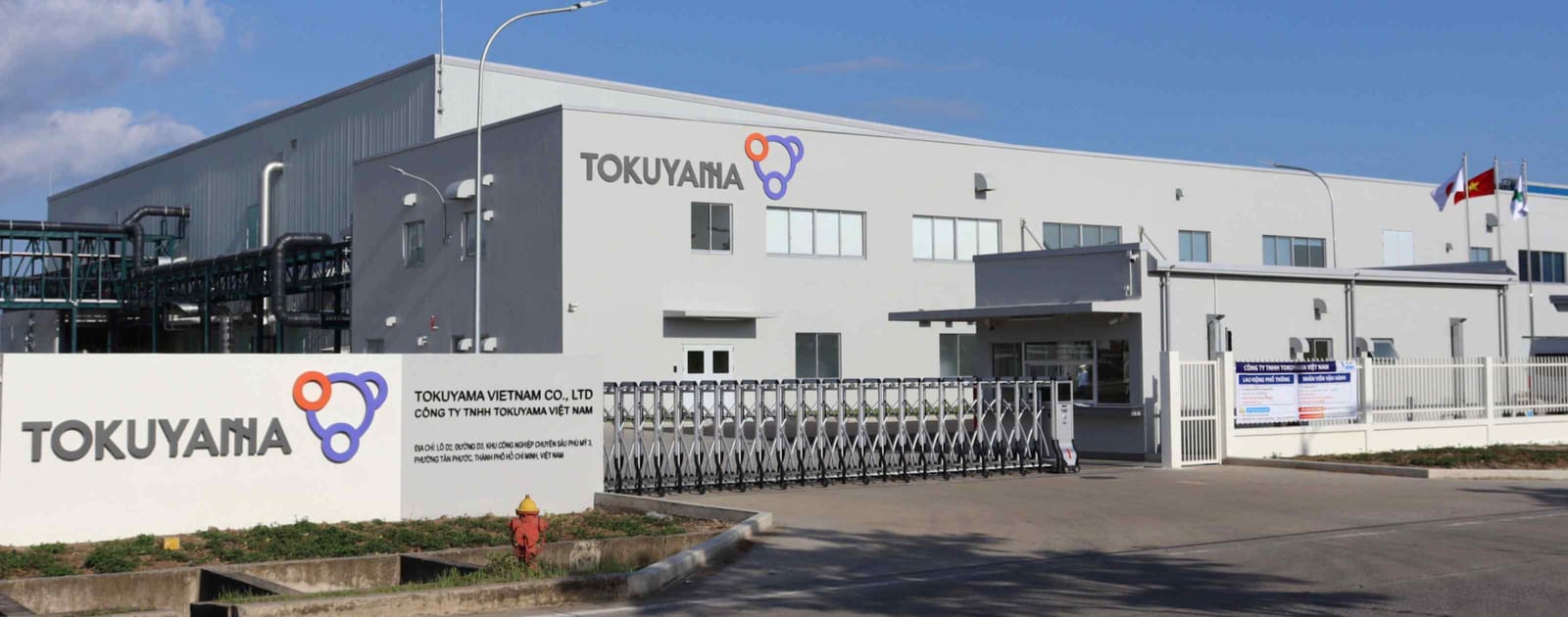
Tokuyama's expansion hedges against this uncertainty by adding capacity in stages rather than committing to a single massive buildout. The Vietnam facility, located in the country's southern industrial belt, will come online first, followed by the Malaysian site. This phased approach allows the company to calibrate production volumes as demand signals clarify, avoiding the risk of stranded assets if AI growth disappoints or if alternative materials gain traction.
Regional Implications for Chip Ecosystems
Tokuyama's move also carries implications for Southeast Asia's ambitions in the semiconductor value chain. Both Vietnam and Malaysia have articulated national strategies to move beyond assembly and testing into higher-value segments, including materials and equipment. Attracting a Japanese materials producer with Tokuyama's technical reputation lends credibility to those ambitions and creates opportunities for local suppliers to integrate into global networks.
Vietnam's government has prioritized semiconductor investment through tax incentives, streamlined permitting, and infrastructure upgrades in key industrial zones. The country's proximity to Chinese and Taiwanese foundries makes it a logical location for materials suppliers looking to serve those customers without operating inside China itself, a consideration that matters as export controls and technology transfer restrictions tighten. Malaysia, meanwhile, benefits from decades of experience hosting multinational semiconductor operations, offering a mature regulatory environment and a workforce familiar with cleanroom protocols and quality standards.
The presence of a polysilicon producer in the region could also catalyze investment in adjacent segments. Wafer manufacturers, for example, may find it economically attractive to co-locate near polysilicon sources, reducing logistics costs and improving supply chain coordination. Equipment suppliers, chemical distributors, and testing labs often cluster around anchor tenants, creating the kind of ecosystem density that drives innovation and operational efficiency.
Trade Pressures and the Polysilicon Landscape
Polysilicon supply has become entangled in trade policy over the past several years. China dominates global production, accounting for the majority of output, but concerns over forced labor practices in Xinjiang have led to import restrictions in the United States and Europe. The U.S. has imposed tariffs on certain polysilicon imports as part of a broader pushback against subsidized Chinese capacity, a policy environment that has increased demand for non-Chinese sources.
Tokuyama's Southeast Asian expansion positions the company to serve markets where Chinese polysilicon faces barriers, without incurring the cost penalties associated with Japanese production. Vietnam and Malaysia both maintain trade relationships with the U.S., Europe, and regional partners, allowing Tokuyama to navigate tariff regimes more flexibly than if it relied solely on Japanese or Chinese manufacturing.
This dynamic underscores a larger shift in semiconductor supply chains: geography is no longer just about cost or proximity to customers. It has become a strategic variable in its own right, shaped by export controls, sanctions, trade agreements, and geopolitical alignment. Companies that can operate across multiple jurisdictions while maintaining quality and cost competitiveness gain a structural advantage, one that Tokuyama appears intent on securing.
Execution Risk and the Long Game
Building polysilicon plants in new countries is not without risk. Tokuyama will need to replicate the process controls and quality systems that underpin its Japanese operations, a task that requires transferring technical knowledge, training local workforces, and establishing supplier relationships in unfamiliar regulatory environments. Any misstep in contamination control or process consistency can result in off-spec material, jeopardizing customer relationships and undermining the business case for diversification.
The company will also face competition from established players who are expanding their own capacity. Chinese producers continue to add volume despite trade restrictions, and other Japanese and South Korean materials firms are evaluating similar geographic strategies. Tokuyama's success will depend on execution speed, operational discipline, and its ability to secure long-term supply agreements with foundries that value supply chain resilience as much as price.
Yet the long-term logic is compelling. As AI drives semiconductor demand into new territory, the materials layer of the value chain becomes more critical and more vulnerable. Polysilicon producers who can deliver consistent quality from geographically distributed sites will command premium pricing and capture share from customers eager to avoid single-source dependencies. Tokuyama's dual-site strategy in Vietnam and Malaysia is a bet that resilience, not just capacity, will define competitive advantage in the next phase of the chip cycle.
The factories themselves are still under construction, and production timelines remain subject to the usual permitting, equipment installation, and commissioning delays. But the strategic direction is clear: the center of gravity in semiconductor materials is shifting, and Southeast Asia is emerging as a key node in the reconfigured network. Whether other materials suppliers follow Tokuyama's lead will shape the region's role in the global chip ecosystem for years to come.