Samsung Commits $79 Billion to Shareholders While Racing to Keep Pace in AI Memory
The record payout signals both investor appeasement after stock declines and the mounting capital demands of competing in high-bandwidth memory for AI workloads
A Capital Allocation Dilemma at Scale
Samsung Electronics has committed to returning up to 110 trillion won to shareholders, equivalent to roughly $79 billion, marking the largest capital distribution in the company's history. The move arrives at a moment when the Seoul-based conglomerate faces competing pressures: mollifying investors rattled by recent share price weakness while simultaneously funding the infrastructure buildout required to compete in AI-optimized memory products.
According to Samsung, the decision follows a period in which equity markets grew concerned about potential oversupply in commodity memory segments, even as the company's semiconductor division posted record operating profit in the April-June 2026 quarter. The dual narrative reflects the bifurcation now visible across memory markets. Older DRAM and NAND products face cyclical glut risks, while high-bandwidth memory for AI accelerators remains capacity-constrained and commands premium pricing.
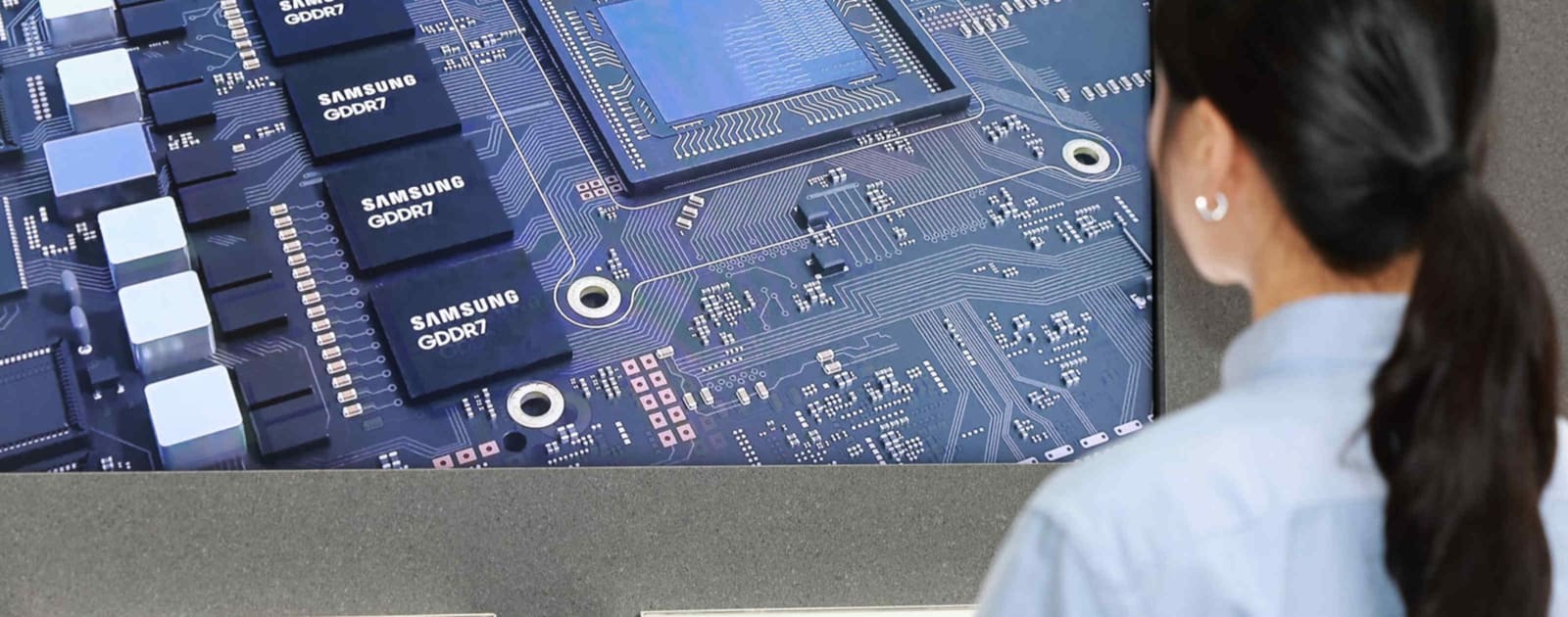
At DailyTechWire, we've tracked similar capital allocation crossroads at other Asian semiconductor leaders. SK Hynix recently unveiled a $28.6 billion buyback plan, and Taiwan's DRAM makers have floated dividend hikes. Each reflects the same calculus: how much cash to return versus how much to plow into next-generation fabs, packaging lines, and R&D for HBM3E, GDDR7, and chiplet interconnects.
The Stock Slide That Prompted Action
Samsung's equity had declined in the months preceding the announcement, weighed down by investor concerns that traditional memory markets were entering a down-cycle. Quarterly earnings calls highlighted inventory builds at PC and smartphone OEMs, and spot prices for certain DRAM modules began softening in regional exchanges.
Yet the same earnings reports showed Samsung's semiconductor unit delivering record operating profit, driven almost entirely by sales of high-bandwidth memory to hyperscale cloud providers and AI infrastructure vendors. The disconnect between headline profitability and share price performance underscored a credibility gap: investors were not convinced Samsung could sustain margins if commodity segments turned, nor were they confident the company could defend its position against SK Hynix in the most lucrative AI memory tiers.
The $79 billion return program functions as both a vote of confidence and a hedge. By committing such a large sum, Samsung signals that it expects robust free cash flow even after capital expenditures. But the sheer scale also reflects how much pressure management felt to stabilize the stock and reward long-term holders who had weathered volatility.
Balancing Buybacks With AI Infrastructure Spend
The tension inherent in the announcement is straightforward: every dollar returned to shareholders is a dollar not available for fab expansion, advanced packaging capacity, or talent acquisition in process engineering. Samsung's competitors are not standing still. SK Hynix has expanded its HBM production lines in Icheon and Wuxi, and Micron is ramping domestic U.S. capacity with CHIPS Act subsidies. Meanwhile, Chinese memory makers continue to climb the technology curve despite export controls, adding another vector of competitive pressure.
Samsung's capital expenditure in 2025 exceeded $30 billion, much of it directed toward EUV lithography tools, cleanroom expansions, and packaging infrastructure for through-silicon vias and micro-bump interconnects. Industry analysts we follow estimate that maintaining technology leadership in HBM alone requires annual outlays in the high single-digit billions, separate from legacy DRAM and NAND lines.
The 110 trillion won payout will be executed over multiple years, likely through a combination of share buybacks and special dividends. This phased approach gives Samsung flexibility to throttle distributions if cash flow weakens or if an acquisition or joint venture opportunity emerges. It also allows the company to continue funding capex at levels sufficient to keep pace in AI memory, provided that segment margins hold.
Regional Context and Government Expectations
South Korea's semiconductor policy has grown more explicit about the strategic importance of memory leadership. The government views Samsung and SK Hynix as national champions in a technology domain where few countries possess both scale and advanced process know-how. Export controls imposed by the United States and the Netherlands on lithography equipment to China have reinforced Seoul's sense that memory is a geopolitical asset, not merely a commercial one.
This backdrop complicates Samsung's capital allocation. Returning $79 billion to shareholders could be read as prioritizing financial engineering over industrial resilience, particularly if competitors use the same period to outspend Samsung on next-generation capacity. Yet the company's record profit figures suggest it believes it can do both, extracting cash from mature nodes and legacy products while reinvesting in leading-edge.
The Korean government has also floated tax incentives and co-investment vehicles to support semiconductor R&D and fab construction. If Samsung taps these programs, the effective cost of capex declines, making the large shareholder return more feasible without sacrificing competitive position. Whether such arrangements materialize at scale remains an open question, but the policy intent is clear.
What the Return Program Reveals About Margin Confidence
A capital return of this magnitude implies Samsung expects its semiconductor margins to remain elevated or at least stable. The primary driver would be continued strong pricing in HBM3E and future HBM4 products, which sell at multiples of commodity DRAM pricing and carry significantly higher gross margins.
Samsung's challenge is that it currently trails SK Hynix in market share for the highest-performance HBM used in Nvidia's flagship AI accelerators. Catching up requires not only process refinement but also tighter co-engineering with GPU designers and cloud hyperscalers. If Samsung can close that gap over the next 12 to 18 months, the margin thesis holds. If it cannot, the company may face a scenario in which commodity weakness is not fully offset by AI memory strength, pressuring the cash flow assumptions underpinning the return program.
The payout also reflects Samsung's assessment that memory markets, despite near-term volatility, remain structurally favorable due to AI demand. Global training and inference workloads continue to scale, and each new generation of accelerators ships with more HBM capacity. Samsung is effectively betting that this demand curve is steep enough to absorb incremental supply and sustain pricing, even as competitors add capacity.
Investor Sentiment and the Path Forward
For shareholders, the 110 trillion won commitment is a tangible acknowledgment of recent frustrations. Samsung's stock had underperformed peers in the broader Korean equity market, and activist investors had occasionally raised concerns about capital efficiency and governance. The return program addresses those concerns head-on, albeit at a moment when the company's operational performance is strong.
The risk is that by locking in such a large distribution, Samsung reduces its strategic optionality. Semiconductor cycles are notoriously difficult to forecast, and the AI infrastructure buildout, while robust today, could decelerate if hyperscaler capex budgets tighten or if inference workloads prove less memory-intensive than training. In that scenario, having committed $79 billion to buybacks and dividends might constrain Samsung's ability to pivot or invest counter-cyclically.
Still, the decision reflects a pragmatic reading of current conditions. Samsung's semiconductor division delivered record profit in the most recent quarter, the AI memory pipeline remains full, and the company holds a technology portfolio that spans logic, memory, and packaging. Returning capital now, while cash generation is strong, allows Samsung to satisfy investors without abandoning the capex roadmap required to compete in the AI era. Whether that balance holds over the multi-year execution period will depend on how memory markets evolve and whether Samsung can reclaim ground in the highest-margin HBM segments.