Apple Cuts Over 200 Jobs in Vision Pro and Siri Teams
The reductions hit gaming and content divisions hardest, signaling a recalibration of the company's spatial computing ambitions just eighteen months after launch.
A Quiet Retreat from Early Bets
Apple has eliminated more than 200 positions across its Vision Pro and voice assistant operations, a move that reshapes two of the company's most visible technology initiatives. The reductions concentrate heavily on the Vision Pro side, where a gaming team has been largely disbanded and the immersive content division has been downsized, according to Apple's statement.
The company framed the changes as necessary "to evolve our business to deliver the best experiences for our users" and noted that it will create new roles elsewhere, though specifics on headcount replacement or timing were not disclosed. For a firm that rarely discusses internal restructuring publicly, the acknowledgment itself carries weight.
The Vision Pro Calculus
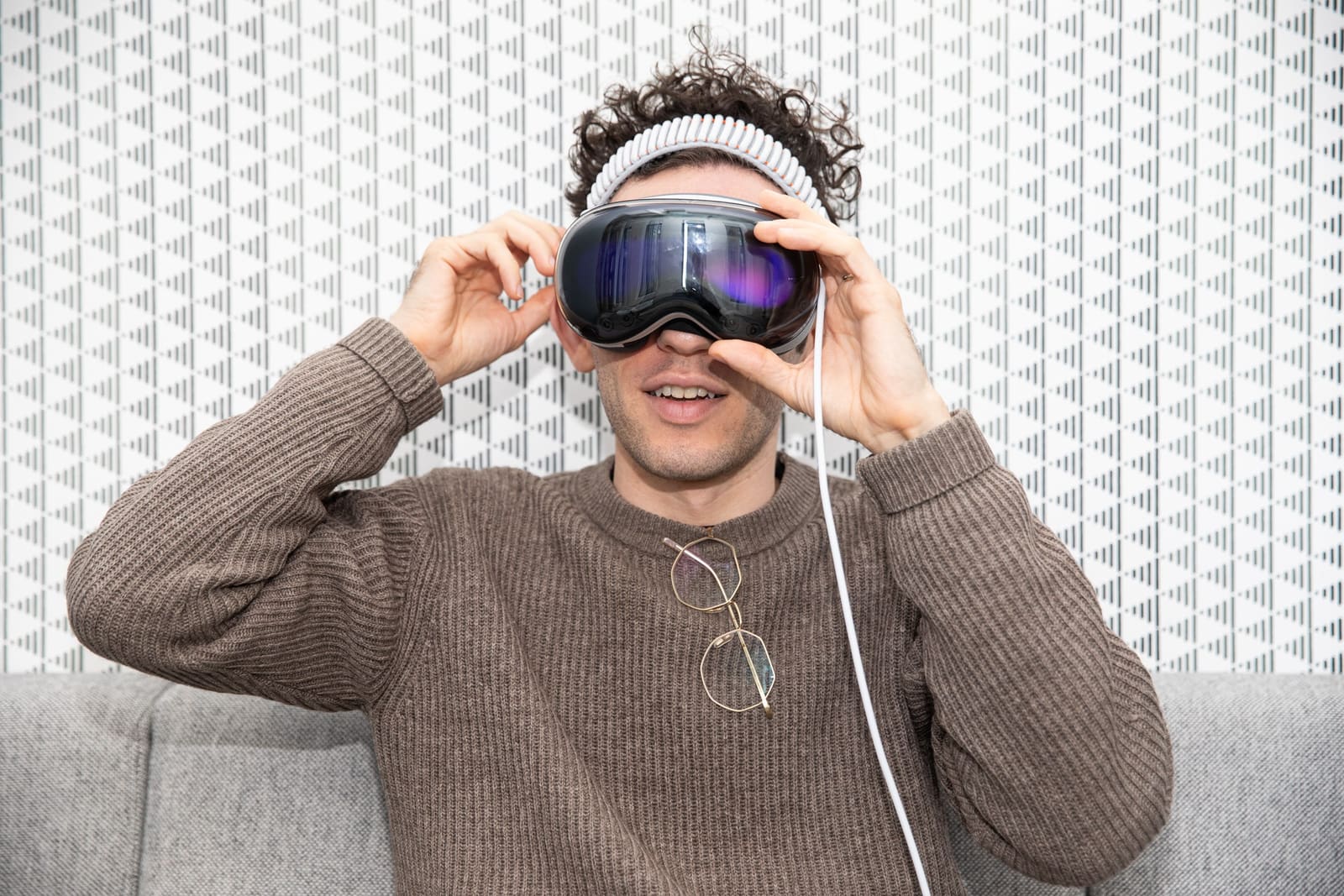
The Vision Pro entered the market in early 2024 with a $3,499 price tag and a pitch centered on "spatial computing," a term Apple hoped would redefine how professionals and enthusiasts interact with digital environments. At DailyTechWire, we've tracked the device's trajectory across Asia, where interest from developers in Seoul, Singapore, and Tokyo initially ran high but plateaued as the cost barrier and ecosystem gaps became clearer.
Gaming and immersive content were two pillars Apple used to justify the headset's positioning as more than an enterprise tool. The decision to shutter the gaming team and trim content operations suggests those pillars failed to generate the traction Cupertino anticipated. Building a library of compelling spatial experiences requires sustained investment, and the calculus appears to have shifted: the return on that investment, measured in user adoption and developer momentum, has not materialized quickly enough.
The Vision Pro's challenge mirrors hurdles faced by other high-end mixed-reality devices. Meta's Quest Pro launched at $1,499 before a price cut, and even that figure proved prohibitive for mainstream adoption. Apple's premium positioning made sense in theory, the hardware is unquestionably sophisticated, but software ecosystems don't mature on hardware quality alone. They need volume, iteration, and a critical mass of creators willing to bet time and resources on a platform.
Siri in the Crosshairs
The Siri cuts are less detailed in scope but no less telling. Apple's voice assistant has long lagged behind competitors in accuracy, contextual understanding, and third-party integration. While Google Assistant and Amazon Alexa expanded their enterprise and developer ecosystems, Siri remained tightly controlled and, for many users, frustratingly limited.
Restructuring the Siri organization could signal a pivot toward generative AI-driven conversational interfaces, an area where Apple has been conspicuously quiet even as rivals raced to embed large language models into consumer products. The company has the resources and talent to catch up, but the layoffs suggest a reassessment of how much human capital to deploy on legacy voice technology versus newer paradigms.
It's worth noting that Apple's approach to AI has historically favored on-device processing and privacy-first architectures, constraints that complicate the rapid deployment of cloud-heavy LLM features. If the Siri team reductions accompany a strategic shift, we may see Apple lean harder into federated learning or smaller, specialized models that run locally, an approach that aligns with its brand but requires different engineering priorities.
Reading the Tea Leaves
Apple does not lay off staff lightly. The company's reputation for operational discipline and employee retention makes any public acknowledgment of cuts noteworthy. The fact that these reductions touch two high-profile product areas, Vision Pro and Siri, rather than back-office functions, suggests the changes are strategic, not merely cost-driven.
For the Vision Pro, the implication is stark: Apple is narrowing its focus. Instead of attempting to build a broad spatial computing ecosystem encompassing gaming, entertainment, productivity, and creative tools simultaneously, the company appears to be concentrating resources on fewer, higher-confidence use cases. Enterprise applications, design workflows, and niche professional tools may survive this culling; consumer gaming and general immersive content, less so.
For Siri, the message is murkier. If the reductions precede a major architectural overhaul, they could be a prelude to something more capable. If they reflect a deprioritization, Siri may continue to drift as a feature rather than a platform, a voice interface that works well enough within Apple's walled garden but never achieves the ambient utility its competitors offer.
What Comes Next
Apple has promised new roles, which means the overall headcount impact may be smaller than the raw number suggests. But the reallocation itself is the story. Talent that was building Vision Pro games and immersive experiences will either exit the company or shift to other initiatives. The same applies to Siri engineers.
In the near term, Vision Pro owners and developers should expect a slower cadence of first-party content releases and fewer marquee gaming titles. Third-party studios, already cautious about committing to a platform with uncertain reach, will take note. The device's roadmap likely shifts toward incremental hardware updates and tighter integration with Apple's existing software ecosystem, positioning it as a premium accessory for power users rather than a mass-market category.
For the broader industry, Apple's pullback is a data point. If even Cupertino, with its balance sheet and brand loyalty, finds spatial computing difficult to monetize at scale, other players will adjust their expectations. The race to define the next computing platform remains open, but the timeline just stretched, and the bar for commercial viability just rose.
The cuts also underscore a reality that has shaped the past eighteen months of tech employment: growth assumptions made during the pandemic and the early generative AI wave are being stress-tested. Companies that expanded headcount to chase speculative opportunities are now trimming teams where results have not matched forecasts. Apple, traditionally insulated from such swings, is not immune.
Whether this marks a temporary recalibration or a longer retreat from ambitious hardware bets will become clearer in the next product cycle. For now, the message is unambiguous: Vision Pro and Siri, as they exist today, are not delivering the outcomes Apple projected, and the company is adjusting accordingly.